Wednesday, April 11, 2007

Six Islands, Six Different Island Foxes


Island foxes are found on six of the eight Channel Islands off the coast of southern California.
(Where does the island fox live? What is an island fox? Experiencing Santa Cruz Island )

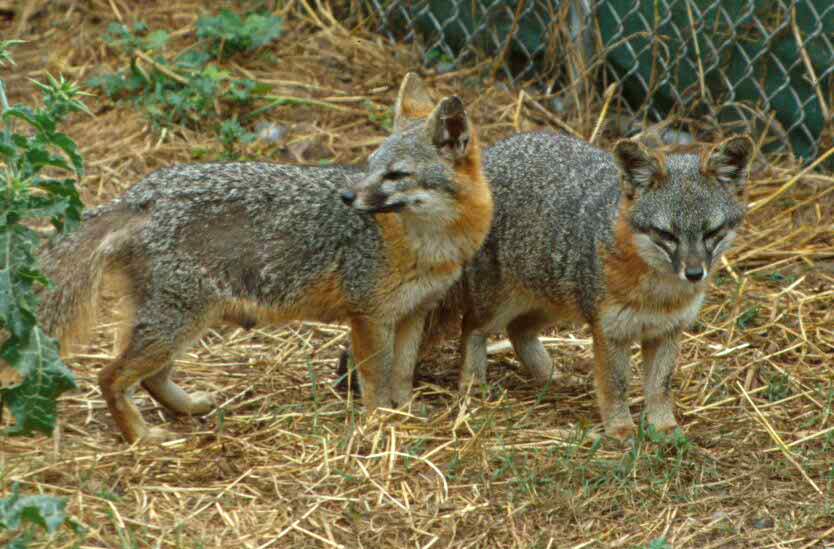
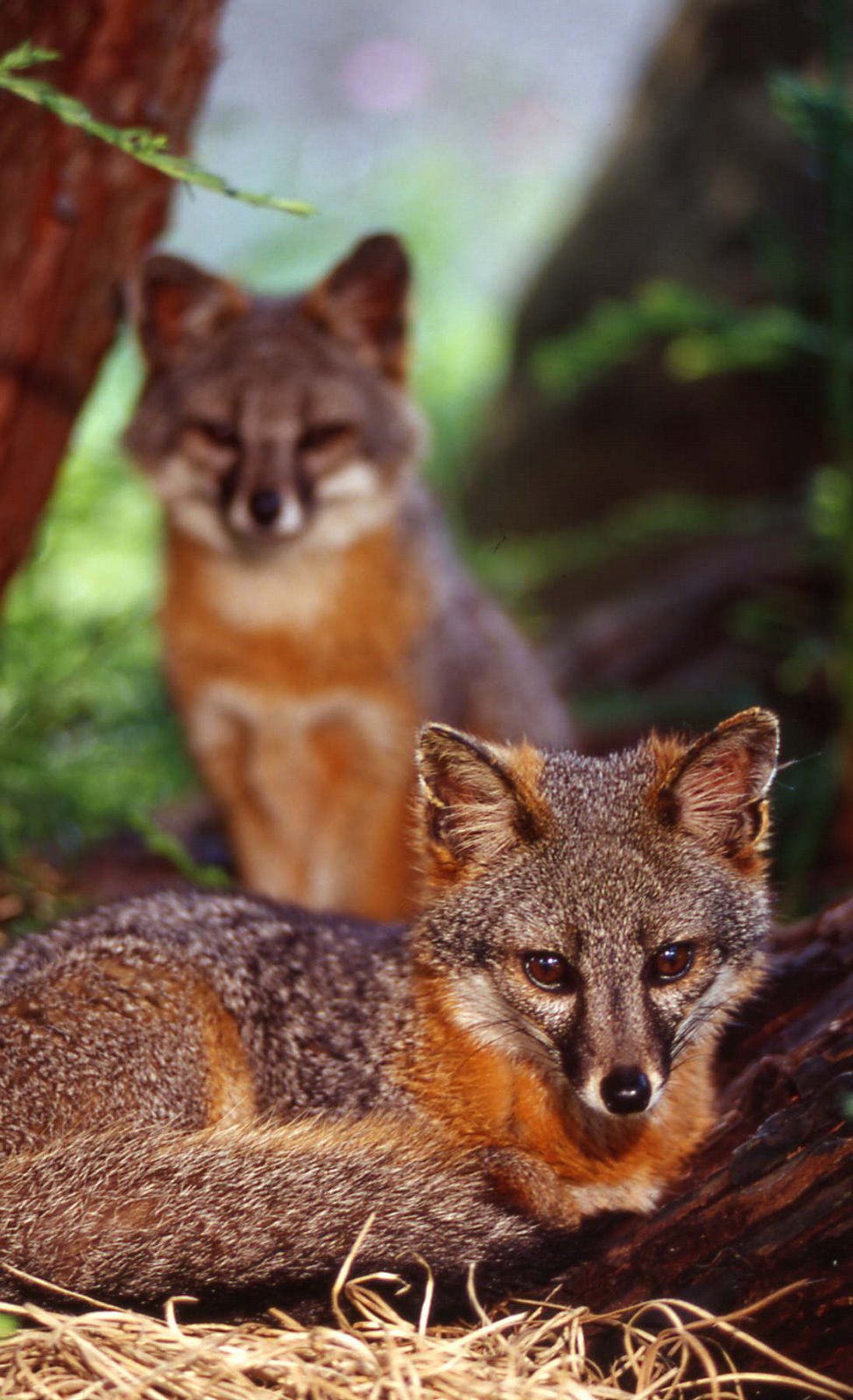
A pair of San Clemente island foxes at the Santa Barbara Zoo. (Where can you see an island fox?)


Island foxes all have similar lifestyles and habits:
  • About the island fox
  • Males consistently weigh more than females
  • What do island foxes eat? Their favorite food is the deer mouse. (Each island has its own subspecies of deer mouse.)
  • Island foxes are good climbers, which allows them to reach bird nests and eggs
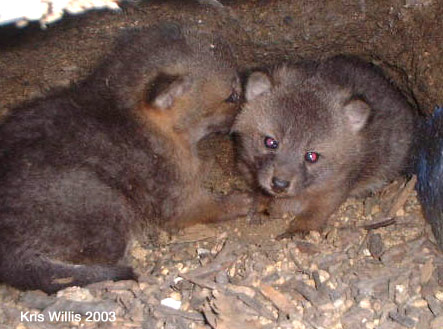
  • Island fox pups are born in the spring. Island foxes usually have 2-3, but may have as many as 5 pups



But the foxes on each island are slightly different from each other. The differences are great enough that each island has its own subspecies of island fox.

National Park Service biologist Tim Coonan points out that the San Miguel island fox weighs significantly more than the island foxes on the neighboring island of Santa Rosa.

A San Miguel island fox being fitted for a radio collar.

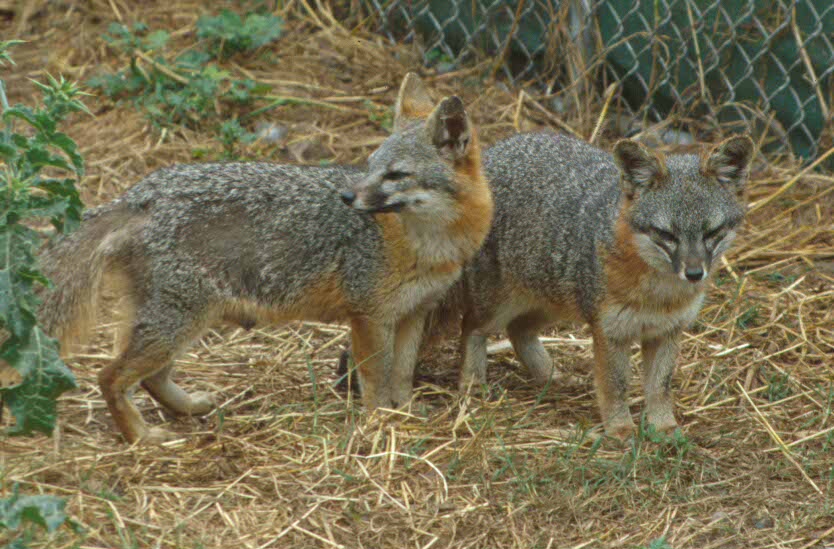
A pair of Santa Rosa island foxes. (Experiencing Santa Rosa Island)


Tail length is a specific physical trait that varies between the different subspecies. Studies show island foxes from different islands have more or less tail vertebra.

In descending order:
  1. San Nicolas Island 22 tail vertebra
  2. Santa Catalina Island 21 tail vertebra
  3. San Clemente Island 19 tail vertebra
  4. Santa Rosa Island 19 tail vertebra
  5. Santa Cruz Island 19 tail vertebra
  6. San Miguel Island 15 tail vertebra
Between the shortest-tailed island foxes on San Miguel Island and the longest tailed on San Nicolas Island there is a difference of 7 vertebra. Interestingly, Schoenherr, Feldmeth and Emerson point out in Natural History of the Islands of California (Univ. of California Press 1999) that the island foxes on San Nicolas Island appear to have the least amount of genetic diversity. This suggests the San Nicolas population may be descended from as few as a single pair of foxes.


All of the island fox populations are vulnerable because they live in such limited habitats. Small population numbers mean that a single introduction of a disease, like the canine distemper outbreak on Santa Catalina Island, can threaten an entire island fox population. (Santa Catalina island fox Update) Catastrophic events, like the arrival of an unexpected predator–the golden eagle–can cause near extinction.

The island foxes on San Miguel Island were reduced to only 15 individuals because of predation by golden eagles. This genetic bottleneck means future San Miguel Island foxes will be more genetically alike than they were in the past.

Conservation and research efforts are necessary across the islands to preserve and protect the six subspecies of island foxes.

Donations to Friends of the Island Fox supports conservation and education efforts to Help Save all six subspecies of island fox. See how your donations can make a difference.

Tuesday, March 13, 2007

FIF at Moorpark Spring Spectacular 2007


March 17 & 18
March 25
March 31 & April 1


Spring is in the air. Island foxes are getting ready to have their litters of pups across the Channel Islands. Come help us celebrate.

Over the next three weekends Friends of the Island Fox will be out at America's Teaching Zoo participating in their Annual Spring Spectacular at Moorpark College. (10 AM to 5 PM daily)

We’ll be raising awareness about the island fox and its Channel Island home and making connections with the community and educators.

The Spring Spectacular is a great family outing with animal shows, a Kid’s Fun Zone and more. Visit their Website

Representatives from Friends of the Island Fox are happy to participate in Earth Day Fairs and school conservation events. You can help spread the word about the endangered island fox–its conservation challenges and successes–by inviting FIF to your community or school event.

For more information or to schedule a visit from Friends of the Island Fox contact us at

(805) 386-0386

admin@islandfox.org

Sunday, March 04, 2007

Island Fox Goes to the Fair

28th Annual Los Angeles Environmental Education Fair
Saturday, March 20 from 9 AM to 4 PM

“A greener tomorrow, today!”

Friends of the Island Fox (FIF) will be at the L.A. Environmental Education Fair (LAEEF) this coming Saturday at the L.A. County Arboretum and Botanic Garden in Arcadia.

“The LAEEF focuses on young people. ... [especially] hands-on activities that engage students in a natural science experience...”


Come out and join FIF for a fun and informative day. FIF representatives will be talking to students and teachers about the island fox and our free outreach programs.

Fox in the Classroom - FIF representatives visit schools with an interactive presentation about the island fox and its Channel Island habitat. (grades 2 - college; Santa Barbara, Ventura & Los Angeles counties)

Fox Ambassador Program - Classes and schools can participate in the Fox Ambassador Program. You’ll play an active role in helping the endangered island fox.

Friends of the Island Fox will also come out to your community group and give a Fox Talk. This interactive presentation will give your group the most up-to-date information about the island fox, its history, research and current status on the Channel Islands.

For more information or to schedule a visit from Friends of the Island Fox contact us at:

(805) 386-0386 or admin@islandfox.org

Monday, February 19, 2007

Island Fox Update - Santa Catalina Island


The island foxes on Santa Catalina Island face different survival challenges than the foxes on the northern islands.


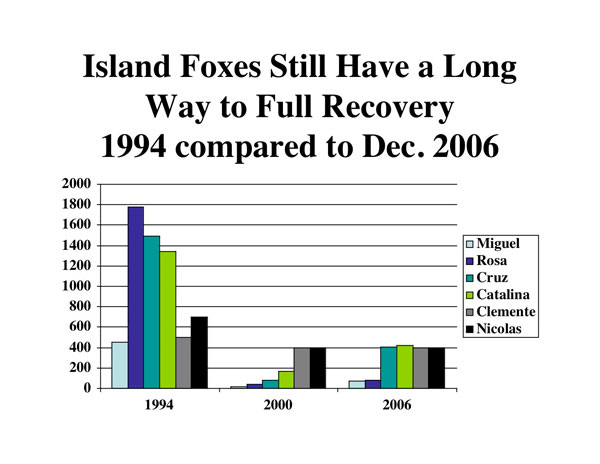
In 1999, the Santa Catalina island fox population declined by over 90%.

Only approximately 100 foxes remained because of an outbreak of canine distemper virus. In this emergency situation, the Catalina Island Conservancy (CIC) and the Institute for Wildlife Studies (IWS) created a captive breeding facility to help reestablish a stable fox population. Twenty-two island foxes from the West End of Catalina Island, where the animals were unaffected by the virus, were translocated to the affected East End. A distemper vaccination program was also implemented.

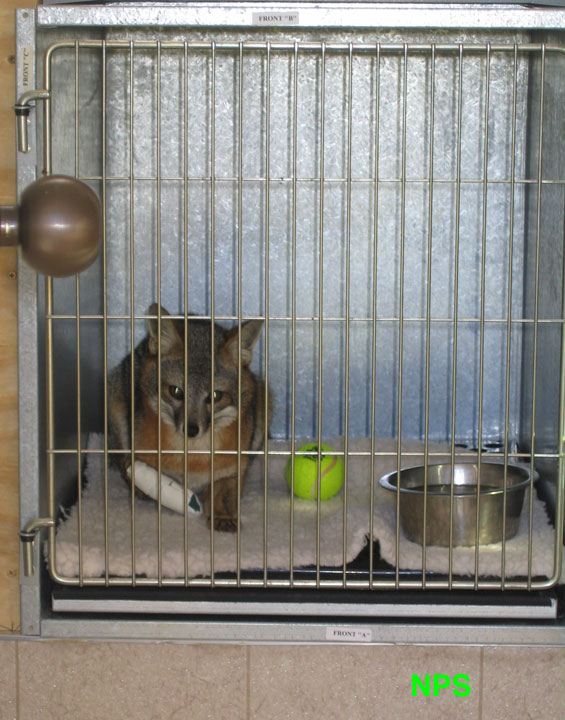
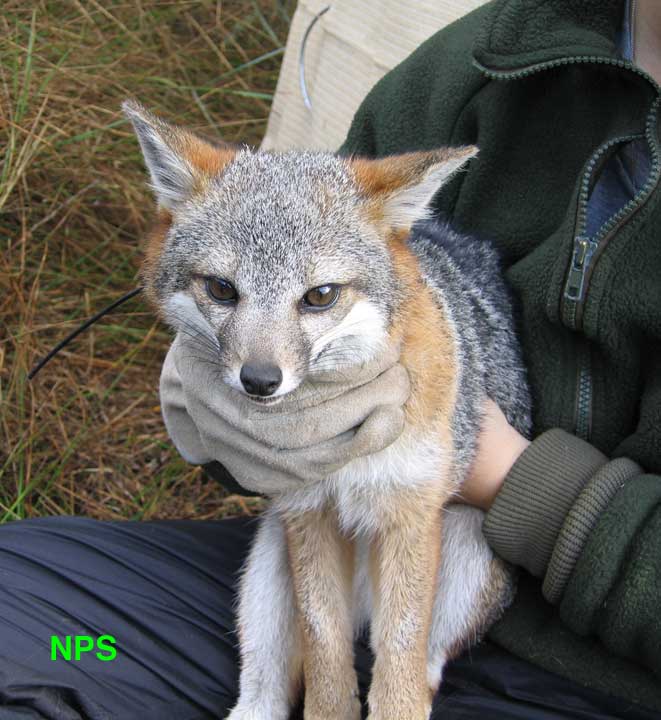
[The fox pictured is Tachi, CIC's education fox. More about Tachi.]

After several successful years, captive breeding efforts concluded in 2004. Since then, the Catalina island foxes have been recovering their numbers in the wild.

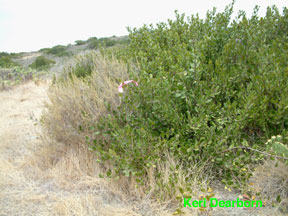
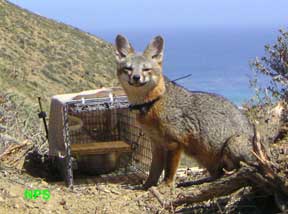
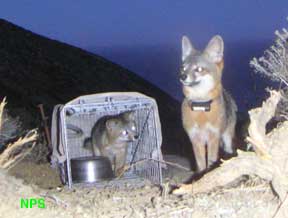
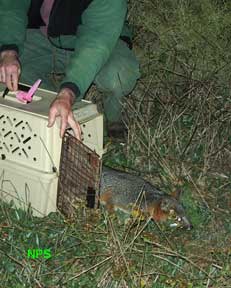
Foxes are counted by setting cage traps in specific places, such as the location marked by the colored tag on this bush. The total number is estimated from individuals that are caught. Trapping also allows biologists to check the health of individual foxes and vaccinate them against distemper. The CIC estimates in 2007 that there are approximately 500 island foxes on Catalina. This population is doing well but still has a long way to go to reach the pre-outbreak estimate of 1,342 foxes.

Today, however, the Catalina island fox is facing new threats.
Since 2001, over 37 foxes have been found with cancerous ear tumors (Ceruminous gland carcinoma). These mysterious ear lesions are typically fatal. Currently, the Catalina island fox is the only subspecies with this disease. The Catalina Island Conservancy is supporting research that is being conducted by IWS and the University of California, Davis to determine the prevalence and possible causes for this cancer.

The island foxes on Santa Catalina also have the challenge of sharing their island with people and domestic pets. Cars on the few island roads have been responsible for 9 fox deaths in the past two years (2005-2006). While three more foxes were attacked and killed by domestic dogs.

Signs warning “Watch for Foxes” are one way to alert drivers and new pet policies for the interior of the island require residents and visitors to vaccinate their pets, keep them leashed and to clean up after them.

When visitors dock their boats in Catalina’s harbors they may not be aware of the island fox, just on shore. Friends of the Island Fox hopes to support the Catalina Conservancy in further island fox disease research and public education to help the residents and visitors on Catalina Island understand their role in providing a safe habitat for island foxes.

Thursday, February 15, 2007

Island Foxes on 'Animal Planet'

Friday, Feb. 16 at 9 PM

Animal Planet’s
new series 'Ms. Adventure'


will feature a segment on the island foxes of
San Miguel Island.


You’ll have a chance to see the island foxes and some of the devoted people from the Channel Islands National Park working to save this endangered species.

Tuesday, January 30, 2007

How Can You Help the Island Fox ?


The island fox lives on six of California’s Channel Islands and no where else in the world. While pups like these are helping increase the various island populations, they are still highly endangered.For the most recent fox status from the northern islands read the December Island Fox Update

You can help the island fox by supporting conservation efforts:
Through Friends of the Island Fox you can also help to fund important island fox management, public education and research.


Fox Veterinarian - $5,000 helps pay for veterinarian visits to the islands to care for sick foxes in the captive breeding facility, conduct annual physicals and administer vaccinations.

Fox Guardian – $2,500 helps fund signs at Channel Island landings to educate visitors and ensure the safety and health of island foxes.

Fox Researcher – $1,000 helps provide funding for island fox research projects.

Fox Ambassador – $500 pays for a teaching trunk to be loaned to teachers in Ventura, Santa Barbara and Los Angeles counties for classroom education about the island fox and the California Channel Islands.

Fox Tracker – $250 buys a radio collar so a released island fox can be tracked to ensure its safety.

Fox Teacher – $100 purchases needed educational materials to be used in classroom and community programs.

Donations of any size help the cause to SAVE THE ISLAND FOX. You can donate directly through the PayPal or Network for Good buttons in the upper right corner or through the mail. (Download brochure)

You can also help by inviting Friends of the Island Fox representatives to speak at your community group or school.

Schools, classrooms or youth groups can also participate in the
Fox Ambassador Program as a conservation or Earth Day Project.

Contact us by phone at (805) 386-0386 or e-mail: admin@islandfox.org


You can also help the island fox by supporting zoological facilities that house San Clemente Island foxes.

To join the Island Fox News e-mail list, send a request to islandfoxnews@gmail.com

Working Together We Can Save The Island Fox

Sunday, January 28, 2007

Friends of the Island Fox, Inc. Goes Live!

Hear FIF on the radio or streaming live on the web.

January 31 from 1:00 - 2:00 PM
on Talk Radio 960 AM
in Antelope Valley

or www.talk960.com


FIF President Pat Meyer and National Park Service Lead Biologist Tim Coonan will be interviewed by Barb Stanton of Talk Radio 960 AM.

You’ll get the most up-to-date information on fox status and news on how you can help the island fox.


LISTEN live on the internet.

Wednesday, January 17, 2007

Island Fox Research Notes – Hilary Swarts

Hilary in the field on Santa Cruz Island with one of the oldest collared females, A3Y. (Photo by Jessica Sanchez)

“You can kind of see her collar ID colors: Pink, White, Pink, Pink. That's how we identify the foxes photographed by remote cameras. Annoyingly, it doesn't work all the time. This female just got her newly painted collar in mid October.” - Hilary

Research:
Circadian temporal activity of the Santa Cruz Island Fox (Urocyon littoralis): A possible newfound anti-predator defense for a naïve, endangered species

Hilary Swarts, a PhD candidate at the University of California at Davis, is studying the behavioral response of the island fox to golden eagles, a predator to which foxes are not adapted. Her theory is that foxes, which are naturally active during the day (diurnal), have possibly changed their behavior in response to predation pressures from golden eagles. Eagles also hunt during the day, so foxes may be responding by being more active at night (nocturnal). Specifically, the research is investigating whether behavior patterns of foxes on Santa Cruz Island have changed in the period since the 1990’s when golden eagles colonized that island. If foxes have changed their behavior, this shift may be a selection- or learning-based response to predation by golden eagles, or it may be a response to reduced fox density.

Hilary’s research will examine several aspects of island fox ecology including reproductive success, changes in population abundance in response to different levels of predation, daytime activity levels in the absence of predation, and will compare measures of daytime activity to the risk of predation. The results from her research will contribute scientifically to the understanding of the effects of invasions on behavioral ecology, while also providing crucial information to resource managers on the risks of golden eagle predation to the Santa Cruz Island fox population.

Hilary Swarts , Ph.D. Candidate
Department of Wildlife, Fish, and Conservation Biology
University of California at Davis


FIF plans to fund future island fox research. You can help with your donation to Friends of the Island Fox, Inc. To donate use the PayPal or Network for Good buttons in the upper right corner.

For more on Santa Cruz Island and the island fox:

Wednesday, November 29, 2006

Looking for An Ideal Holiday Gift?


Island Fox Update - As the year comes to a close, the island fox is showing very positive signs of recovery on the northern islands.

You can play an important role in helping the endangered island fox. Give the gift that makes a difference:

Give the GIFT of FREEDOM: $250 purchases a radio collar for a captive fox being released back into the wild or for a pup born in 2006

Give the GIFT of EDUCATION: $50 provides printed materials for a school visit or community outreach event

Give the GIFT of INVOLVEMENT: Any contribution to Friends of the Island Fox, Inc. supports island fox conservation and education. Any amount you can give is important.

Donate directly through the PayPal button on the right or through the mail. (Download brochure)


San Miguel Island Update

Currently on San Miguel Island there are 20 foxes in captivity and 77 in the wild, for a subspecies total of 97. National Park Service lead biologist Tim Coonan says, “The last time we had close to 100 San Miguel foxes was in 1996, so that's a pretty significant milestone. The wild foxes include 25 pups born in the wild this year. Our camera monitoring indicates that 12 of the 13 pairs we monitored had litters.” Traps with food are put out to attract foxes to locations with cameras, so pups born in the wild can be counted.

Island foxes returned to the wild are breeding very successfully. But before an island fox can be released it needs a radio collar so its safety can be monitored. This month 16 more foxes were released into the wild on San Miguel Island. It is hoped that captive breeding on this island will be unnecessary by the end of 2007 and that all of the San Miguel foxes will once again be roaming free. With the donation of funds for a radio collar, you can help make this happen.

More about San Miguel Island

Santa Rosa Island Update

Radio collars are vital to the 13 captive foxes released back into the wild on Santa Rosa Island this fall. Monitoring the foxes allows biologists to rapidly respond when a fox is preyed upon by a golden eagle. Since the capture of two adult golden eagles this summer, only two juvenile golden eagles have been seen on the northern islands. No fox fatalities attributed to golden eagles have occurred since March 8, 2006.

Currently there are 28 island foxes in captivity on Santa Rosa and 52 in the wild, including 14 pups born this year to 5 litters. Captive breeding will continue on Santa Rosa for a couple years.

More about Santa Rosa Island & Island Journal


Santa Cruz Island Update

In June of 2006 there were 81 foxes in captivity on Santa Cruz Island. But as nonnative species have been removed and the natural island habitat has been reclaimed, 58 of the captive island foxes have been released. Tim Coonan reports, “The estimated wild population is approximately 250 foxes, though it may be significantly higher than that, perhaps as high as 400 foxes.”

Educating the public about the complex natural balance on the Channel Islands - the importance of removing feral pigs, reintroducing bald eagles and relocating golden eagles - is vital to creating an informed public and the survival of the island fox. When you support Friends of the Island Fox’s education efforts, you help create a community that actively supports island fox conservation.

More about Santa Cruz Island & Island Journal.

In 2006, Friends of the Island Fox provided funds for 10 radio collars, visited schools from primary grades through college and educated 1000s of people like you about the island fox at six different community events.

Can an endangered animal be saved? YES

This season Give the GIFT of A FUTURE.
Through the efforts of like-minded people, we will SAVE the ISLAND FOX.

Please use the PayPal button at the upper right to donate or contact us through the mail. (Download brochure)

Friday, November 10, 2006

Where To See An Island Fox

Friends of the Island Fox hopes that as the wild population of island foxes increases toward recovery on the California Channel Islands, the opportunity for everyone to see an island fox in its natural environment will also increase.

Until that time, the Catalina Island Conservancy cares for Tachi, an island fox that can not be released in the wild and several zoos exhibit and breed foxes from San Clemente Island. This subspecies of island fox is not listed as endangered but is still vulnerable to population declines because it is found only on San Clemente Island and no where else in the world. Captive management of the San Clemente Island fox has helped develop husbandry techniques and establish veterinary care procedures for the endangered subspecies of foxes on the northern islands and Santa Catalina Island.


You Can See Island Foxes At:

Santa Barbara Zoo
The Santa Barbara Zoo exhibits two fox pairs:
- a Male and Female from San Clemente Island
- a Female from San Clemente Island and a Male born at the Santa Barbara Zoo

The Santa Barbara Zoo maintains the Stud Book or breeding records for all the island foxes in captivity on the mainland. They also are caring for a Male from Santa Rosa Island that requires daily medical care due to a chronic eye condition.

Roots & Shoots hosts a Fall Fox Festival at the Santa Barbara Zoo each October.


Los Angeles Zoo
The Los Angeles Zoo exhibits a fox pair:
-Female from San Clemente Island and Male born at the Santa Barbara Zoo

The Docent Conservation Committee at the Los Angeles Zoo hosts an Island Fox Festival annually in May.


Charles Paddock Zoo
Exhibits a Male born at the Santa Barbara Zoo

Coyote Point Museum
Exhibits a Male born at the Los Angeles Zoo

Orange County Zoo
Exhibits a Male born at the Los Angeles Zoo

Utah’s Hogle Zoo
Exhibits a Male from San Clemente Island

California Living Museum- Bakersfield
Exhibits two Males from San Clemente Island

Even if you can’t venture over to the Channel Islands, zoos that are helping save the species can give you an opportunity to see the island fox, one of California’s precious treasures.


What is it like on the islands?

Experiencing Santa Cruz Island
Experiencing Santa Rosa Island

Getting there - Island Packers