Showing posts with label Santa Cruz Island fox. Show all posts

Friday, December 01, 2017

Fox Foto Friday - Island Fox Pairs


Marty Chin - I took this on my first trip to Santa Cruz Island back in 2011 with the Sierra Club 20's and 30's Group. I spent about an hour watching these rascally young foxes looking for food, playing, and marking territory. Love Friends of the Island Fox and the great work you do.  I met some of your volunteers twice on Earth Days at the LA Zoo.

Thank you Marty for sending in your photo for our Fox Foto Friday. This pair of island foxes is the perfect December image. Right now island fox pairs are taking a break from family life, but around the end of the year they will find a mate or re-establish their pair bond.

Submit your island fox photo to islandfoxnews@gmail.com and be part of Fox Foto Friday.

Tuesday, July 07, 2015

Observing Channel Island Fox Behavior on Santa Cruz Island

Santa Cruz Island, Channel Islands National Park
Participants in the Friends of the Island Fox trip to Santa Cruz Island on June 20th had a beautiful day and an opportunity to observe behavior between individual wild Channel Island foxes. Fifteen years ago, when this subspecies of Channel Island fox was facing extinction, such an opportunity was unthinkable.

The island foxes on Santa Cruz Island have made a strong recovery. A baby boom of foxes occurred on Santa Cruz between the fall count in 2007 and 2009. The population jumped from 350 to 1,200. Adult survivorship has been very high, which means we are seeing an increasing number of island foxes between the ages of 5 and 8 years old. These are mature individuals. Island foxes are believed to be in their prime between 2-5 years of age and are estimated to live 8-10 years in the wild.


This trip two elderly animals were noticeable by their broken-down ears and minor injuries to legs and tails. These injuries were most likely inflicted by younger adult island foxes protecting territory. The campground offers an area where infirm animals can potentially find resources, while having some protection from other foxes. 


We observed this older island fox lying down on the ground between campsites where people were active at tables. His coloring camouflaged him well in the dappled shade.

When some campers left their site, a healthy adult island fox checked out their table area. We watched as the slightly larger, but older animal, approached. We didn’t know what to expect.

Submissive behavior of elderly island fox toward another adult.
However, when the older fox got within five feet of the table area, it lowered its head submissively to the younger animal. The younger fox did not chase the older animal or show aggression, yet it physically communicated to the older fox not to approach any closer. Without any direct contact, the older fox was sent off into the bushes.

photo courtesy of Daniel Mekonnen, 2015
We saw 8 - 10 adult island foxes (none were radio-collared individuals). 

We watched island foxes searching for food, retrieving figs, and eating them (Check out the video by Douglas Welch). (The fox jumps up into a shrub at ~2:48) A large percentage of the Santa Cruz Island fox’s diet is fruit.

We’ll have more on the status of the Santa Cruz Island fox in an upcoming Island-by-Island Update. At the Island Fox Conservation Working Group meeting, biologists from The Nature Conservancy reported that a female island fox, born during captive breeding on Santa Cruz, recently passed away at age 12. She is the oldest wild island fox scientifically documented on Santa Cruz Island. Biologists were able to accurately date her age and follow her life because of her ID microchip.


We also had a fantastic encounter with common dolphins on our boat ride home. Hundreds of these colorful dolphins were feeding and swimming right next to us. Look closely and you will see a youngster swimming beside its mother. We saw numerous young dolphins.  (Video of the common dolphins by Douglas Welch).

More photos of the Friends of the Island Fox Trip to Santa Cruz Island:
A special thank you to trip participants Eric Gotthelf, Douglas Welch, Michael Solomon and Daniel Mekonnen for their photos.

Sunday, June 16, 2013

Good News on Channel Island Fox Recovery

Have you heard the good news? 

All four of the subspecies of endangered Channel Island foxes are doing well. In fact, three of the subspecies are considered to be close to recovered. What constitutes recovery?

  1. Population numbers that have returned to healthy levels
  2. Reduction of threats (those that caused the original near extinction and/or new challenges to survival)
  3. Stability of the first two for at least five years

A graph of the population figures from Santa Cruz and Santa Catalina Islands shows the rapid declines toward extinction in the late 1990s. (Caused by unnatural golden eagle predation on Santa Cruz and introduced distemper virus on Santa Catalina.) 


From 2000 to 2007 island foxes increased in captive breeding facilities on each of the islands and were gradually released into the wild. Once the threats to their survival were reduced, populations of island foxes increased rapidly in the wild. Golden eagles were relocated and bald eagles were reestablished on the northern islands, while vaccinations for distemper and rabies were instituted across the islands.

On both Santa Cruz and Santa Catalina the island fox populations now fluctuate around a number that represents the carrying capacity or maximum population that can survive on each island's resources. The population of any living species alters naturally in response to available food, water and habitat.

The population numbers for island foxes are compiled annually by biologists in the field each autumn. These hard-working people  from across the six islands come together each year in June with veterinarians, scientists and government officials to discuss the status and threats to each of the six subspecies of island fox. We will have more from the annual meeting of the Integrated Island Fox Recovery Team as we compile our notes. It's been a happy busy week.

Monday, March 12, 2012

Santa Cruz Trip with FIF

Join Friends of the Island Fox for:

A Trip to Santa Cruz Island
Saturday, May 5, 2012
to Look For The Island Fox

Please join us when we visit Santa Cruz Island for a tour with our educators.  We will look for the endangered island fox, plus the many other endemic species, both plants and animals, found only on this island and nowhere else.  On the trip over to Santa Cruz (about 1 hour) there is the possibility of seeing many marine species.

Tickets for adults will be $65.00 per person, children $55.00. A percentage of the fee will go to support island fox recovery efforts.

We will take the Island Packers boat from Ventura Harbor leaving at noon and returning around 5 PM on Saturday May 5, 2012.  Check in will be required at 11:15 AM

Reservations are limited and will be provided on a first come basis. To book reservations, please download the Reservation Booking Form (Click Here to download pdf)  

Island fox trying to take food from backpack.
Send the completed form with your check, made payable to the "Friends of the Island Fox" to the address on the form.  Reservations will be taken in the order received, and no reservations can be accepted without payment.

Before the island visit you are welcome to join us at 9:30 AM at the Channel Islands National Park Visitors Center at 1901 Spinnaker Drive, Ventura.  We will tour the native plant garden, visit the Center and you will have the chance to view the Channel Islands National Park film “Treasure in the Sea” narrated by Kevin Costner. 

At the time of booking you will receive further details of the trip, including where to meet, what to pack, the suggested clothing and other items of interest. Note the photo above. Food items will need to be secured at all time. What to remember when visiting the island fox.

Tuesday, January 31, 2012

Restoring Habitat for Island Foxes

courtesy of Kevin Pease
Across the Channel Islands efforts are being made to restore the natural ecosystems that the island fox depends on for survival. One such project is the restoration of a wetland area at Prisoner’s Harbor on Santa Cruz Island, in the Channel Islands National Park.

Prior to large scale ranching on Santa Cruz, the canyon at Prisoner’s Harbor had a seasonally flowing stream that created a rare coastal lagoon. This wetland would have attracted amphibians, fish, reptiles, small mammals and migrating birds. It would have provided important food and water for the island fox.

Currently the Channel Islands National Park and the Nature Conservancy are digging out the tons of gravel and dirt that were used to fill in the wetland. Eucalyptus trees that were introduced as wind breaks are being removed and native species are being replanted. You can see some of the work in progress in a video interview by the Ventura County Star with Russell Galipeau, Channel Islands National Park Superintendent.


courtesy of Kirin Daugharty
The hillsides surrounding Prisoner’s harbor have become home to Tani and Tiptu, FIF’s island foxes on twitter. What changes will the island foxes see as the wetland is restored? Will ducks and other migrating bird species visit the area this year? Or will it take years for nature to reestablish itself in this island lagoon?

Restoring native habitat comes in stages: removing introduced species, reintroducing native species that have disappeared, understanding all of the elements of reestablishing nature’s balance.

For more information on the Prisoners Harbor Coastal Wetland Restoration

Monday, April 18, 2011

Follow An Island Fox on TWITTER

Friends of the Island Fox announces the birth of Tani, a special island fox pup on Santa Cruz Island. More on Santa Cruz Island.

This island fox pup will have a voice through Friends of the Island Fox. You'll be able to follow Tani's adventures on Twitter at @ifoxtweet. See the Twitter box in the right hand column below the island fox picture or follow on the Friends of the Island Fox FaceBook page.  

Over the next year this island fox will tweet her experiences as she grows up and explores her island home.


Today Tani and her brother and sister were born in a hillside den. They are each about the size of two AA batteries. Sleep and food are their primary interests and their world revolves around their mother.


Follow @ifoxtweet on Twitter as an island fox grows up.

Monday, April 11, 2011

Spring Is the Time for Island Fox Pups

Spring is blooming across the Channel Islands. The mountain morning glory unfurls its white flowers tinged in pink.

In protective dens across the islands, female island foxes are giving birth to their litters of pups. The green hillsides with their flowers hint that the rainfall has been good this year. If the plants are healthy they will produce abundant fruit this summer. The Catalina cherry, toyon and prickly pear cactus are all important food sources for the island fox. Island fox food. If the plants grow well, the animals that depend on them will do well too.
Last year the drought impacted island foxes. Fewer pups were born and many were underweight. This year we are hoping for healthy island fox pups. Typically island foxes have 2 pups, but if there is abundant food they can have up to 5 pups.

Representatives from Friends of the Island Fox were out on Santa Cruz Island last week. More on Santa Cruz Island. The hillsides were green and the Catalina cherry trees were covered in blooms. We’re looking for a special island fox pup to be born that will be communicating out to the world about its daily life as it grows up.

This exciting birth is just around the corner. We hope that by sharing the daily adventures of this little island fox via Twitter, people around the world will have a better understanding of the challenges the island fox faces living on an island and being an endangered species. (Link to video - island fox encounters bald eagle chick)


Are you ready to follow an island fox pup as it grows up?

Wednesday, July 21, 2010

Visiting the Island Fox

Summer is a great time to visit the California Channel Islands. As island fox populations recover from disease and predation by golden eagles that nearly pushed them to extinction, more people are having the opportunity to see island foxes in the wild. (Why island foxes are endangered)
Observing an endangered animal in the wild is a rare experience and it comes with responsibility. Here are a few important tips to remember when encountering an island fox:
  1. Do Not Feed Them - Island foxes are smart and they know people have food. But feeding an island fox can threaten its life. Human food is not good for island foxes and does not provide the necessary nutrition. Wild foxes, especially juveniles, that become dependent on handouts never learn to forage for natural food and can die when their free food source disappears.
  2. Store Food Appropriately - Island foxes are clever. Even campers who do not intentionally feed island foxes can sometimes become a source of food. We have heard cases of a single island fox taking an entire plastic bag with eight hamburger buns right off of a picnic table. Plastic and food wrappers can appear to be food and cause injury to island foxes. (see island fox and fishing hook) The NPS campgrounds offer food lockers to secure food items.
  3. Island Foxes Are Wild Animals - Even though the island foxes are cute and friendly, they are wild animals. A woman feeding an island fox on Santa Catalina Island was bitten. The Center for Disease Control can require that any fox that bites a person be euthanized to insure that it is not carrying rabies.
  4. Leave Your Pets At Home - Island foxes can acquire diseases from domestic dogs and cats. The distemper virus, which can be carried by dogs, caused the death of over 88% of the island foxes on Catalina in the late 1990s. As wild animals, island foxes can also carry diseases that are dangerous for pets–parvovirus, coronavirus and internal parasites. Some of these diseases can be transferred simply through animal droppings and do not require animal-to-animal contact. While many island foxes are vaccinated for rabies and distemper, not all of them are. It is illegal to take pet dogs or cats on to any of the islands that make up Channel Islands National Park. On Catalina Island dogs are required to be leashed. Several island foxes have been attacked and killed by free-roaming domestic dogs.
  5. Watch for Wildlife on Road - The increase of island foxes on Santa Catalina means that more foxes are being seen along the islands few roads. Because of their small size and gray coloring, island foxes can be hard to see especially at twilight. The number one cause of death for island foxes on Catalina is being hit by a car. Roadsigns
Southern Californians have worked very hard to save the island fox from extinction. The reward is that now we can see island foxes in the wild again. If we all act with respect and responsibility toward our friend the island fox, we can insure their continued success toward sustainable populations.

On Santa Cruz Island and Santa Rosa Island, in Channel Island National Park, visitors can see island foxes around the campgrounds, landing areas, and along hiking trails. Channel Islands National Park

On Santa Catalina Island, the increase of island foxes means that more individuals are being seen around the town of Avalon and the golf course. Island foxes can also be seen in the island’s interior. Catalina Island Conservancy

If you can’t travel out to the Channel Islands, you can visit island foxes in several local zoos.

Photos courtesy of Kevin Pease.

Tuesday, November 10, 2009

How Can You Help the Island Fox?


You don’t have to be on the Channel Islands to help the island fox and all of the wild creatures that live here in Southern California.

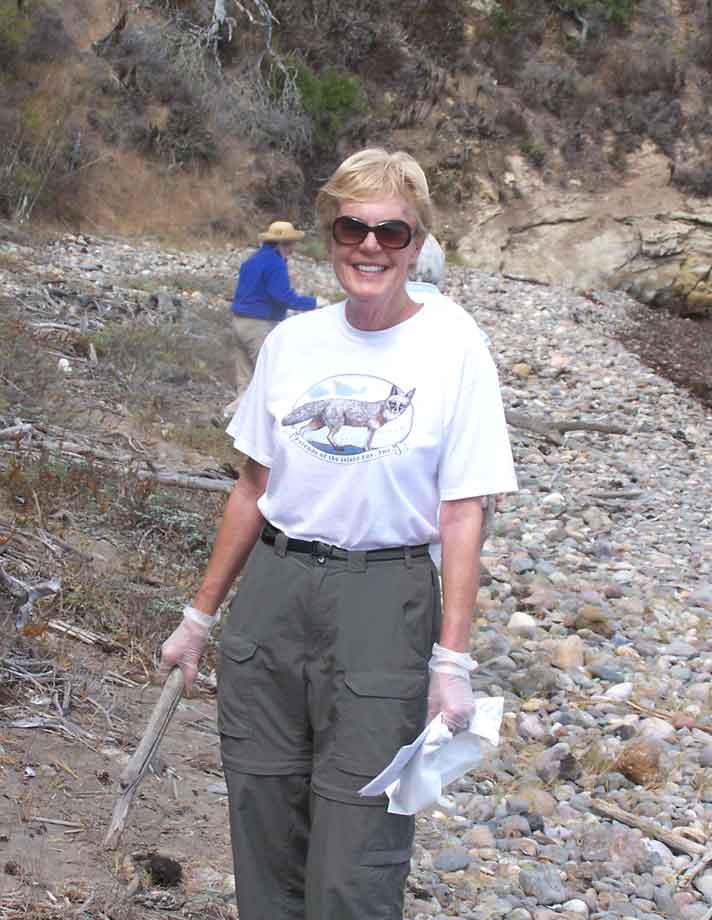
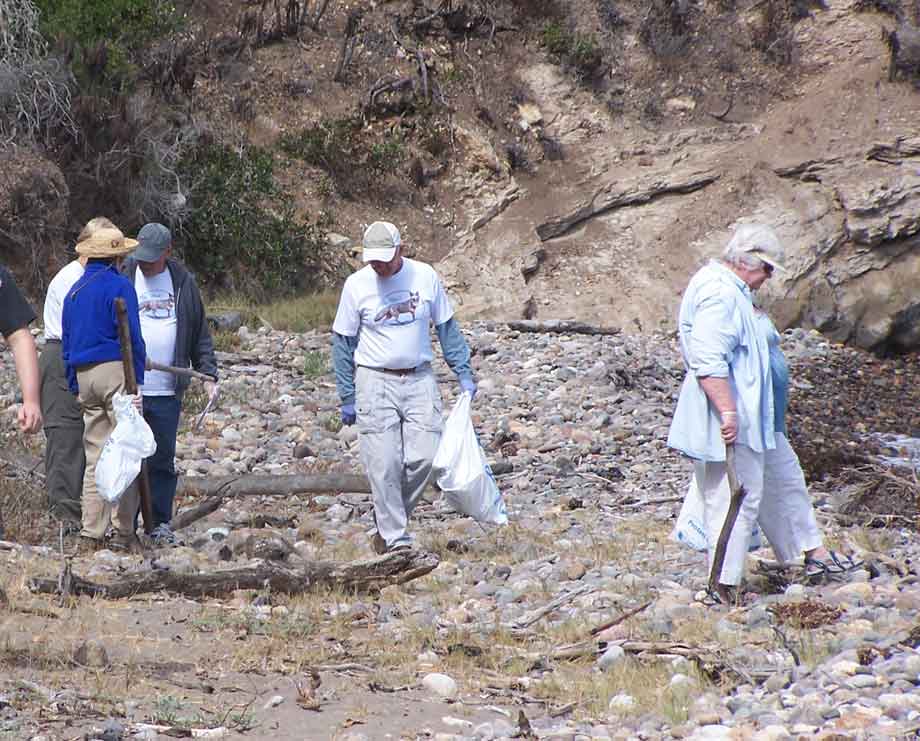
In September, volunteers from Friends of the Island Fox joined volunteers from the Channel Island Park Foundation to clean up trash on Santa Cruz Island. Through our joint efforts we picked up over 400 lbs. of debris that had washed up on the island or had been left behind by human activities.


Pieces of metal and glass pose a threat to the feet of wild animals. Fishing lures and cast off human items can be dangerous to island foxes. (See The Island Fox and The Fishing Hook)

Plastics that travel down gutters and storm drains to the sea are eaten by a wide range of animals. When these bits of plastic enter the food chain, they threaten not only animals, but humans as well. So the next time you see a piece of trash in the gutter or on the ground, don’t just walk on by. Stop and pick it up. Your simple act could save a young sea bird, a sea turtle or even an island fox.

Our thanks to the Island Fox Friends that participated in this year’s clean-up: Bob Colli, Keri Dearborn, Betty Dunbar, Michael Lawshé, Jerry Leach, Gerri Martin, Pat Meyer and Mary Renaker.

A special thank you to Carol Pillsbury of the Channel Island Park Foundation and Russell Galipeau of Channel Islands National Park for including FIF in this important event.

For MORE ways to HELP THE ISLAND FOX.

Tuesday, September 15, 2009

Return to Santa Cruz Island


In 2005, Kevin Pease encouraged his school to become the first Island Fox Ambassador School and they raised funds for one of Friends of the Island Fox's first radio collars.

During the summer of 2006, Kevin and his family went to Santa Cruz Island and he sent us his Island Journal complete with an island fox photo.


Kevin returned to Santa Cruz Island again this summer and sent us the following update:

Santa Cruz Island Journal - Summer 2009

Not even after 5 minutes of having been on Santa Cruz Island did I see an island fox, casually strolling through the campgrounds. This reoccured every day for the seven days I was out there. Some days there would be multiple foxes together, looking for food or picking a fight with the skunks. I would have to say though the last night there was the best. Venturing out at around 10 PM for a night hike, I came across two adults and about three pups. The pups were curious, running up and sitting in front of my feet staring up at me, it was a wonderful experience. What was remarkable and joyous about this trip was the difference in population. On the first trip to the islands I saw few foxes but now, they are all over the place. The hard efforts to help these foxes is really showing! - Kevin

In 2007 the island foxes on Santa Cruz Island were all returned to the wild. Recovery Milestone in 2007

A major factor in the rapid recovery of the endangered island fox has been the active participation of school children and community members in island fox conservation efforts.

You can help support island fox conservation by contributing to Friends of the Island Fox.

During Fall health checks, funds are needed to vaccinate wild island foxes against rabies and distemper. Funds are also needed to radio collar island foxes to monitor the health of the population.

Tuesday, October 09, 2007

Island Foxes Released on Santa Cruz Island

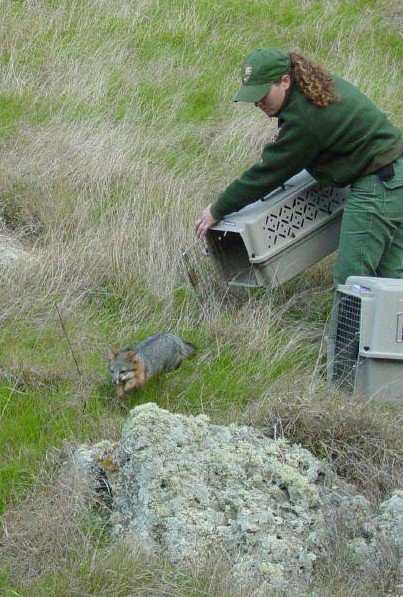
October 8, 2007 was another landmark day in the ongoing recovery of our endangered island foxes on the California Channel Islands. Yesterday, 10 island fox pups, born as part of the captive breeding program on Santa Cruz Island, were released into the wild.

Due to the success of several conservation efforts the fortunes of these newly released foxes look hopeful. Since 2002, captive breeding on Santa Cruz has produced over 85 fox pups and the overall Santa Cruz Island fox population has increased to approximately 300. Golden eagles that nearly ate the foxes into extinction, have been almost completely removed from the island and bald eagles, that were reintroduced to the northern islands beginning in 2000, are now breeding successfully and repopulating their historic home. Currently, 40 bald eagles reside on the northern islands.

“Historically, fox populations on the island ranged between 1,500 and 3,000,” said Dr. Lotus Vermeer, The Nature Conservancy’s Santa Cruz Island Project Director. “After several successful breeding seasons and with golden eagle predation curtailed we’re optimistic that the foxes will continue this upward trend.”

The fox population on Santa Cruz Island has more than tripled since the island fox was listed as an endangered species just three years ago. If everything continues to go well, all of the remaining island foxes in the breeding facility on Santa Cruz will be released back into the wild before the end of 2007.

On this auspicious day, Russell E. Galipeau, Jr., Superintendent of Channel Islands National Park offered “Many thanks to our partners: Pacific West Regional Office, The Nature Conservancy, Fish and Game, Fish and Wildlife Service, Institute of Wildlife Studies, UC system, Friends of the Island Fox and special thanks for the professionalism and dedication of the entire [Channel Islands National Park] CHIS staff. Everyone has played a role in stealing the island fox from the grasp of extinction and all of you should feel proud. Island fox recovery is still going to be a long journey with many challenges, but ... [we] are making, and will continue to make far-reaching achievements in ecological restoration and what is most important to remember is that in a world of troubling times someone, somewhere must provide a ray of hope.”

You can help support that “ray of hope” and the island foxes being released into the wild.

Your donation of $250 puts a radio collar on an island fox so it can be monitored in the wild.

$100 helps pay for biological research into island fox diseases.

$50 funds materials to raise awareness about the island fox at a school visit or a community event.

With your help, Friends of the Island Fox is helping to make a difference. Working Together We Can Save the Island Fox and create a community that treasures our Channel Islands.