Tuesday, November 20, 2007

Island Fox Health Checks on Catalina Island

The Santa Catalina Island fox became endangered when an outbreak of disease, believed to be canine distemper, killed over 85% of the population in just a few years. To help prevent such catastrophic events in the future, biologists across the Channel Islands use the late summer and early fall to count island foxes and give them health checks.

In September, Friends of the Island Fox went out in the field with Julie King, fox biologist for the Catalina Island Conservancy as she did health checks on wild island foxes.

Click to Listen to Island Fox Talk Podcast in the field with Julie King as she examines a young female island fox.

An island fox health check involves:
  • taking the weight - The island fox is weighed while still in the trap.
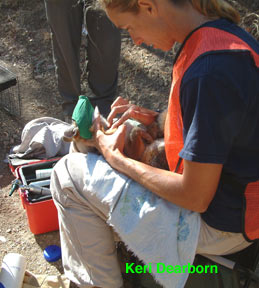
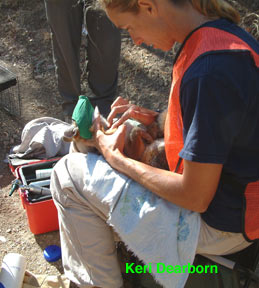
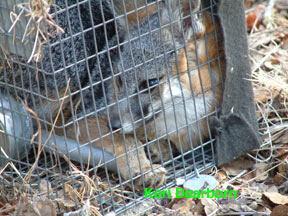
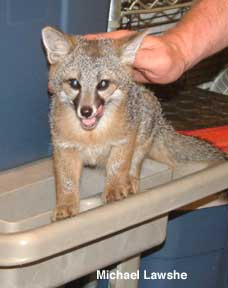
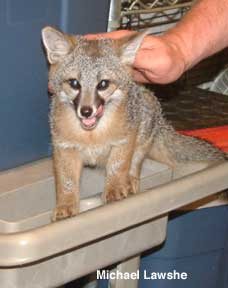
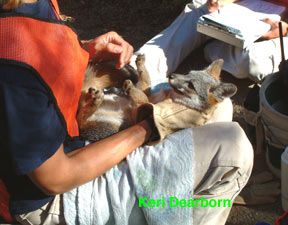
  • evaluation of over all physical status - The biologist feels the fox’s body for any lumps, bumps or wounds. (photo above)

  • visual check of teeth, coat - Teeth are checked for wear and breakage (this female fox was under 2 years old but had a broken tip on an upper canine tooth); the coat is examined for overall heath and the presence of parasites, fleas and ticks.
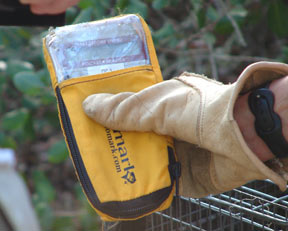
  • ear exam - An otoscope is used to look in the fox’s ears. The biologist is looking for ear mites, inflammation and disease.


  • vaccinations - Island foxes receive vaccinations to help reduce the chance of disease.
  • drawing a blood sample - The blood sample provides additional information on health and possible disease exposure. A mask is put over the foxes eyes to reduce the animal's stress while being handled by humans.


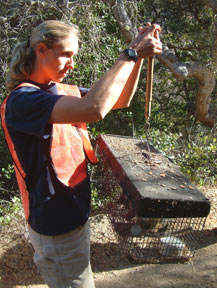
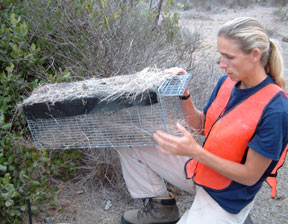
How was the island fox caught for the health check?

The island foxes on Santa Catalina are increasing in number, but a new threat is causing them problems, ear mites. Cancerous tumors are forming in the ears of island foxes on Catalina. The relationship between the ear mites and the cancer is currently being studied. Friends of the Island Fox would like to help the Catalina Island Conservancy in their quest to solve this mystery that is posing a new danger to island foxes.
You can help by making a donation through the "Pay Pal" or "Donate Now" buttons at the top right of the page.

Through generous donations Friends of the Island Fox has funded 17 radio collars in the past 2 years so island foxes can be monitored in the wild. Your donation to Friends of the Island Fox helps fund conservation efforts across all of the Channel Islands to help save the island fox.

Saturday, November 10, 2007

Counting Island Foxes

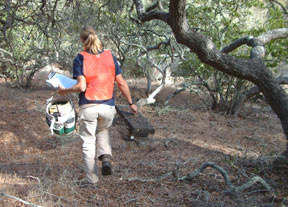
If you are a fox biologist on the Channel Islands, late summer through early autumn is a busy season. During this short window of time, island fox populations are counted and individual animals receive health check-ups. To get their hands on these pint-sized, but sharp-toothed predators, special box-type traps are put out in specific areas.

In September, Friends of the Island Fox rode along with Julie King, fox biologist for the Catalina Island Conservancy. The day on Santa Catalina Island started very early, because all of the traps on a string must be checked before the day starts to get warm.


Most foxes are captured in the evening or during the night. Even so, the traps are set in shaded spots so that a fox won’t become overheated. Each trap has a covering over the top and grass or hay inside to make it more comfortable

The fox is first identified by its “pit tag.” A scanner responds to the microchip tag and displays the animals identification number.

Endangered island foxes on Santa Catalina, San Miguel, Santa Rosa and Santa Cruz islands are given microchip identification tags like those you would use on your pet dog. The fox in the trap is scanned with the microchip reader to identify it. In this way, the biologist knows when the fox was last caught and whether or not it needs vaccinations, a health check or radio collar maintenance.


If the fox does not have a microchip or pit tag, it will receive one.

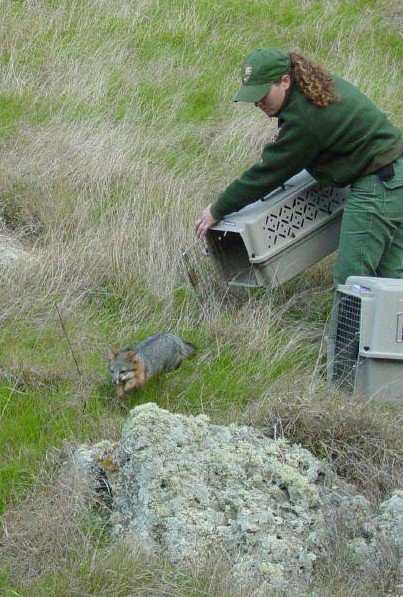
If it has already been caught this season and has had its health check, the biologist will release the fox and reset the trap. If not, then the island fox will spend 15-20 minutes with the biologist getting a full health workup.

Join us November 20th for an audio podcast as biologist Julie King does a health check on an island fox.

Tuesday, October 09, 2007

Island Foxes Released on Santa Cruz Island

October 8, 2007 was another landmark day in the ongoing recovery of our endangered island foxes on the California Channel Islands. Yesterday, 10 island fox pups, born as part of the captive breeding program on Santa Cruz Island, were released into the wild.

Due to the success of several conservation efforts the fortunes of these newly released foxes look hopeful. Since 2002, captive breeding on Santa Cruz has produced over 85 fox pups and the overall Santa Cruz Island fox population has increased to approximately 300. Golden eagles that nearly ate the foxes into extinction, have been almost completely removed from the island and bald eagles, that were reintroduced to the northern islands beginning in 2000, are now breeding successfully and repopulating their historic home. Currently, 40 bald eagles reside on the northern islands.

“Historically, fox populations on the island ranged between 1,500 and 3,000,” said Dr. Lotus Vermeer, The Nature Conservancy’s Santa Cruz Island Project Director. “After several successful breeding seasons and with golden eagle predation curtailed we’re optimistic that the foxes will continue this upward trend.”

The fox population on Santa Cruz Island has more than tripled since the island fox was listed as an endangered species just three years ago. If everything continues to go well, all of the remaining island foxes in the breeding facility on Santa Cruz will be released back into the wild before the end of 2007.

On this auspicious day, Russell E. Galipeau, Jr., Superintendent of Channel Islands National Park offered “Many thanks to our partners: Pacific West Regional Office, The Nature Conservancy, Fish and Game, Fish and Wildlife Service, Institute of Wildlife Studies, UC system, Friends of the Island Fox and special thanks for the professionalism and dedication of the entire [Channel Islands National Park] CHIS staff. Everyone has played a role in stealing the island fox from the grasp of extinction and all of you should feel proud. Island fox recovery is still going to be a long journey with many challenges, but ... [we] are making, and will continue to make far-reaching achievements in ecological restoration and what is most important to remember is that in a world of troubling times someone, somewhere must provide a ray of hope.”

You can help support that “ray of hope” and the island foxes being released into the wild.

Your donation of $250 puts a radio collar on an island fox so it can be monitored in the wild.

$100 helps pay for biological research into island fox diseases.

$50 funds materials to raise awareness about the island fox at a school visit or a community event.

With your help, Friends of the Island Fox is helping to make a difference. Working Together We Can Save the Island Fox and create a community that treasures our Channel Islands.

Tuesday, September 25, 2007

Island Foxes Eat Fruit

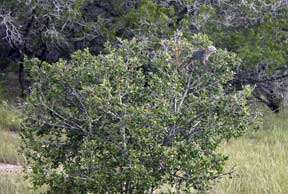
Can you find the fox in the tree?

Look high on the right-hand side.


Food can be hard to find if you are an island fox on the California Channel Islands. To reach a greater variety of foods, island foxes are excellent climbers. Their front feet are bigger than their back feet. Being able to climb allows the fox to reach birds and their eggs, but it also lets them eat fruit high in trees.


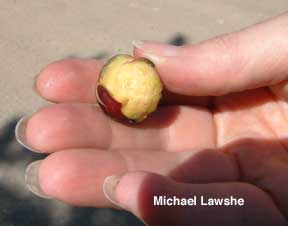
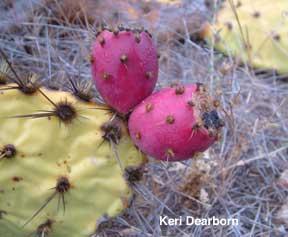
Here are two kinds of native fruit, eaten by island foxes in the fall, Catalina cherry and prickly pear.


The Catalina cherry looks similar to a cherry we might eat, but the fruit is
mostly a big seed. Birds and insects also eat the fruit, nectar and pollen from this important native plant.


But the seed is so big, it takes an animal at least the size of an island fox to swallow the cherry pit and move it to another location.

Prickly pear fruit is large and juicy with many small seeds.


Birds and foxes enjoy eating these fruit as well. The biologists on Catalina Island tell us that when the prickly pear are ripe, they see foxes with their faces stained purple.

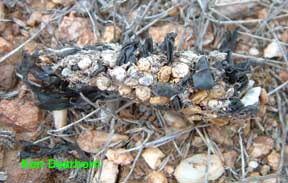
One way we can tell what an island fox is eating is by looking at its scat or droppings. Look at the seeds in this scat and the chunks of thick plant skin. Which fruit was this island fox eating, Catalina cherry or prickly pear?


This fox was eating prickly pear. See other foods eaten by island foxes

Because the island fox swallows the seeds whole and redeposits the seeds far away from the parent plant in its scat, the fox is very important to the native plants on the Channel Islands. The island fox helps plants reseed themselves. This is especially important after events like the fire that burned a large area on Catalina Island this spring.


Wild fire and fires accidentally set by people are a threat to island foxes. It can be hard for them to escape. See Catalina Fire Survivor.


But the effect of the fire lasts longer than the
flames. Many of the plants that provide food and shelter for the island fox were burned. The good thing is, the island fox will help these plants to grow again by scattering the plants' seeds in its scat.

Tuesday, September 11, 2007

Friends of the Island Fox and Jane Goodall


Friends of the Island Fox is proud to join our friend Dr. Jane Goodall at the

5th Annual Day of Peace
sponsored by Roots and Shoots and the Jane Goodall Institute

Come Join in the Fun at this FREE event:

Sunday, September 23
at GRIFFITH PARK (by the merry-go-round)
11 AM - 4 PM

There will be:

Hear Jane Goodall speak and help celebrate the community and conservation work accomplished by local Roots and Shoots youth groups.

Visit Friends of the Island Fox at our booth. We will selling “Friends of the Island Fox” T-shirts and offering stuffed toy foxes for a $10 donation.

We’ll be raising funds for fox radio collars and looking for schools willing to meet the conservation challenge of becoming Fox Ambassadors.

Come by and say “Hi.”

For more information: rootsandshootsla@aol.com
or www.janegoodall.org/peace-day

Monday, August 20, 2007

Milestone for San Miguel Island Fox

In 2000 the population of island foxes on San Miguel Island drop to a mere 15 individuals. While island foxes live on 6 of California's Channel Islands, the foxes on each island are slightly different from each other. With only 15 island foxes left on San Miguel, they were potentially the last of their kind. (Island foxes on 6 different islands.)

Working together, the National Park Service, conservation organizations, scientists and private citizens helped save the San Miguel Island Fox from going extinct.

Listen to the Fox Talk Podcast and hear an interview with biologist Tim Coonan of Channel Islands National Park and his exciting news from San Miguel Island.

CLICK TO HEAR
CHANNEL ISLAND FOX TALK Podcast

Previous Fox Talk Podcast -
  • Fox Talk - July 4, 2007 Pat Meyer President of Friends of the Island Fox & Alan Varsik on the new fox pup born at the Santa Barbara Zoo.

WATCH VIDEO of island foxes being released on San Miguel Island.

Why were the San Miguel Island foxes endangered?
More about island foxes.
Captive breeding to save island foxes.
Most recent reports from all of the islands.

Monday, August 06, 2007

Highlights from the Island Fox Conference 2007

Integrated Island Fox Recovery Team Meeting
June 19-21, 2007

This was the ninth year people concerned with saving the island fox on the Channel Islands have come together to share information and strategies. Some are scientists and biologists working in the field, others represent conservation organizations or government agencies, but everyone has the same goal - assuring the recovery of the four endangered island fox populations and maintaining the health of the two populations on the southern islands.

Reports were provided by each of the land managers or their representatives:
  1. San Miguel and Santa Rosa Islands - Tim Coonan, National Park Service
  2. Santa Cruz Island - Rachel Wolstenholme, The Nature Conservancy
  3. Santa Catalina Island - Julie King, Catalina Island Conservancy
  4. San Clemente Island - Bill Andelt, Department of Fish, Wildlife and Conservation Biology Colorado State University
  5. San Nicolas Island - Grace Smith, U.S. Navy
  6. Alan Varsik, Director of Animal Programs and Conservation at the Santa Barbara Zoo and keeper of the studbook for the captive San Clemente Island fox population in mainland Zoos.
Summary:
Reproduction in the wild has been very successful and endangered island fox populations continue to recover. However, golden eagle attacks reoccurred this spring threatening foxes on Santa Cruz Island. Concerns regarding disease are being raised on Santa Rosa and Santa Catalina. Wild fire appeared as a new threat, while public education became vital in helping to reduce an old threat - vehicular trauma. This past year demonstrated how fragile island fox populations are and how important it is to monitor them for the earliest signs of threats that could be catastrophic.

A Glance at the Numbers
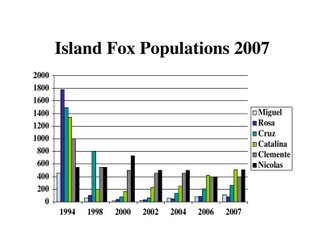
There still is a long way to go to reach normal population numbers, but island foxes are increasing in number on all islands.


HIGHLIGHTS
:

Southern Islands:

San Nicolas Island (~506 foxes in the wild)
Island fox population studies were completed on San Nicolas Island. All foxes handled had blood drawn and were given identification microchips. Some individuals were vaccinated against distemper and rabies viruses. The San Nicolas Island fox subspecies has shown a slight increase in population and has the highest density for any of the islands - 18 individuals per square kilometer in the coastal dune area. The population appears stable and there is no indication of widespread disease.

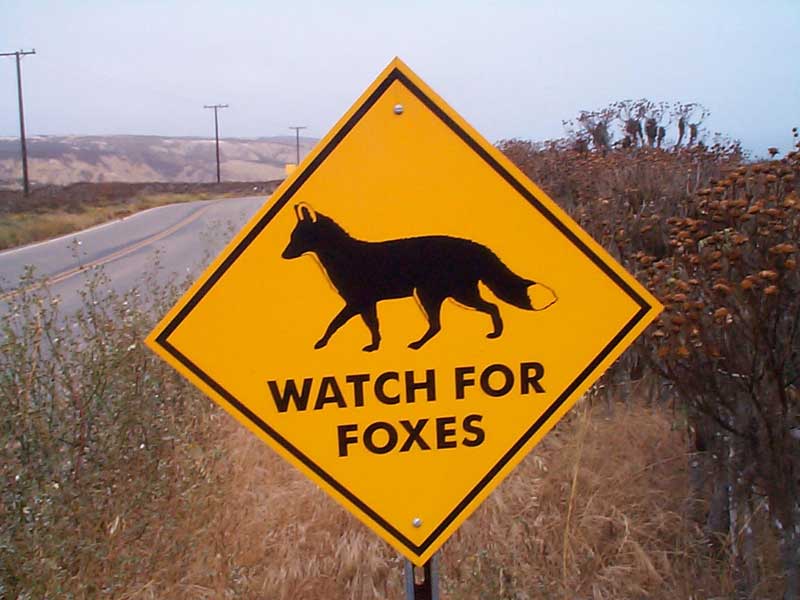
On a positive note: In previous years as many as 20-25 island foxes lost their lives to vehicular trauma. Education programs and fox-warning signs have dramatically decreased car-related fatalities. In 2007, only 2 known and 1 possible island fox death were the result of car strikes.

San Clemente Island (~450 foxes in the wild; 11 - in captivity in mainland zoos)
The territories of 71 radio-collared foxes were studied. Foxes that stayed away from roads had a greater survival rate than those that traveled along the roads. While education programs and signs have helped reduce fox deaths related to car strikes, studies are being done to see if more foxes are hit in specific areas where drivers have less visibility.

On a positive note: Fox fatalities due to cars have numbered only 6 for the first half of 2007. This is a dramatic drop from the 55 fatalities in 2005 and 35 in 2006. During this research, island foxes were observed eating prickly pear cactus fruit. A food item not previously known to be part of their diet.

In mainland Zoos, there are currently ten male island foxes and one female. Unfortunately, all offspring born in the zoos have been male. An island fox was born at the Santa Barbara Zoo April 2007. For more: see new pup and hear an update on our Fox Talk podcast.

Santa Catalina Island (~509 foxes in the wild, 1 in captivity)
The Santa Catalina population continues to recover from the near-catastrophic decline of 1999-2000 and island fox density has increased to 3.31 per square kilometer (compare that to San Nicolas Island above). New challenges to fox recovery are cancerous tumors of the ear and wild fire. The Catalina Island Conservancy is working with the Institute for Wildlife Studies (IWS) and the University of California at Davis to culture the ear mites that appear linked to cancerous ear tumors. All island foxes caught are being closely examined. It is unknown whether the ear mites are being transferred to foxes from feral cats, are specific to Catalina, are the cause of the cancer, or if inflammation caused by irritation from the mites is uniquely causing cancer in this fox subspecies. Further study is needed to understand the connection between the ear mites and the growing percentage of foxes with cancerous tumors. Currently, 44% of the population is showing signs of this disease. It is a very high percentage and analogous to the facial cancer that is threatening the Tasmanian devil.

One island fox was injured, but no island foxes are known to have perished in the wild fire that affected 10% of the island (4,750 acres). For more on the Catalina Fire. Friends of the Island Fox donated funds for radio collars for 5 foxes in the fire area including the injured female fox that was released back into the wild on July 11, 2007.

On a positive note: Over 87% of the island foxes on Santa Catalina have now been vaccinated for canine distemper. Public education and a “pet policy” for the island’s interior have helped to decrease the number of island foxes being killed by domestic dogs. Ten roadside fox-warning signs and a speed-feedback machine in a high fox-density area have helped reduce fox fatalities due to car strikes to just 5 for the first half of 2007. The City of Avalon has formed an Animal Task Force to actively address the feral cat population. New GPS tracking collars are being tried on 10 foxes in the burn area and 10 outside of the burn area to track day-to-day movement.

Northern Islands:

Santa Cruz Island (~260 foxes in the wild, 33 in captivity)
Fall 2006, 56 Santa Cruz island foxes were released back into the wild. Released foxes were recaptured 1-2 weeks later to check on their health and none needed to be returned to captivity. 73 foxes were radio collared. While the initial island fox numbers were up on Santa Cruz Island, spring 2007 turned out to be a very dangerous time, especially for island foxes born in captivity. After nearly a year without a death due to golden eagle predation, it is believed a single golden eagle killed 21 foxes on Santa Cruz Island in a few weeks. Most of the caught foxes were young adults that had been born in captivity. As of the Fox Conference, biologists on Santa Cruz Island were still searching for the golden eagle, with hopes of catching it and relocating it back to the mainland.

On a positive note: All 5,036 feral pigs on Santa Cruz Island appear to have been removed; there has been no sign of a pig since January 2007. Without the food source provided by the pigs there will be less motivation for the golden eagle to stay on the island. Captive breeding of island foxes will continue on Santa Cruz and more releases are hoped to occur later in the year.

Santa Rosa Island (total ~40 foxes in the wild; 37 in captivity)
Island foxes continue to be released into the wild. There have been no deaths due to golden eagles since spring 2006, but several foxes have died from unusual illnesses and injuries from other foxes. The National Park Service plans to maintain 12 individuals at a breeding facility for several more years, but will be releasing the others.

On a positive note: Foxes in the wild on Santa Rosa have been reproducing at high rates.

San Miguel Island (80 foxes in the wild; 2 in captivity)
From the most endangered population, with only 15 surviving individuals, the island foxes on San Miguel are making a strong recovery. In November 2006, 16 foxes were released back into the wild. Watch one of the fox releases on San Miguel Island. Foxes as young as one year old are becoming parents, resulting in 32 pups being born in the wild in 2006. There have been no fox deaths caused by golden eagles in 16 months.

On a positive note: Because the San Miguel Island foxes are doing so well in the wild, ALL releasable individuals will be returned to the wild. (Two elderly females will be cared for at the breeding facility.) The last captive San Miguel Island fox is scheduled to be released July 31, 2007. This marks a milestone in helping this population recover from near extinction. Stay tuned for our next Fox Talk and report on the release from Tim Coonan.

New Insights:

- In 2006, the greatest survival threat to the island fox was vehicular trauma. 35% of known island fox deaths last year were car related. The efforts to reduce incidents with cars are vitally important.

- Monitoring island foxes in the wild is imperative to maintaining healthy populations and the ability of biologists to respond quickly to fox survival threats, whether those threats are introduced predators or disease. Radio telemetry collars are being placed on as many island foxes as possible. Other monitoring methods were also discussed:
  1. Automated telemetry systems that would sweep the island picking up signal from all foxes on a daily basis and reporting to a single terminal. Man hours would be reduced but hardware cost is unknown.
  2. Noninvasive fecal genotyping was presented by Melissa Gray, a UCLA graduate student. Even in the small San Miguel population, DNA markers can be found that allow individuals to be identified from DNA in their scat. Collecting the scat, recording locations and correlating the DNA can provide information on an individual fox’s movements in a way that is noninvasive to the individual animal.
To read the complete Summary of the “NINTH ANNUAL MEETING ISLAND FOX WORKING GROUP” with access to some of the participants presentations go to http://californiaislands.org/_wsn/page3.html

For more on how YOU CAN HELP THE ISLAND FOX.

Friends of the Island Fox, Inc. strongly supports all of the conservation efforts by the various biologists and organizations working on behalf of the island fox. Our goal is to make the community at large aware of the island fox’s situation and to help all of these positive efforts to Save the Island Fox.

Wednesday, July 04, 2007

Channel Island Fox Talk Podcast

Happy July 4th!

Friends of the Island Fox is proud to announce our new

Channel Island Fox Talk - Podcast
.

We hope to bring you interviews and updates with the people that are helping to save the endangered island fox.

Channel Island Fox Talk - Episode 1
:
  • Pat Meyer, President of FIF and the plans for Fox Talk
  • Alan Varsik, Santa Barbara Zoo Director of Animal Programs and Conservation, with an island fox update
CLICK HERE TO LISTEN to
Channel Island Fox Talk

Wednesday, June 27, 2007

Helping Island Foxes Caught in the Catalina Fire

Friends of the Island Fox is happy to announce the gift of five radio collars for foxes in the fire zone on Santa Catalina Island.

A HUGE Thank You to everyone who stepped forward to help when the island fox was in need. Individuals can make a difference and working together we can save these endangered local creatures. Your concern about the island foxes on Santa Catalina Island in the wake of the fire and your generous donations have funded the purchase of five radio collars.

Which foxes will receive the radio collars?

One of the radio collars will go on the small female fox that was injured in the fire. Julie King, Senior Wildlife Biologist for the Santa Catalina Island Conservancy reports:

The injured fox is currently doing very well, and is expected to make a full recovery. Her weight has increased substantially and her paws are healing.

The little female fox has been moved to a pen at the captive breeding facility to continue her rehabilitation. When she is released, she will be fitted with one of the FIF radio collars so that her success in the wild can be monitored.

In order to ascertain if any other foxes in the fire area were injured the Conservancy set up monitoring traps.

15 individual foxes were captured (9 females, 6 males). No injuries were observed, and all captured foxes were at or above average weight.

Three of the caught females showed signs of actively lactating. These females are good evidence of pups that survived the fire. Four foxes trapped in the fire area were also fitted with radio collars donated by Friends of the Island Fox.

Watch four island foxes being released into the wild on San Miguel Island. Make sure you look for their radio collars.


Why are radio collars important?


Radio collars alert biologists not only to a fox’s location but whether or not it is alive. Flying over the burn area, biologists were able to pick up signals from the radio collared foxes and determine they all were alive. On Santa Cruz Island this spring, radio collars provided the first alert that a golden eagle was once again preying on island foxes.


Across the Channel Islands, foxes are raising this year’s pups. For their own protection, these precious new additions to the island fox populations will need radio collars. But each radio collar costs $250. With your donations we can see that more island foxes have radio collars.


Thursday, June 07, 2007

Island Fox Born at Santa Barbara Zoo


(photo courtesy of Santa Barbara Zoo)

Spring is pupping season for the endangered Channel island foxes and each birth is a celebration. While we are waiting to hear how many pups were born out on the islands, the Santa Barbara Zoo happily announced the birth of a new island fox.

The male pup was born April 12, 2007, to a pair of older parents from San Clemente Island. The mother was unable to nurse the tiny pup and therefore it is being handreared by the Santa Barbara Zoo staff.

Fitting in the palm of your hand, the pup weighed only two ounces at birth–less than 2 AA batteries. Staff members attended to feedings six times a day, 24 hours a day, and the pup quickly doubled its weight.

As of Thursday June 7, the latest update is...

“It seemed like he was perhaps premature when he was born and a bit undersized. But within a month or so, he caught up to where he needed to be. He now weighs 1.4 pounds. He still gets two bottles of formula a day but has teeth and is eating solids. He receives our omnivore diet, like the other Island foxes we have, which is a canine mix, sort of like dog chow. We supplement that with small chunks of various vegetables and with baby food (chicken and rice, vegetables with turkey, turkey dinner). We are happy that he’s doing so well and heading towards normal development. We will soon start giving him some time and exposure with our male fox whose mate died recently. Hopefully, they can be companions.”

Currently this brings the total number of island foxes in Zoos to 12. Where can you visit a zoo with island foxes.

Alan Varsik, Director of Animal Programs and Conservation at the Santa Barbara Zoo and FIF board member, adds “The birth of this pup will further enhance our ability to continue to tell the conservation story of the island fox and the unique and special habitat that it lives in.”

Captive breeding has played an important role is reestablishing island fox populations. What is captive breeding? Animal management protocol developed at the Santa Barbara Zoo and other zoo facilities has helped provide valuable information on how to keep island foxes safe and healthy in captive environments.

Working together zoos and conservation land managers are saving this endangered species. Friends of the Island Fox supports their efforts and works with them to educate the public about the island fox and its unique habitat, the Channel Islands.