Showing posts with label what does an island fox eat. Show all posts

Wednesday, November 12, 2014

New Findings on Island Fox Diet

Providing the best opportunity for island foxes to survive in the wild means understanding how they use resources and interact with other species.

Researchers, headed by Brian Cypher, examined the diet of island foxes across all six Channel Islands. Their findings have just been published in Global Ecology and Conservation, 2(2014) 255–66. Their article: “Multi-population comparison of resource exploitation by island foxes: Implications for conservation,” looks at the dietary differences between the six island subspecies, compares seasonal dietary shifts and dependence on introduced species, and recommends considerations for future conservation efforts. (Original paper)

The scientists gathered island fox scat across the six islands during four seasons in 2009. The scat samples were analyzed at California State University-Stanislaus’ Endangered Species Recovery Program office in Bakersfield, CA.


San Miguel Island deer mouse, courtesy of C. Schwemm
The researchers discovered that sixteen species were most frequently found in island fox scat or droppings:
  • Animal Prey - island deer mice, birds, lizards, beetles and beetle larvae, Jerusalem crickets, silk-spinning sand crickets, and grasshoppers
  • Plant Fruits - from toyon, manzanita, prickly pear cactus, and summer holly
  • Introduced Species - earwigs, European snails, fruits of ice plant and Australian saltbush

toyon fruit, courtesy of K. Dearborn animalbytes.net
Like many members of the canine family, island foxes are generalists when it comes to searching for food. They hunt small prey, search out seasonal fruit, but will also eat carrion. To survive on the Channel Islands, island foxes have evolved to exploit all available food resources. The graph below is a simplified comparison of the frequency with which different items appeared in the diet of the six island fox subspecies over a year. (for complete tables and percentages see the original paper, below)


Arthropods in the Diet
An interesting finding is the importance of numerous insect species. Insect parts constituted a “significant proportion of each scat.” The dark purple band in the graphic above depicts the frequency of insects found in scat on each island. On all six islands, beetles were a primary food item year-round (most identifiable were darkling beetles and ten-lined June beetles). Insect prey offers calorie-rich food for little energy expenditure, making them an efficient food source. In addition there was evidence island foxes occasionally ate cockroaches, dragonflies, butterfly caterpillars, and wasps.

European earwigs are now found across North America, including the Channel Islands. This introduced species has become an important food resource for island foxes. Earwigs were a primary food source on San Nicolas, San Miguel, Santa Rosa, and Santa Cruz, and were an important food source on San Clemente in the spring and on Santa Catalina during the fall and winter.

Crustaceans–beach hoppers and various crabs–were occasionally found in scat, demonstrating that some island foxes search for food along shorelines. Introduced European garden snails are now found on several of the Channel Islands and island foxes have included them in their foraging. On the two islands, San Clemente and San Nicolas, garden snails (red band on graphic) have become a primary food resource for island foxes.

Vertebrate Prey 

island fox with 3 deer mice in jaws, courtesy NPS
Many people think of foxes as primarily mammal and bird predators. While the island fox does hunt, these larger prey items appeared less frequently in the diet than you might think. The blue band represents the frequency of deer mouse remains and the green band represents the frequency of lizards (on San Clemente and San Miguel) or birds (on Santa Rosa). At a glance you can see that lizards and birds are not primary food sources on three islands and, on all islands, deer mice are less frequently found in the diet than insects.

Some additional prey animals were found occasionally in fox scat: Catalina California ground squirrels (only found on Catalina), scavenged seal or sea lion, spotted skunk (competitors on Santa Rosa and Santa Cruz), a few black rats, a house mouse, and a bat. While island foxes have been seen catching snakes, no evidence of snake remains was found in 2009.

Native Fruiting Plants

Santa Cruz Island fox in tree searching for fruit
The larger the Channel Island, the greater its plant diversity. The two largest islands, Santa Cruz and Santa Catalina, offer island foxes abundant plant resources. On these two islands, native fruit is a major part of the diet. The orange band on the graphic above shows that, on Santa Cruz, the primary island-fox diet consists of insects and fruit. 

On Santa Rosa, where large introduced browsing animals (deer and elk) continued to degrade native plants until 2011, deer mice were more frequently found in the diet than fruit. As the plant resources on Santa Rosa Island recover, researchers will be watching to see if fruit becomes a greater part of the island fox diet.

While fruit is an important part of the diet for most island foxes, there can be a great deal of difference in the species consumed between islands. The chart below shows the plant species found in the scat with a more than 10% frequency. 


On Santa Catalina and Santa Cruz the number of native plant species is high and no introduced non-native plant species are used frequently by island foxes. The islands that have suffered the greatest alteration of their native plants, San Clemente, San Nicolas, and San Miguel, are currently sustaining island foxes with introduced plant species. Notice on San Miguel, no native plant fruit was found to be consumed by island foxes.

Conservation Implications 

Removing introduced animal species from the islands has eliminated some carrion opportunities for island foxes. However, carrion of large introduced animals is not believed to have ever been a primary food source for these omnivorous canines.

Removing introduced non-native plant species is a major goal across the Channel Islands, but this study reveals an important caution. Island foxes are consuming introduced ice plant and the garden snails it harbors. Before invasive ice plant and Australian saltbush can be removed, native fruiting plants will need to be reestablished so that island foxes have enough resources to survive.

Future Study
This study provides the first comprehensive look at island fox diet across the Channel Islands and through the seasons. However, it represents one year: 2009. Native plant resources fluctuate with annual weather. Climate change and drought are impacting native plants and fruit production. Have impacts to plant resources in 2013 and 2014 challenged survival for island foxes and their smaller prey, which are also dependent on plant foods? Have island foxes altered their diet in the face of drought? (Parasite threat from food source on San Miguel) Can conservation measures to restore the natural ecosystem be managed so that resources are not compromised for island foxes? And will island foxes expand their diet as their ecosystem is restored? Continued study of island fox diet is vital to informed conservation decision making.

Download the original Research Paper “Multi-population comparison of resource exploitation by island foxes: Implications for conservation”

Tuesday, March 06, 2012

Climate and Island Foxes

Santa Catalina Island
Across the six islands that are home to island foxes (Habitat), pairs like Tani and Tiptu are breeding and finding an appropriate den site. Island fox pups are typically born in late April.

Like all wild animals, island fox reproduction is impacted by the amount of local resources–food, water and territory. As endangered populations of island foxes have recovered, there have been several years where female foxes have had large litters of pups. Typically two pups are born in a litter, but when resources are abundant there can be as many as five pups.

Because the recovering endangered populations were small, there was little competition for territory and food. In the mid-2000s, it was not unusual for island foxes on San Miguel to have litters of three to five pups. With large litters of offspring the San Miguel Island population, that had nearly gone extinct in 2000 when there were only 15 surviving individuals, was able to exponentially increase each year.  Graph

But severe climate can greatly reduce the resources available to island foxes. 2007 was the driest year on record in southern California since National Weather Service records began in 1878; less than four inches of rain fell. The lack of rainfall reduced the plant foods on the islands which reduced the deer mice, insects and bird life. Without winter rains, the Catalina cherry, native currants, toyon and other fruit producing plants produced less fruit for the foxes to eat. Less food, meant fewer island fox pups were born or survived. The winter seasons of 2008 - 2011 averaged approximately 12 inches of rain, the low side of normal, but still enough that Channel Island wildlife flourished.
 

This winter season is showing early signs of drought. As mid-March approaches the Los Angeles area has received less than six inches of rain. This year if spring rains do not arrive, we may see fewer island foxes born and fewer that will survive. Climate fluctuations act to moderate animal and plant populations, but climate change means greater weather extremes. Drought in 2012 could make it more difficult for young island foxes like Tani to successfully reproduce and could slow down the recovery of endangered island foxes.

Thursday, July 21, 2011

Island Fox Pups Grow Up

courtesy of NPS volunteer Inge Rose
During the warm days of summer, island fox pups grow up fast. Through rough and tumble play with their siblings, they learn to stalk and pounce. Small paws pin a sister or brother to the ground. They practice grabbing hold with their sharp little teeth and shaking. All of these behaviors are important skills for hunting.

Stalking and pouncing are the actions used by island foxes to catch island deer mice, birds, lizards and snakes, and even some insects, like grasshoppers. Island fox catches a snake.


Digging with agile, clawed paws enables island foxes to catch Jerusalem crickets and beetles. Insects are probably the first prey that most island fox pups hunt on their own. (See the Twitter adventures of Tani, a young island fox grows up, in the right side panel.)


Both parents help to teach the island fox pups where and how to find the variety of food they will need to survive on the rugged Channel Islands. As summer continues, fruit will ripen on a variety of native plants, bringing new food opportunities to the growing island foxes.

Link to a video of island fox pups on Catalina Island sent to FIF by an island fox friend. Watch for the three pups, just like in Tani's family.

Thursday, June 02, 2011

Island Fox and the Jerusalem Cricket

Island fox pups on the Channel Islands are now about 6 weeks old and about to emerge from the family den. Friends of the Island Fox's Twitter fox, Tani, is learning what to eat. Both the mother and father island fox bring food to their pups. Follow Tani's tweets in the black Twitter box on the right.


Island foxes are omnivorous, they eat both plant food and other animals. Insects are fairly easy to find and they are an important part of an island fox's diet. Jerusalem crickets are a favorite food for island foxes. This large insect can be found in the soil under native plants and it provides a protein-rich meal. Jerusalem crickets are also known as earth babies, ninõs de la tierra or potato bugs (but they don't eat potatoes).
Jerusalem cricket
The island fox, the Catalina cherry and the Jerusalem cricket all depend on each other. The island fox eats the Jerusalem cricket, but it also eats the fruit of the Catalina cherry. The seeds of this plant are too big for the finches and small birds to swallow. But the island fox does swallow some of the seeds and helps to disperse the cherry seeds across the island so new plants can grow. Fox Scat The Jerusalem cricket lives under the Catalina cherry plant and eats some of its roots and dead leaves on the ground. It is a decomposer helping create healthy soil where new plants can grow. The island fox, the Catalina cherry and the Jerusalem cricket are just a small part of the interconnected web of plants and animals on the Channel Islands.


The island fox has evolved to have very pointed teeth so it can pick up small insects. The teeth act like tweezers carefully picking up grasshoppers and crickets, while leaving twigs and leaves behind.


Island foxes also eat the native island deer mice, some small birds and their eggs. As summer comes to the island, fruit will start to play an important role in the what the foxes eat.


Follow along with Tani on Twitter or on Facebook as an island fox grows up.

Saturday, November 29, 2008

Island Fox Origins and the Truth Behind Eagle Diets

Are you looking for information on the origin of island foxes; how they evolved and their biology? Perhaps you’ve heard people question whether golden eagles were actually preying on island foxes. Answer your questions with information from the primary sources.

Friends of the Island Fox is honored to make
information available from top researchers and biologists working with the island fox and the Channel Island ecosystem.


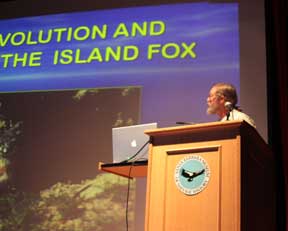
Paul W. Collins, Curator of Vertebrate Zoology at the Santa Barbara Museum of Natural History recently gave two presentations from his accumulated research at an Island Fox Workshop sponsored by the Santa Barbara Museum, Ty Warner Sea Center, Santa Barbara Zoo and Friends of the Island Fox. Both of these presentations are now available through links from the Friends of the Island Fox Educational Research Library.

  • Origin, Evolution and Biology of the Island Fox - looks at genetic, morphological, and archeological data regarding island fox origins and the basics of island fox biology, size, behavior, reproduction and diet

  • Diet of Bald and Golden Eagles on the Channel Islands - looks at the role eagles played in the decline of island foxes on the Northern Channel Islands and compares the diet of bald and golden eagles on the islands by examining prey remains in nests.

These two slideshow presentations can be found in the Educational Research Library

Under: “Island Fox Fact Sheets & Current Research

Under: “Links to Research Sources

Friends of the Island Fox is endeavoring to create the Internet’s most current library of information regarding island foxes. If you are a researcher or biologist and would like us to link to or host your published work relating to the island fox or the Channel Island ecosystem, please contact the Friends of the Island Fox Webmaster at islandfoxnews@gmail.com

Tuesday, September 25, 2007

Island Foxes Eat Fruit

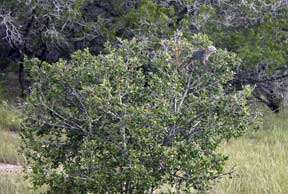
Can you find the fox in the tree?

Look high on the right-hand side.


Food can be hard to find if you are an island fox on the California Channel Islands. To reach a greater variety of foods, island foxes are excellent climbers. Their front feet are bigger than their back feet. Being able to climb allows the fox to reach birds and their eggs, but it also lets them eat fruit high in trees.


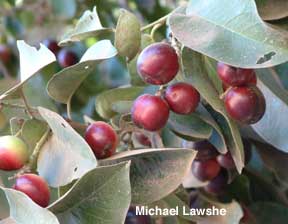
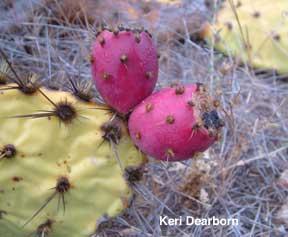
Here are two kinds of native fruit, eaten by island foxes in the fall, Catalina cherry and prickly pear.


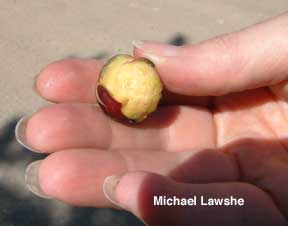
The Catalina cherry looks similar to a cherry we might eat, but the fruit is
mostly a big seed. Birds and insects also eat the fruit, nectar and pollen from this important native plant.


But the seed is so big, it takes an animal at least the size of an island fox to swallow the cherry pit and move it to another location.

Prickly pear fruit is large and juicy with many small seeds.


Birds and foxes enjoy eating these fruit as well. The biologists on Catalina Island tell us that when the prickly pear are ripe, they see foxes with their faces stained purple.

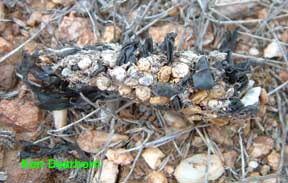
One way we can tell what an island fox is eating is by looking at its scat or droppings. Look at the seeds in this scat and the chunks of thick plant skin. Which fruit was this island fox eating, Catalina cherry or prickly pear?


This fox was eating prickly pear. See other foods eaten by island foxes

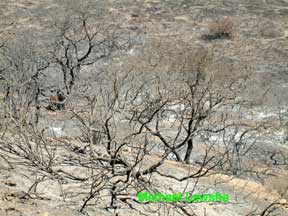
Because the island fox swallows the seeds whole and redeposits the seeds far away from the parent plant in its scat, the fox is very important to the native plants on the Channel Islands. The island fox helps plants reseed themselves. This is especially important after events like the fire that burned a large area on Catalina Island this spring.


Wild fire and fires accidentally set by people are a threat to island foxes. It can be hard for them to escape. See Catalina Fire Survivor.


But the effect of the fire lasts longer than the
flames. Many of the plants that provide food and shelter for the island fox were burned. The good thing is, the island fox will help these plants to grow again by scattering the plants' seeds in its scat.