Island foxes love their native fruit! Across the Channel Islands native fruit sometimes makes up over 50% of the island fox's diet.
Researcher Todd West observed this island fox eating island redberry. From toyon and lemonade berry, to Catalina Island cherry and prickly pear cactus, if the native fruit is red, island foxes eat it.
Thank you, Todd, for sharing your photo with Friends of the Island Fox. More of Todd's photos. More island foxes eating.
Do you have a great photo of an island fox? Share it with Fox Foto Friday - islandfoxnews@gmail.com
 |
| Santa Catalina Island |
Across the six islands that are home to island foxes (Habitat), pairs like Tani and Tiptu are breeding and finding an appropriate den site. Island fox pups are typically born in late April.
Like all wild animals, island fox reproduction is impacted by the amount of local resources–food, water and territory. As endangered populations of island foxes have recovered, there have been several years where female foxes have had large litters of pups. Typically two pups are born in a litter, but when resources are abundant there can be as many as five pups.
Because the recovering endangered populations were small, there was little competition for territory and food. In the mid-2000s, it was not unusual for island foxes on San Miguel to have litters of three to five pups. With large litters of offspring the San Miguel Island population, that had nearly gone extinct in 2000 when there were only 15 surviving individuals, was able to exponentially increase each year. Graph
But severe climate can greatly reduce the resources available to island foxes. 2007 was the driest year on record in southern California since National Weather Service records began in 1878; less than four inches of rain fell. The lack of rainfall reduced the plant foods on the islands which reduced the deer mice, insects and bird life. Without winter rains, the Catalina cherry, native currants, toyon and other fruit producing plants produced less fruit for the foxes to eat. Less food, meant fewer island fox pups were born or survived. The winter seasons of 2008 - 2011 averaged approximately 12 inches of rain, the low side of normal, but still enough that Channel Island wildlife flourished.

This winter season is showing early signs of drought. As mid-March approaches the Los Angeles area has received less than six inches of rain. This year if spring rains do not arrive, we may see fewer island foxes born and fewer that will survive. Climate fluctuations act to moderate animal and plant populations, but climate change means greater weather extremes. Drought in 2012 could make it more difficult for young island foxes like Tani to successfully reproduce and could slow down the recovery of endangered island foxes.
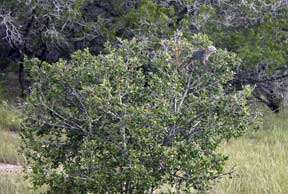
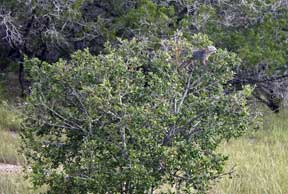 Can you find the fox in the tree?
Look high on the right-hand side.
Food can be hard to find if you are an island fox on the California Channel Islands. To reach a greater variety of foods, island foxes are excellent climbers. Their front feet are bigger than their back feet. Being able to climb allows the fox to reach birds and their eggs, but it also lets them eat fruit high in trees.
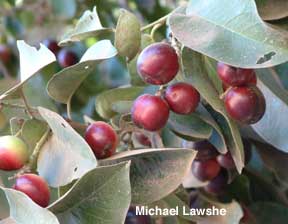
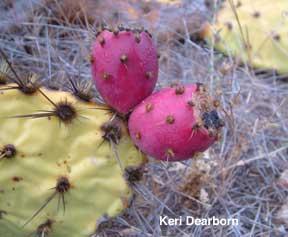
Here are two kinds of native fruit, eaten by island foxes in the fall, Catalina cherry and prickly pear.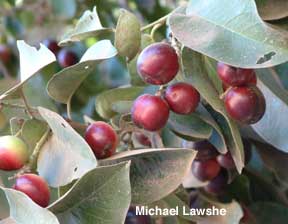
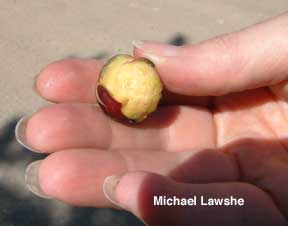
The Catalina cherry looks similar to a cherry we might eat, but the fruit is mostly a big seed. Birds and insects also eat the fruit, nectar and pollen from this important native plant. 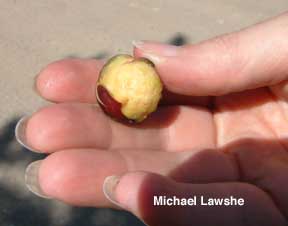
But the seed is so big, it takes an animal at least the size of an island fox to swallow the cherry pit and move it to another location.
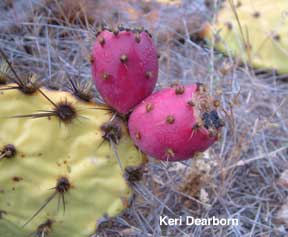 Prickly pear fruit is large and juicy with many small seeds.
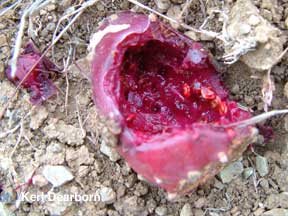 Birds and foxes enjoy eating these fruit as well. The biologists on Catalina Island tell us that when the prickly pear are ripe, they see foxes with their faces stained purple.
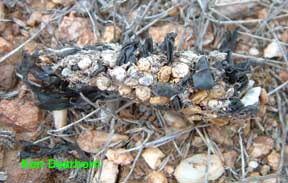
One way we can tell what an island fox is eating is by looking at its scat or droppings. Look at the seeds in this scat and the chunks of thick plant skin. Which fruit was this island fox eating, Catalina cherry or prickly pear?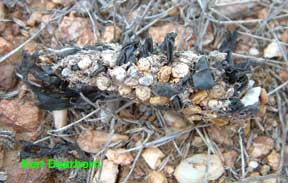
This fox was eating prickly pear. See other foods eaten by island foxes
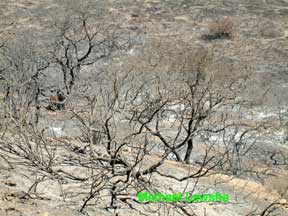
Because the island fox swallows the seeds whole and redeposits the seeds far away from the parent plant in its scat, the fox is very important to the native plants on the Channel Islands. The island fox helps plants reseed themselves. This is especially important after events like the fire that burned a large area on Catalina Island this spring.
Wild fire and fires accidentally set by people are a threat to island foxes. It can be hard for them to escape. See Catalina Fire Survivor.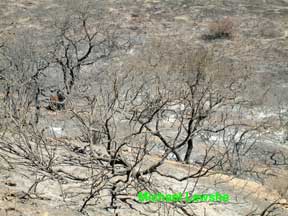
But the effect of the fire lasts longer than the flames. Many of the plants that provide food and shelter for the island fox were burned. The good thing is, the island fox will help these plants to grow again by scattering the plants' seeds in its scat.