Wednesday, July 21, 2010

Visiting the Island Fox

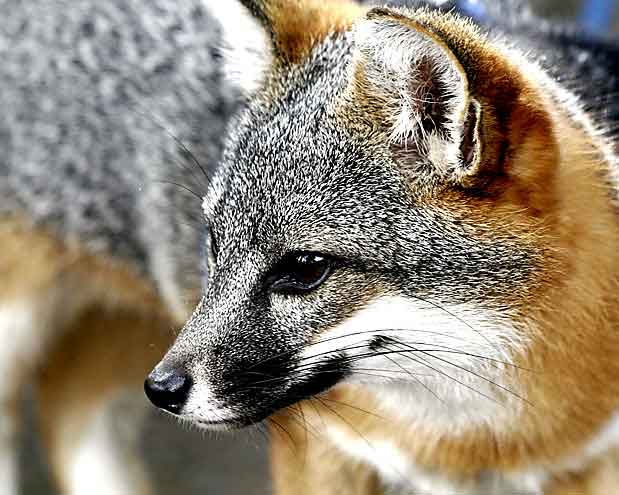
Summer is a great time to visit the California Channel Islands. As island fox populations recover from disease and predation by golden eagles that nearly pushed them to extinction, more people are having the opportunity to see island foxes in the wild. (Why island foxes are endangered)
Observing an endangered animal in the wild is a rare experience and it comes with responsibility. Here are a few important tips to remember when encountering an island fox:
  1. Do Not Feed Them - Island foxes are smart and they know people have food. But feeding an island fox can threaten its life. Human food is not good for island foxes and does not provide the necessary nutrition. Wild foxes, especially juveniles, that become dependent on handouts never learn to forage for natural food and can die when their free food source disappears.
  2. Store Food Appropriately - Island foxes are clever. Even campers who do not intentionally feed island foxes can sometimes become a source of food. We have heard cases of a single island fox taking an entire plastic bag with eight hamburger buns right off of a picnic table. Plastic and food wrappers can appear to be food and cause injury to island foxes. (see island fox and fishing hook) The NPS campgrounds offer food lockers to secure food items.
  3. Island Foxes Are Wild Animals - Even though the island foxes are cute and friendly, they are wild animals. A woman feeding an island fox on Santa Catalina Island was bitten. The Center for Disease Control can require that any fox that bites a person be euthanized to insure that it is not carrying rabies.
  4. Leave Your Pets At Home - Island foxes can acquire diseases from domestic dogs and cats. The distemper virus, which can be carried by dogs, caused the death of over 88% of the island foxes on Catalina in the late 1990s. As wild animals, island foxes can also carry diseases that are dangerous for pets–parvovirus, coronavirus and internal parasites. Some of these diseases can be transferred simply through animal droppings and do not require animal-to-animal contact. While many island foxes are vaccinated for rabies and distemper, not all of them are. It is illegal to take pet dogs or cats on to any of the islands that make up Channel Islands National Park. On Catalina Island dogs are required to be leashed. Several island foxes have been attacked and killed by free-roaming domestic dogs.
  5. Watch for Wildlife on Road - The increase of island foxes on Santa Catalina means that more foxes are being seen along the islands few roads. Because of their small size and gray coloring, island foxes can be hard to see especially at twilight. The number one cause of death for island foxes on Catalina is being hit by a car. Roadsigns
Southern Californians have worked very hard to save the island fox from extinction. The reward is that now we can see island foxes in the wild again. If we all act with respect and responsibility toward our friend the island fox, we can insure their continued success toward sustainable populations.

On Santa Cruz Island and Santa Rosa Island, in Channel Island National Park, visitors can see island foxes around the campgrounds, landing areas, and along hiking trails. Channel Islands National Park

On Santa Catalina Island, the increase of island foxes means that more individuals are being seen around the town of Avalon and the golf course. Island foxes can also be seen in the island’s interior. Catalina Island Conservancy

If you can’t travel out to the Channel Islands, you can visit island foxes in several local zoos.

Photos courtesy of Kevin Pease.

Tuesday, June 22, 2010

12th Annual Meeting of the Island Fox Recovery Group

Last week biologists and land managers from across the Channel Islands came together to report on the current status of California's endangered island fox.


The news in 2010 is very positive. Conservation efforts are paying off in increased population numbers for all four of the endangered subspecies–San Miguel, Santa Rosa, Santa Cruz and Santa Catalina Islands. But even as there was discussion on the criteria needed to support a possible delisting from endangered status, the importance of monitoring these vulnerable populations was brought home.

In the early months of this year, 11 island foxes on Santa Rosa were killed by an unnatural predator, a golden eagle. A juvenile golden eagle was spotted on several occasions, but to date it has not been caught. The deaths of the endangered animals came to light because of individual island foxes that were radio collared and monitored.

Across the islands radio collars enable biologists to quickly locate a fox that has died. When the animal doesn't move at all for six hours the radio collar changes it signal to a "mortality" pattern. This timely knowledge enables the biologists to immediately find the carcass and begin to determine the cause of death. The sooner the cause of death is understood, the quicker steps can be taken to protect other island foxes.

Radio tracking collars play a vital role in monitoring island foxes and have helped these tiny animals to make an unprecedented recovery for an endangered mammal species. This is why Friends of the Island Fox has worked to raise funds to place radio collars on individual island foxes. (See Radio Collars)

As we distill down our notes from the Annual Conference and verify our information with the island fox biologists, we will be posting an update for each of the 6 subspecies of island foxes.

While there are still challenges ahead for endangered island foxes, population numbers are up and community awareness is growing. Friends of the Island Fox thanks all of you who have played a role in raising funds, educating the public, and working on island fox conservation. You have played an important role in bringing the island fox back from the brink of extinction.

Sunday, June 13, 2010

Friends of the Island Fox at Placerita Nature Center

What is an island fox doing in a capture cage?


California's Channel Island fox is making a strong comeback thanks to the joint efforts of government agencies, private organizations and the general public. Conservation efforts include annual capture of island foxes to count their numbers and provide them with health checks. Join Keri Dearborn, V.P. of Education for Friends of the Island Fox at:

Placerita Nature Center
8:30 - 9:30 AM,
Saturday June 19th


Keri will explore why the island fox became endangered and what actions were taken to save them. She will also demonstrate how field biologists use radio tracking to monitor island fox health and welfare. The group will hike a short way into the chaparral for an opportunity to see how island foxes are trapped annually across the islands. Kids will have the opportunity to engage in the steps biologists use to preform a health check on an island fox in the field.

Following there will be a guided hike, lead by representatives from the Placerita Nature Center.

Join us for a fun opportunity to learn about field biology and the island fox in a beautiful natural setting. This event is FREE and for ages 5 and up.

Tuesday, June 08, 2010

A Box For A Fox - Blackstock Middle School Students Help Island Fox

Sixth grade students from Blackstock Middle School in Ventura, California reached out to help endangered island foxes. They made special donation boxes with the saying "A Box for A Fox."


Together the students in Mr. Mortenson's and Ms. Krause's classes collected enough money to help vaccinate island foxes against fatal diseases–rabies and canine distemper.

Blackstock Middle School joins a growing list of schools across southern California that have become Island Fox Ambassador Schools. Each class, grade or school in the Island Fox Ambassador Program participates in three steps:
  1. Learning about the island fox
  2. Sharing that knowledge with others
  3. Participating directly in supporting island fox conservation

Friends of the Island Fox - Island Fox Ambassadors
  • Westridge School, Pasadena
  • Hancock Park Elementary School, Los Angeles
  • Buena High School Environmental Club, Ventura
  • St. Cyril’s of Jerusalem School, Los Angeles
  • Santa Clara Elementary, Ventura
  • Santa Barbara Charter School, Santa Barbara
  • Carpenteria Family School, Santa Barbara
  • Blackstock Middle School, Ventura
For more information about the Island Fox Ambassador School Program contact us at islandfoxnews@gmail.com

Thursday, May 27, 2010

More Island Fox Talk


What would an island fox say if it could talk?

Listen in as Friends of the Island Fox V.P. of Education Keri Dearborn returns to the EverGreen Show, an environmental education radio program produced for California State University, San Bernardino's Internet radio station.

They'll be discussing why the island fox was vulnerable to dramatic population decline and how the population is recovering.

The EverGreen Show airs:
  • Tuesday, June 1 from 6-6:30 PM
  • and replays Thursday, June 3 from 6-6:30 PM.

Listen to the Interview The interview as it aired is available in two parts:

Thursday, May 20, 2010

Important Message from Friends of the Island Fox

Friends of the Island Fox has something important to tell you.


Please note that as of May 20, 2010 our phone number has changed.


The new phone number is (805) 228-4123.

For information on school visits or community programs about the endangered island fox, please use our new phone number or e-mail us at:

admin@islandfox.org
or
islandfoxnews@gmail.com

Thursday, May 06, 2010

It's Pupping Season for Island Foxes

Across the Channel Islands a new generation of island foxes are being born. Each litter of pups are an important step toward full recovery for the endangered populations on San Miguel, Santa Rosa, Santa Cruz, and Santa Catalina Islands.


Island foxes reproduce only once a year, in the spring. This year's weather has been good for native plants which suggests we could see a large number of healthy island fox pups.


With small parents, island fox pups, or kits, are very tiny at birth. They weigh approximately the same as two AAA batteries and would easily fit in the palm of your hand.

Young foxes are very vulnerable and are born in a den. The den provides protection from weather and other animals
for the first weeks of their lives. Here the mother feeds them milk until they start to eat solid foods. The father brings food back to the den both for his mate and the pups.

Unlike most other canines, island foxes don't appear to dig. They must find a den site either in a hole dug by another island species, (spotted skunk, ground squirrels, etc.) or a naturally made hollow under dense vegetation, tree roots or rocks.
Pups born in March or April are emerging from dens on the islands in May. Both parents care for the youngsters, helping to feed them and teaching them how to find food. This pup is with its father, an older male, in the fog on San Nicolas Island.

Island foxes grow up fast and by September they will be ready to leave their parents and strike out on their own. Annual counting of island foxes doesn't occur until the fall to insure that pups are weaned and somewhat independent. During trapping and counting, island foxes also undergo annual health checks. Radio monitoring collars are replaced or put on and island foxes are given vaccinations against distemper and rabies.

Last year biologists recorded impacts on island foxes from climate change. Continued drought reduced fruit on the islands' native plants. The combination of increased temperatures, low rainfall and reduced food resources caused the litter size born to each pair of island foxes to be small. A normal island fox litter is 2-3 pups. In good years, litters of up to 5 pups are possible. Unfortunately, the pups born in 2009 also had reduced birth weight, impacting their survival.

This year's normal rain levels may bring more positive pup numbers. Biologists are hoping for numerous healthy pups to continue the island fox's successful recovery.


Monday, April 26, 2010

How Do Island Foxes Protect Themselves?

We recently received an interesting question from a student:

How do island foxes protect themselves?

The island fox protects itself like any member of the dog family.
  • It can run away. An island fox can run fairly fast, even leaping as it sprints. (watch M67 run as he is released into the wild) Because of its small size, an island fox can run under and through dense chaparral and grasses.
  • Its coloration also helps the island fox hide, this is called cryptic coloration or camouflage.
  • It can climb, either up steep rocks or even up into trees to escape.
  • It can bark to scare away a threat. (video of barking island fox)
  • It can bite. It has sharp teeth and can bite like any small dog.
Why do they need to protect themselves?

Island foxes protect themselves against each other. During the breeding season, pairs of island foxes defend the territory where they are raising their pups. This island fox probably lost its ear in a scrape with another island fox. (photo courtesy of Geoffrey Grow)

Prior to 500 years ago and the arrival of European people, island foxes did not have any kind of a predator from which they needed to defend themselves. Today island foxes need to defend themselves from people, pet dogs, feral cats (cats that have gone wild), cars (on San Nicolas, San Clemente, and Santa Catalina Islands), occasionally golden eagles and introduced raccoons (on Santa Catalina Island).

Already this year, an island fox was killed by a pet dog on Santa Catalina Island. Feral cats are currently being trapped and relocated away from San Nicolas Island to protect island foxes and other endemic island species. Friends of the Island Fox works with the islands where foxes are hit by cars. One of our Ambassador Schools
raised funds to add signs along roads to encourage motorists to watch for island foxes.

Disease introduced either by domestic dogs and cats or raccoons accidentally introduced to the islands can be fatal to island foxes. A $10 donation can vaccinate an island fox against rabies and distemper. Friends of the Island Fox works with Channel Islands National Park and the Catalina Island Conservancy to help fund vaccinations. Private donors and Ambassador Schools have played a vital role in providing vaccinations for endangered island foxes.

You can help protect island foxes. Your donation can go a long way toward educating the local community and providing vaccinations for island foxes.

Thursday, April 15, 2010

Celebrate Earth Day With The Island Fox


This weekend you can help celebrate Earth Day with the endangered island fox. Friends of the Island Fox will be at:

Los Angeles Zoo and Botanical Gardens
Saturday and Sunday, April 17 & 18
10 AM - 4 PM

The L. A. Zoo will be highlighting California species as part of their Earth Day celebration. Friends of the Island Fox will be on hand to offer special activities both days:

  • 11:30 AM - Radio Tracking Demonstration
  • 12:00 PM - Island Fox Exhibit Talk
  • 2:30 PM - Island Fox Exhibit Talk
  • 3:00 PM - Radio Tracking Demonstration

We will be located near the island fox exhibit in the heart of the Zoo. Come by, say ‘Hello’ and meet an island fox.

For L.A. Zoo hours and directions: www.lazoo.org

Both the L.A. Zoo and the Santa Barbara Zoo played an important role in developing husbandry methods that contributed to the success of captive breeding for the island fox. Saving endangered species depends on knowledge about dietary needs and reproductive behavior. Zoos can play an important role in increasing scientific understanding and providing public education about endangered species. Come out and support the zoo’s conservation efforts

Monday, March 08, 2010

Talking About Island Foxes


What would an island fox say if it could talk?

That is the question Friends of the Island Fox V.P. of Education Keri Dearborn will be exploring on the EverGreen Show, an environmental education radio show produced for California State University, San Bernardino's Internet radio station.

Listen in and hear why the island fox is so important to the island ecosystems and what you can do to help endangered island foxes.

The EverGreen Show airs:
  • Tuesday, March 9 from 6-6:30 PM
  • and replays Thursday, March 11 from 6-6:30 PM.

CLICK HERE to Listen to the interview from CSUSB Coyote Radio