Showing posts with label young island foxes. Show all posts

Saturday, December 16, 2023

Fox Foto Friday - Radio Collars on San Miguel Island Foxes

 Look who's getting radio tracking collars!

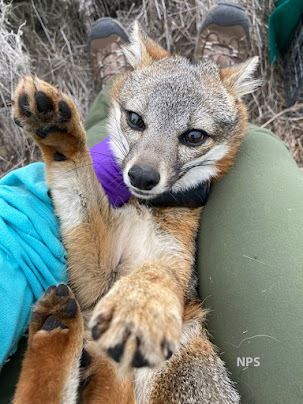
Island foxes born on San Miguel Island in April of 2023 are now adults and large enough to wear radio collars. Three were fitted with radio collars this week. The mask helps the island fox remain calm while the collar is being fitted.

Channel Island National Park biologists report this year's young adults are looking very healthy.

Watch them for yourself as they are released with their new radio collars.


Your donations to Friends of the Island Fox 

help to fund radio collars, vaccinations, and research 

into island fox health and behavior


Wednesday, December 15, 2021

A San Miguel Island Fox Gets A Radio Tracking Collar


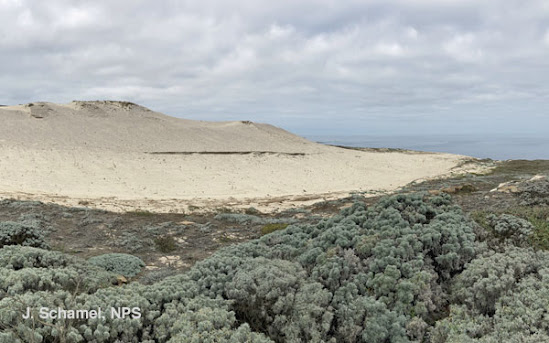
San Miguel Island is a windswept, treeless place. The most northwest of the California Channel Islands, and part of Channel Islands National Park, few people visit, but this island provides vital habitat for the rare San Miguel Island fox.

This fall during fox counting, a young male island fox was captured in this area of dunes and sage. Few pups were captured in 2021 on any of the Channel Islands; continued drought conditions reduced available food resources resulting in fewer pups being born. 

Male M515 is one of the few island fox pups documented in 2021. Following his health check, he was fitted with a radio-tracking collar funded by Friends of the Island Fox. This radio collar will enable biologists to monitor his survival and track his movement. 

As a young adult, M515 has yet to establish his territory. Will he stay in this dune area or roam to more shrubby parts of the island?

Will he stay close to the coastline or will he find a home in the island's interior? Which area will provide the greatest quantity and quality of resources? How large of a territory will he patrol? These are important questions that researchers are trying to answer.

Young male island foxes are on the move in autumn and winter. Is his priority finding a territory or a mate? We don't really know. As a youngster, however, he will have competition for territory from other males. The population of island foxes on San Miguel Island was estimated at 277 individuals in 2020. (2021 population estimates are currently being calculated.) Because the current population is down from an estimated high of 453 in 2019 (an average rainfall year), M515 may have an easier time finding a territory of his own.

His island is a beautiful, if rugged place to live. If he's lucky, winter rains will bring renewed plant growth and prey species. He might find a mate and father pups before his first birthday in April.

Through it all, his radio collar will allow biologists to track his survival and see where he ends up on the island. If you donated to Friends of the Island Fox - M515 might be wearing a collar you helped provide! 

Every Donation Helps Island Foxes

More about San Miguel Island

Monday, November 07, 2011

A Radio Collar for Tani, the Island Fox!

photo courtesy of Kevin Schafer
Across the Channel Islands young island foxes are striking out on their own. They have spent the summer playing with their siblings and growing up. Their parents have taught them to hunt and find native fruit. Island fox food. Now, it is time for them to search out their own territory.

Tani, the young island fox that we have been following on Twitter, has left her parents and faced some challenges. Tani. A few days ago she tangled with another adult island fox female and was injured. Island foxes depend on the resources in their territory and they will protect their territory from other island foxes. Tani was lucky to only be injured on her ear, but the infection she suffered left her weak and vulnerable. Fortunately, on the Channel Islands biologists in the field are able to provide some medical care to wild island foxes. (Channel Islands National Park, Santa Catalina Island and the U.S. Navy islands)

When Tani received medical treatment she also was fitted with a radio collar to track her movements. The radio collar will provide information on how far she travels from her parents home range and enable biologists to understand where a young fox establishes its own territory. 

Across the islands young island foxes face challenges surviving without their parents. In the past two months several young island foxes have been hit by cars on Santa Catalina Island. Territory along roads can be attractive, but inexperienced youngsters don't know how to avoid cars. Support Watch for Foxes Signs.


This autumn Friends of the Island Fox funded our 72nd radio collar to track island foxes on the Channel Islands. Radio collars provide information on island fox movements and also alert biologists when an island fox has died. If the animal stops moving for a 6-8 hours, the collar gives off a special mortality signal. With the aid of the radio collar, biologists can locate the island fox's body and determine if the animals death marks a potential threat to other island foxes. Response to introduced disease and unexpected predation by golden eagles can happen rapidly when biologists have specific information from animals in the field. Radio collars on island foxes have helped the endangered populations on San Miguel, Santa Rosa, Santa Cruz and Santa Catalina Islands to make unprecedented recoveries.


photo courtesy of Kevin Pease
Tani is wearing her new radio collar and hopefully it will help biologists track her recovery and her activities as she becomes an adult island fox and establishes her own territory.

Follow Tani on Facebook and on Twitter.