Monday, March 08, 2010

Talking About Island Foxes


What would an island fox say if it could talk?

That is the question Friends of the Island Fox V.P. of Education Keri Dearborn will be exploring on the EverGreen Show, an environmental education radio show produced for California State University, San Bernardino's Internet radio station.

Listen in and hear why the island fox is so important to the island ecosystems and what you can do to help endangered island foxes.

The EverGreen Show airs:
  • Tuesday, March 9 from 6-6:30 PM
  • and replays Thursday, March 11 from 6-6:30 PM.

CLICK HERE to Listen to the interview from CSUSB Coyote Radio

Thursday, January 28, 2010

Friends of the Island Fox Funds #50

Today is a Landmark Day.

Friends of the Island Fox is proud to announce the funding of our 50th radio collar!


Despite the difficult economic times, people like you have stepped forward to play an active role in saving the endangered island fox.

Radio collars play an important role in allowing biologists to track fox behavior, monitor fox health and determine threats to fox survival. Radio collar on fire fox

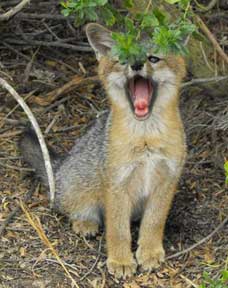
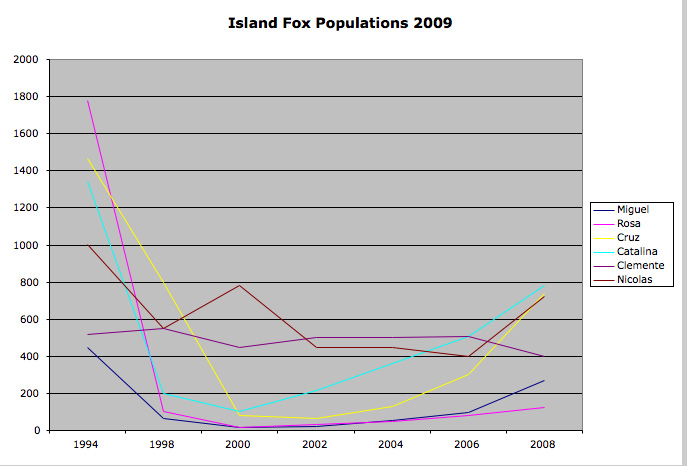
In 2000, four populations of island foxes teetered toward extinction. Why island fox's were endangered

Today, with your help and support, island fox populations are recovering. Current populations

Because island foxes live only on the Channel Islands, like all island species they are small populations that can be quickly impacted by the introduction of disease, ecosystem imbalance and potentially, climate change.

Your support of island fox conservation efforts is vital to the survival of this endangered California species.

As we begin 2010, Friends of the Island Fox thanks all of you for renewing your effort to insure that this keystone species survives into the future.

You can help fund additional radio collars, vaccinations and conservation efforts by CLICKING on the Donate Now buttons at the top of the page.

Tuesday, December 08, 2009

Give the Gift of Saving a Species

photo courtesy of NPS volunteer Inge Rose

Across San Miguel, Santa Rosa, Santa Cruz and Santa Catalina Islands, island fox numbers are rising. Populations that hovered just above extinction, with just 15 individual animals, are climbing toward recovery.


This Holiday Season you can give the gift of helping support island fox recovery.

$250 funds a radio-collar for an island fox

To date Friends of the Island Fox has funded 47 radio-tracking collars for monitoring wild island foxes. Radio collars provide important information on island fox welfare, including the first information on threats from disease or golden eagle predation. Radio Collars.

When you sponsor a radio collar you receive information about an individual island fox, its history and current life in the wild. You are actively playing a role in island fox conservation.


$100 supports Friends of the Island Fox education programs in schools
This year alone, FIF provided FREE educational programs to 2,000 students from 3rd grade to college. The next generation is the vital connection to sustaining wild populations of island foxes. FIF in schools. Interaction with students and community.

$50 funds rabies and distemper vaccinations for 5 island foxes

Diseases transmitted from domestic pets or introduced animals pose a serious threat to island foxes. Each year island foxes are given Health Checks. In order to maintain viable populations in the face of another disease outbreak, 80 - 100 island foxes need to be vaccinated on all 6 islands.

You can play an active role in island fox recovery by donating to Friends of the Island Fox. Give a gift that makes a difference and helps to save the endangered island fox.


Tuesday, November 10, 2009

How Can You Help the Island Fox?


You don’t have to be on the Channel Islands to help the island fox and all of the wild creatures that live here in Southern California.

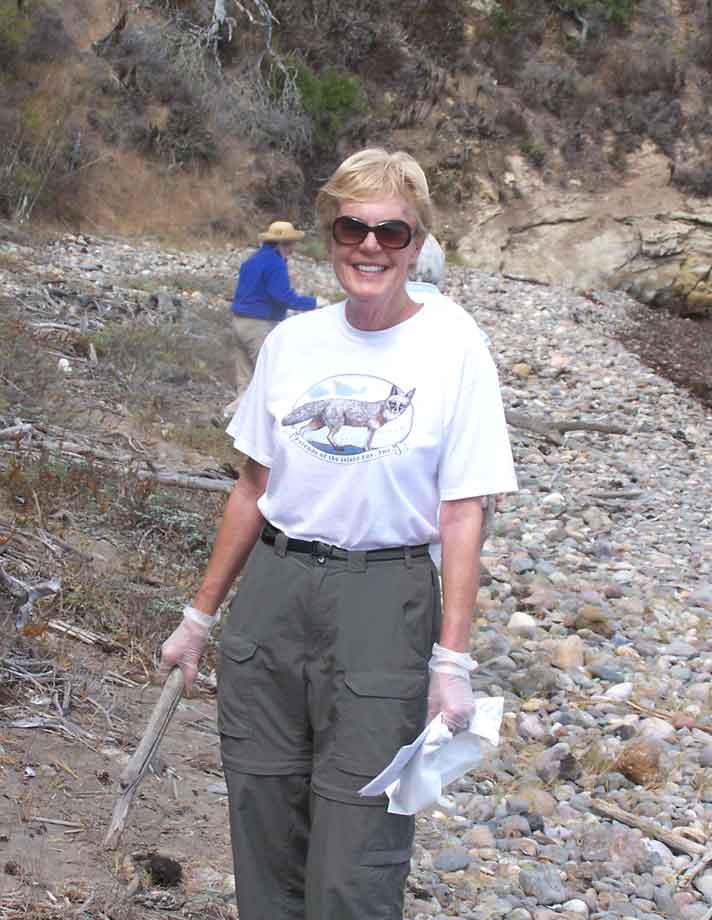
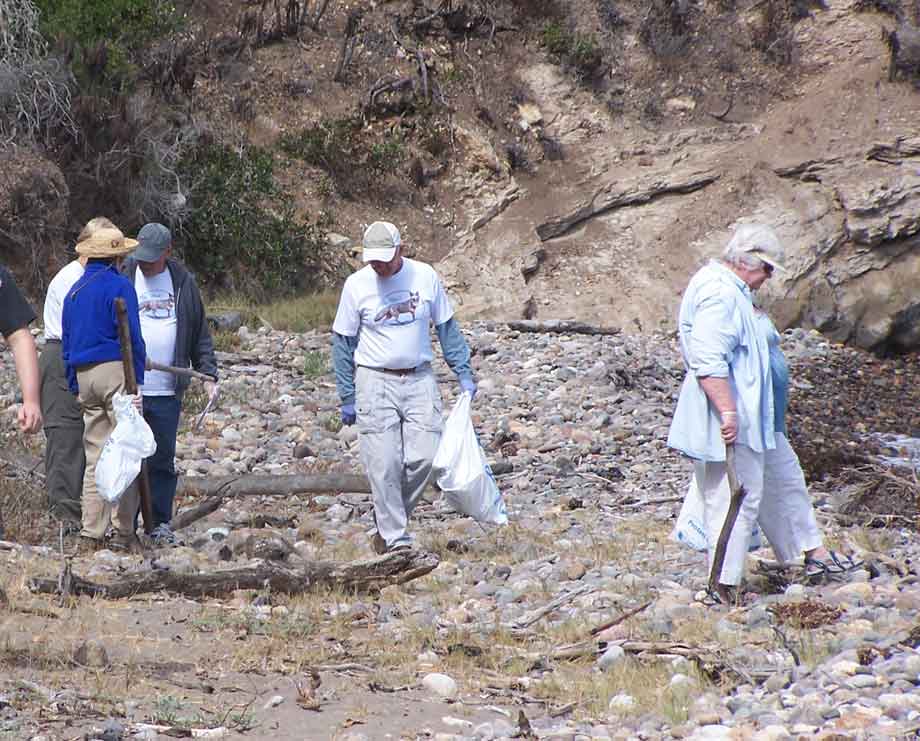
In September, volunteers from Friends of the Island Fox joined volunteers from the Channel Island Park Foundation to clean up trash on Santa Cruz Island. Through our joint efforts we picked up over 400 lbs. of debris that had washed up on the island or had been left behind by human activities.


Pieces of metal and glass pose a threat to the feet of wild animals. Fishing lures and cast off human items can be dangerous to island foxes. (See The Island Fox and The Fishing Hook)

Plastics that travel down gutters and storm drains to the sea are eaten by a wide range of animals. When these bits of plastic enter the food chain, they threaten not only animals, but humans as well. So the next time you see a piece of trash in the gutter or on the ground, don’t just walk on by. Stop and pick it up. Your simple act could save a young sea bird, a sea turtle or even an island fox.

Our thanks to the Island Fox Friends that participated in this year’s clean-up: Bob Colli, Keri Dearborn, Betty Dunbar, Michael LawshĂ©, Jerry Leach, Gerri Martin, Pat Meyer and Mary Renaker.

A special thank you to Carol Pillsbury of the Channel Island Park Foundation and Russell Galipeau of Channel Islands National Park for including FIF in this important event.

For MORE ways to HELP THE ISLAND FOX.

Tuesday, September 15, 2009

Images of Island Foxes


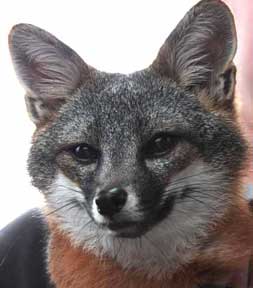
Photos of endangered island foxes are few and far between. This island fox in profile from Santa Cruz Island is courtesy of photographer Kevin Schafer.

Video of island foxes is even harder to come by. The following links will take you to video of and about Channel island foxes.


ARKive.org is an international library of images capturing the natural world. This remarkable resource links to Friends of the Island Fox and we are returning the compliment.

ARKive.org island fox page
http://www.arkive.org/island-fox/urocyon-littoralis/

Their video includes night vision of an island fox going into a sea gull colony and taking an egg.

Channel Islands National Park also has a slide show of island fox photos including pups.

CINP Island Fox page
http://www.nps.gov/chis/naturescience/island-fox.htm

Return to Santa Cruz Island


In 2005, Kevin Pease encouraged his school to become the first Island Fox Ambassador School and they raised funds for one of Friends of the Island Fox's first radio collars.

During the summer of 2006, Kevin and his family went to Santa Cruz Island and he sent us his Island Journal complete with an island fox photo.


Kevin returned to Santa Cruz Island again this summer and sent us the following update:

Santa Cruz Island Journal - Summer 2009

Not even after 5 minutes of having been on Santa Cruz Island did I see an island fox, casually strolling through the campgrounds. This reoccured every day for the seven days I was out there. Some days there would be multiple foxes together, looking for food or picking a fight with the skunks. I would have to say though the last night there was the best. Venturing out at around 10 PM for a night hike, I came across two adults and about three pups. The pups were curious, running up and sitting in front of my feet staring up at me, it was a wonderful experience. What was remarkable and joyous about this trip was the difference in population. On the first trip to the islands I saw few foxes but now, they are all over the place. The hard efforts to help these foxes is really showing! - Kevin

In 2007 the island foxes on Santa Cruz Island were all returned to the wild. Recovery Milestone in 2007

A major factor in the rapid recovery of the endangered island fox has been the active participation of school children and community members in island fox conservation efforts.

You can help support island fox conservation by contributing to Friends of the Island Fox.

During Fall health checks, funds are needed to vaccinate wild island foxes against rabies and distemper. Funds are also needed to radio collar island foxes to monitor the health of the population.

Friday, July 24, 2009

Island Foxes by Any Other Name

photo courtesy Kevin Schafer

Island foxes (Urocyon littoralis) are unique to the Channel Islands off the coast of southern California. But as we travel to different schools and communities we have run across a variety of names for foxes.

Foxes are the most diverse group of canines with various species found all over the world. There are arctic foxes that turn white in winter to blend in with the arctic snow. There are kit foxes and fennec foxes, adapted for deserts in North America and Africa, respectively. The red fox is found world wide (some populations being natural and others introduced by people).

Because various kinds of foxes are found all over the world, a word for fox appears in many languages. Here are a few that students have provided:

  • zorro - Spanish
  • daeb - Arabic
  • Yu woo - Korean
  • renard - French
  • fuchs - German
  • volpe - Italian

Foxes belong to the subfamily of animals called canines which includes wolves, dingos, African wild dogs, jackals, coyotes and domestic dogs. Canines originally evolved in North America. Many of the canines that we know today, however, are members of the family that migrated from North America to other parts of the world millions of years ago. Even the gray wolf is from a line of canines that migrated to Asia and then returned to North America.

The coyote (Canis latrans) and the gray fox (Urocyon cinereoargenteus), the ancestor of the island fox, never left North America. They are ancient species that lived side-by-side with saber-toothed cats and mammoths.

Island foxes have lived on the Channel Islands for at least 6,000 years. Friends of the Island Foxes urges you to explore our website and learn more about the island fox. The island fox only lives in one place in the world, on the California Channel Islands and each island has a different subspecies. To continue to survive into the future, the island fox needs your help.

A $10 donation will vaccinate an island fox against the threat of introduced disease: distemper and rabies.

To Donate CLICK on the Pay Pal or Network for Good button in the upper right corner.

Wednesday, May 13, 2009

The Island Fox Goes to School


March through May is a busy time for island foxes, biologists, and Friends of the Island Fox.

Spring brings fox pups that need to be fed by their parents and counted by biologists in the field. It also is the time for Earth Day events.

For the second year, Friends of the Island Fox participated in the Rio Vista Elementary School Environmental Awareness and Career Day. FIF educators introduced fourth grade students to the island fox, a local endangered species. Students participated in a hands-on activity replicating an island fox health check. They became field biologists weighing, evaluating and recording health data. (More on island fox health checks)

Education can be exciting and fun. Check out Rio Vista Elementary's exciting event on Santa Clarita Valley TV

http://www.scvtv.com/html/scvnews-current.html

The first step in saving an endangered species is educating the local community. Education can come in a variety of approaches, activities and interactions. Friends of the Island Fox is devoted to educating the public, young and old, in creative and relevant ways. The more you know about the island fox, the better neighbor you can be to this endangered species.

To contact Friends of the Island Fox about classroom or community programs:
(805) 386-0386

admin@islandfox.org or islandfoxnews@gmail.com

Tuesday, April 14, 2009

Two Special Dates for the Island Fox


April offers two special days to see island foxes. Both the Los Angeles Zoo and the Santa Barbara Zoo are celebrating special events for Earth Day that shine a spotlight on California’s endangered island fox.


Los Angeles Zoo and Botanical Gardens

Saturday and Sunday, April 18 & 19

“Celebrate Earth Day at the Zoo”

The L. A. Zoo will be highlighting California species during their Earth Day celebration. Friends of the Island Fox will be on hand to offer special activities both days.

  • 11:30 Radio Tracking Demonstration
  • 12:00 Island Fox Exhibit Talk
  • 1:00 Radio Tracking Demonstration
  • 1:30 Fox Health Check (See what the biologists do in the field and give a helping hand)
  • 2:00 Island Fox Exhibit Talk in Spanish

We will be located near the island fox exhibit in the zoo. Come by, say ‘Hello’ and meet an island fox.
More on L.A. Zoo hours and directions:
www.lazoo.org


Santa Barbara Zoo

Celebrate the opening of California Trails
Saturday, April 25, 2009

Come meet one of our favorite island foxes, Finnigan.

The Santa Barbara Zoo is opening their new California Trails exhibit complex. This $6 million construction project includes a renovation of the Channel Island fox exhibit and Condor Country - only the second zoo exhibit in America to display California condors.

Joining the island foxes and California condors are exhibits displaying desert tortoises, bald eagles and Rattlesnake Canyon. Rattlesnake canyon “showcases endangered reptiles and amphibians found in the Los Padres National Forest, including the red-legged frog. The [Santa Barbara] Zoo works in the field with the U. S. Forest Service to monitor this species, which has been decimated due to nonnative predators, such as bullfrogs, pollution, and habitat loss due to development. Western toads, now also facing habitat loss, are also displayed along with rattlesnakes, salamanders, newts, and other frogs.”

The renovated area also includes “the new Explore Store [which] demonstrates how buying "green" directly helps protect the habitats of these creatures, both around the world and in California.”

The new exhibits at the Santa Barbara Zoo offer an exciting opportunity to meet California’s native creatures. The special celebration on April 25th will also offer the chance to see Finnigan, the ambassador island fox. More about Finnigan.

For more information, hours and directions:
www.santabarbarazoo.org

Come out and support these two zoos that have played an important role in aiding the island fox.

Wednesday, April 08, 2009

Island Fox Questions

Friends of the Island Fox is committed to connecting the community with the problems and issues concerned with protecting island foxes. When we receive questions, we want to bring you answers directly from the people in the field with these endangered animals. We received a great question from a student and were able to get a first-hand response.

hi this is a student from balboa middle school. i loved the presentation we got on Wednesday March 11, 2009. the video they showed us was very cute!!!! i have a few questions:
  • how often do the island foxes get hurt?
  • when you take them to the hospital does it hurt the foxes?
  • how long was it until you let the foxes free from cativity?
from a true inpired girl, Anastasia p.s. what are the people , who help the foxes????

Sara is an Island Fox Technician for Channel Island National Park on Santa Rosa Island, she answered:


Hi Anastasia,

Good questions.

Most of the injuries to island foxes have come from mate aggression during breeding (winter/spring) season. This was more common in our captive [breeding] population but has been documented in the wild population as well. These injuries include minor bites and tears around the ears, to more significant trauma involving rips, bites and abscesses (infected pockets under the skin) in various places. The foxes are actually fairly aggressive and scrappy toward one another during this time of the year.

Other common injuries include foxtails stuck in an eye or ear and torn toenails, these usually don't require any additional treatment beyond the time of observance. And, every now and then with the captives, we would find a case of ringworm, exciting.

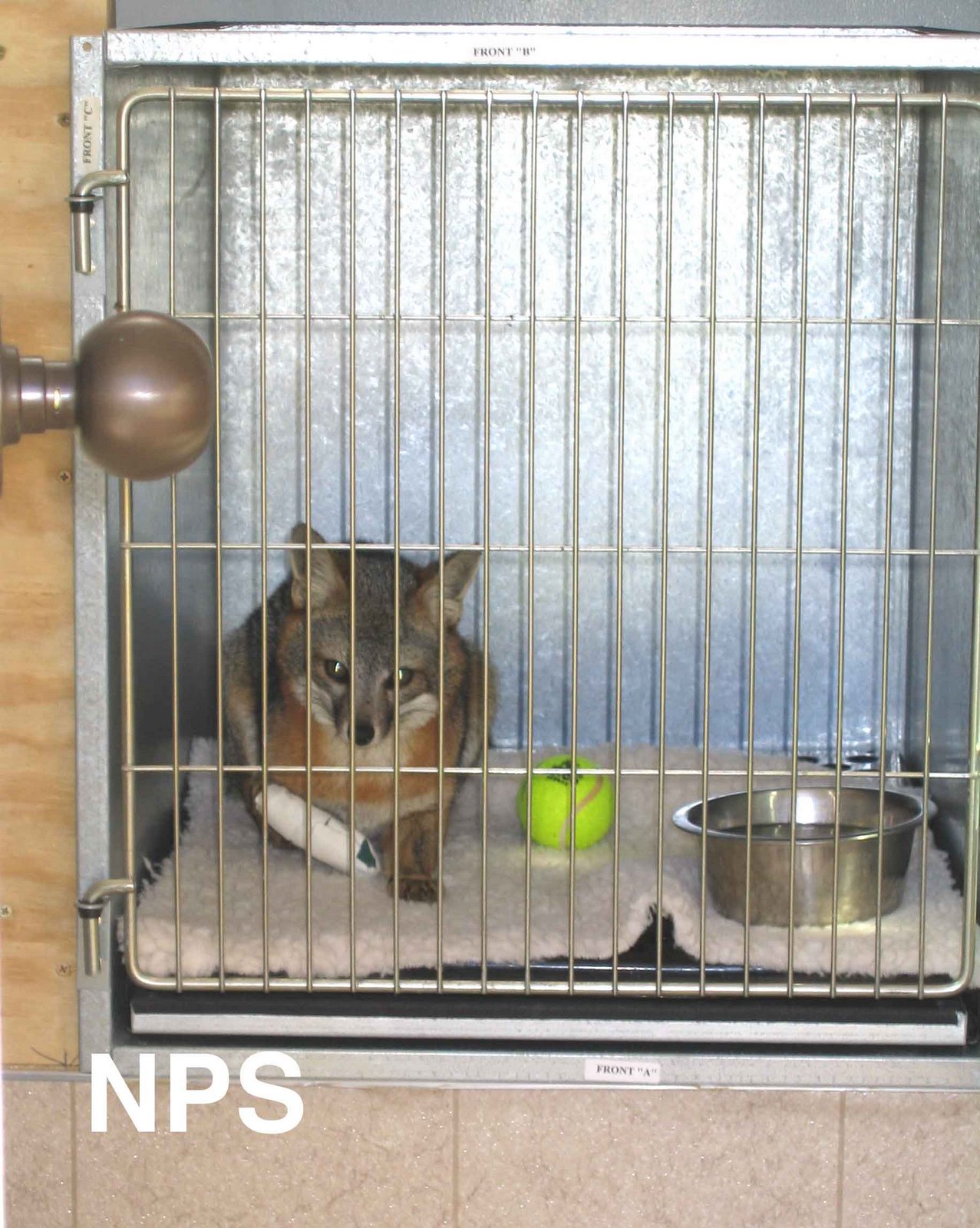
Each island has a clinic called a "Foxpital" and is set up like a small veterinary clinic with all the necessary equipment to properly care for an ill or injured fox. When a fox requires care, they are brought into the foxpital and given an initial assessment by one of our staff fox biologists, from there a veterinarian is consulted to determine the best course of treatment. If necessary, we have veterinarians on call who can come out and perform emergency procedures on the island. Each animal's stay is dependent on the nature and extent of their injury. Most often, if an injury requires a stay in the foxpital, the animal is in for a week or so. In very rare cases we have cared for animals as long as three months.

Thanks for your interest in the island fox,

Sara

Island Fox Technician
Channel Islands National Park
Santa Rosa Island


Other stories on injured foxes:
Fox and the Fishing Lure
Burnie Boots

Your Donations to Friends of the Island Fox support conservation efforts across all of the Channel Islands to help island foxes.