Tuesday, May 29, 2007

Fire Foxes - Catalina Island Fox Update

Early reports on island foxes surviving the Catalina Island fire are very hopeful.

Ann Muscat of the Catalina Island Conservancy

“Habitat damage is extensive and will require further
analysis. There is no obvious loss of larger wildlife (eagle chicks in nest, deer, bison, foxes). Our staff was able to fly over the Island and monitor for 48 radio-collared foxes and all signals were picked up. This is very good news. Foxes are in the pupping season, however, and staff are now surveying the burn area for females in their dens to see if pups are surviving. A number of iron wood and oak groves were lost, but until we can overlay our vegetation maps onto the fire area, we will not know the full extent of the loss of rare and endangered plant species.”

Julie King, Senior Wildlife Biologist, Catalina Island Conservancy adds the following fox details about four foxes that were sighted in the burn area. Three were non-injured, but one female fox with “severe burns to all four paws, severe dehydration and malnutrition” was captured. The “fox is being treated in the Middle Ranch Veterinary Clinic under the direction of Institute for Wildlife Studies veterinarian Dr. Winston Vickers. An additional fox was captured in the process, a large healthy male, was given a workup, fitted with a radio collar and released at the location of capture.”

As of Saturday, May 26, 2007:

We'll be setting traps all weekend to get a better assessment of potential injuries in the burn area. I'll be sure to keep you updated if we get any additional injuries. On a happy note, the fox we are treating is responding very well to treatment. When caught, she was only 1.2kg and she's now up to 1.7kg. She's eating well and so far there is no sign of infection in her paws. It has only been 5 days, but her feet do appear to be slowly healing. She has a long road ahead of her, but she's doing much better than we had initially expected. Dr. Vickers will be out on June 4th to do an assessment. - Julie King

As the information from the Catalina fire area becomes available we will post it here. Friends of the Island Fox is rallying our resources to see what we can do to help the Catalina island foxes. These island fox survivors of the fire need our support more than ever.

Photos of the Catalina Island fire

Thursday, May 24, 2007

Friends of the Island Fox Supports Integrated Fox Conference

Saving the endangered island fox requires the efforts of caring and knowledgeable individuals from around the country. The Integrated Fox Conference brings all of these people together once a year.

The third week in June, biologists and scientists will meet with conservation professionals and land managers for each of the Channel Islands to report on the current status of all six subspecies of island fox and to make conservation decisions for the upcoming year.

To support the efforts of the Integrated Fox Conference, this year Friends of the Island Fox is providing a grant to the U. S. National Park Service to help offset the transportation costs of the four veterinarians that provide care to the foxes on the islands and who do veterinary laboratory work during the year. These devoted people help maintain the health of island foxes and move quickly when disease threatens this endangered population.
  • Karl Hill, DVM - Santa Barbara Zoo
  • Karen Blumenshine, DVM - Wildlife Services Associates
  • Winston Vickers, DVM - Institute for Wildlife Studies
  • Linda Munson, DVM-PMI - University of California, Davis
The Integrated Fox Conference is sure to bring to light unexpected successes and new conservation challenges regarding the island fox. FIF will post a summary of the Conference, including an update on the status of island foxes on Catalina Island after the fire.

FIF thanks all of you who have donated toward island fox conservation during the first half of 2007. Your contributions have made this grant possible.

See last year’s
  • Highlights from the Integrated Fox Conference, June 20-22, 2006Highlights 2006
  • Mid year population UPDATE

Thursday, May 17, 2007

Fire and Foxes on Catalina Island - Update

Just a quick Update on the island foxes on Santa Catalina Island.

Friends of the Island Fox has been in communication with the Catalina Island Conservancy (CIC). The few individual island foxes that are in captive care for health problems and Tachi, CIC's education fox, are all fine. (For more about Tachi)

As of Thursday May 17, the fire is completely out. Now biologists are beginning the task of trying to locate radio collared island foxes to determine if there were any fatalities due to the fire.

CIC will make their full report at the Fox Conference in mid June. A complete summary of all island fox conservation successes and issues will be posted here following the Conference. (most recent look at island foxes on Santa Catalina Island)

Thank you for your concern about the island foxes in the face of this recent fire threat.

Monday, May 14, 2007

Island Fox Festival at Los Angeles Zoo


Come out and support island fox conservation at:


The 4th Annual Island Fox Festival

Saturday May 19th at
the Los Angeles Zoo & Botanical Gardens

Friends of the Island Fox will be helping the L.A. Zoo celebrate the island fox at this day-long event.

Special Activities and Presentations will take place from 10 AM - 4 PM

There will be:
  • A Keeper Talk at the Island Fox exhibit and an Enrichment Presentation
  • Friends of the Island Fox “Fox Talks” throughout the day
  • Fox Radio-Tracking demonstrations
  • Fox Crafts & Conservation Activities
  • Face Painting and more

All activities are included in general admission to the Zoo.


Come out, enjoy a day at the Zoo and meet an island fox. Stop by the FIF booth and say, “Hello.”

Educators and Group leaders: FIF representatives will have information on how you can have Friends of the Island Fox come and give a FREE presentation at your school or community group. We are also looking for enthusiastic schools and groups to participate in our Fox Ambassador Program.


Why is this toy island fox wearing an actual island fox radio collar?


Island foxes need radio collars before they are returned to the wild. Click here for more on Radio Collars and how you can help.

Current Update on the Griffith Park Fire: As of 4 PM 5/9/07 - All is well at the Zoo. All animals are safe and the greatest danger appears to be past. For the most up-to-date information go to www.lazoo.org

Friday, May 11, 2007

Fire and Foxes on Catalina Island

As of 6 PM Friday May 11 the wildfire on Catalina Island appears to be 35% contained. The current situation is an unfortunate example of the delicate nature of island habitats.

Officials from the Catalina Island Conservancy report:

Bald Eagles
The bald eagle chicks that recently hatched on the island are safe. The nests are on the eastern end of the island and not near the fire area. (more on the new bald eagle chicks)

Island Foxes
Currently the effect of the fire on wild island foxes is unknown. Radio collars on individual foxes will be vital in locating individual animals and determining if any have been overwhelmed by the wildfire.

This is another situation that highlights the importance of radio collars on the endangered island foxes on San Miguel, Santa Rosa, Santa Cruz and Santa Catalina Islands. Island foxes are currently having their pups on the islands. This new generation will soon need radio collars.

You can help make sure all endangered island foxes have radio collars.

More on the Catalina island foxes.

As details regarding the Santa Catalina island foxes and the Catalina Island Conservancy become available Friends of the Island Fox will provide updates through our Island Fox News e-mails. To be added to the e-mail list contact us at islandfoxnews@gmail.com

For photos and an article in the Los Angeles Times CLICK HERE

Friday, May 04, 2007

Bald Eagle Update: Spring 2007

The recovery of island fox populations on the northern islands is linked to the successful return of bald eagles to the Channel Islands. (Why bald eagles went extinct on the Channel Islands in the 20th century)

Bald eagles stake out territory for themselves and help to keep out golden eagles which prey on unsuspecting island foxes.

This spring has been filled with wonderful successes for nesting bald eagles on the Channel Islands.


Each Channel Island is a delicate ecosystem. Restoring habitat and supporting a healthy bald eagle population is vital to saving the endangered island fox.

Island foxes are presently having their pups out on the islands. Stay tuned for Updates from the Fox Conference in June and come support Friends of the Island Fox at the Los Angeles Zoo & Botanical Gardens’ Fox Festival Saturday May 19th.

Wednesday, April 11, 2007

Six Islands, Six Different Island Foxes


Island foxes are found on six of the eight Channel Islands off the coast of southern California.
(Where does the island fox live? What is an island fox? Experiencing Santa Cruz Island )

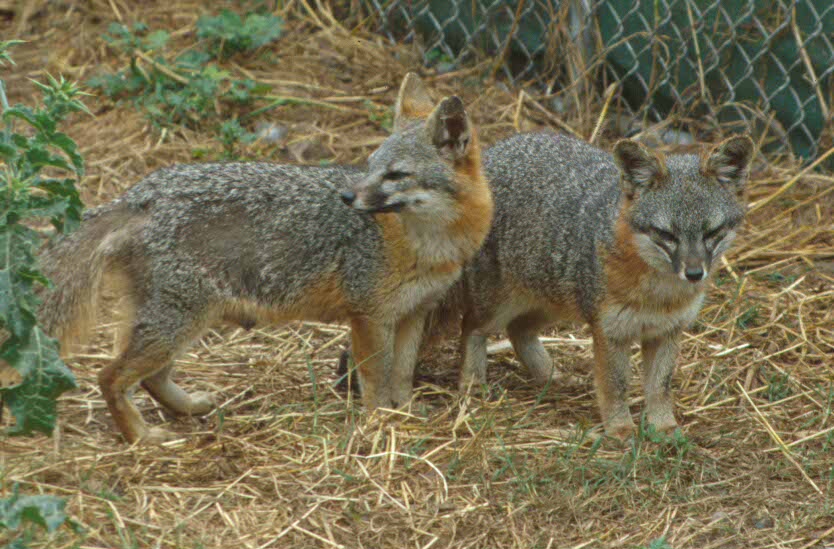
A pair of San Clemente island foxes at the Santa Barbara Zoo. (Where can you see an island fox?)


Island foxes all have similar lifestyles and habits:
  • About the island fox
  • Males consistently weigh more than females
  • What do island foxes eat? Their favorite food is the deer mouse. (Each island has its own subspecies of deer mouse.)
  • Island foxes are good climbers, which allows them to reach bird nests and eggs
  • Island fox pups are born in the spring. Island foxes usually have 2-3, but may have as many as 5 pups


But the foxes on each island are slightly different from each other. The differences are great enough that each island has its own subspecies of island fox.

National Park Service biologist Tim Coonan points out that the San Miguel island fox weighs significantly more than the island foxes on the neighboring island of Santa Rosa.

A San Miguel island fox being fitted for a radio collar.

A pair of Santa Rosa island foxes. (Experiencing Santa Rosa Island)


Tail length is a specific physical trait that varies between the different subspecies. Studies show island foxes from different islands have more or less tail vertebra.

In descending order:
  1. San Nicolas Island 22 tail vertebra
  2. Santa Catalina Island 21 tail vertebra
  3. San Clemente Island 19 tail vertebra
  4. Santa Rosa Island 19 tail vertebra
  5. Santa Cruz Island 19 tail vertebra
  6. San Miguel Island 15 tail vertebra
Between the shortest-tailed island foxes on San Miguel Island and the longest tailed on San Nicolas Island there is a difference of 7 vertebra. Interestingly, Schoenherr, Feldmeth and Emerson point out in Natural History of the Islands of California (Univ. of California Press 1999) that the island foxes on San Nicolas Island appear to have the least amount of genetic diversity. This suggests the San Nicolas population may be descended from as few as a single pair of foxes.


All of the island fox populations are vulnerable because they live in such limited habitats. Small population numbers mean that a single introduction of a disease, like the canine distemper outbreak on Santa Catalina Island, can threaten an entire island fox population. (Santa Catalina island fox Update) Catastrophic events, like the arrival of an unexpected predator–the golden eagle–can cause near extinction.

The island foxes on San Miguel Island were reduced to only 15 individuals because of predation by golden eagles. This genetic bottleneck means future San Miguel Island foxes will be more genetically alike than they were in the past.

Conservation and research efforts are necessary across the islands to preserve and protect the six subspecies of island foxes.

Donations to Friends of the Island Fox supports conservation and education efforts to Help Save all six subspecies of island fox. See how your donations can make a difference.

Tuesday, March 13, 2007

FIF at Moorpark Spring Spectacular 2007


March 17 & 18
March 25
March 31 & April 1


Spring is in the air. Island foxes are getting ready to have their litters of pups across the Channel Islands. Come help us celebrate.

Over the next three weekends Friends of the Island Fox will be out at America's Teaching Zoo participating in their Annual Spring Spectacular at Moorpark College. (10 AM to 5 PM daily)

We’ll be raising awareness about the island fox and its Channel Island home and making connections with the community and educators.

The Spring Spectacular is a great family outing with animal shows, a Kid’s Fun Zone and more. Visit their Website

Representatives from Friends of the Island Fox are happy to participate in Earth Day Fairs and school conservation events. You can help spread the word about the endangered island fox–its conservation challenges and successes–by inviting FIF to your community or school event.

For more information or to schedule a visit from Friends of the Island Fox contact us at

(805) 386-0386

admin@islandfox.org

Sunday, March 04, 2007

Island Fox Goes to the Fair

28th Annual Los Angeles Environmental Education Fair
Saturday, March 20 from 9 AM to 4 PM

“A greener tomorrow, today!”

Friends of the Island Fox (FIF) will be at the L.A. Environmental Education Fair (LAEEF) this coming Saturday at the L.A. County Arboretum and Botanic Garden in Arcadia.

“The LAEEF focuses on young people. ... [especially] hands-on activities that engage students in a natural science experience...”


Come out and join FIF for a fun and informative day. FIF representatives will be talking to students and teachers about the island fox and our free outreach programs.

Fox in the Classroom - FIF representatives visit schools with an interactive presentation about the island fox and its Channel Island habitat. (grades 2 - college; Santa Barbara, Ventura & Los Angeles counties)

Fox Ambassador Program - Classes and schools can participate in the Fox Ambassador Program. You’ll play an active role in helping the endangered island fox.

Friends of the Island Fox will also come out to your community group and give a Fox Talk. This interactive presentation will give your group the most up-to-date information about the island fox, its history, research and current status on the Channel Islands.

For more information or to schedule a visit from Friends of the Island Fox contact us at:

(805) 386-0386 or admin@islandfox.org

Monday, February 19, 2007

Island Fox Update - Santa Catalina Island


The island foxes on Santa Catalina Island face different survival challenges than the foxes on the northern islands.


In 1999, the Santa Catalina island fox population declined by over 90%.

Only approximately 100 foxes remained because of an outbreak of canine distemper virus. In this emergency situation, the Catalina Island Conservancy (CIC) and the Institute for Wildlife Studies (IWS) created a captive breeding facility to help reestablish a stable fox population. Twenty-two island foxes from the West End of Catalina Island, where the animals were unaffected by the virus, were translocated to the affected East End. A distemper vaccination program was also implemented.

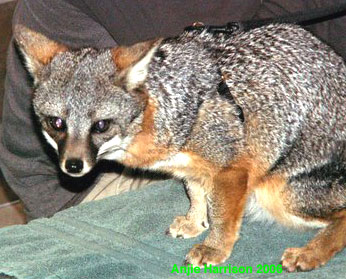
[The fox pictured is Tachi, CIC's education fox. More about Tachi.]

After several successful years, captive breeding efforts concluded in 2004. Since then, the Catalina island foxes have been recovering their numbers in the wild.

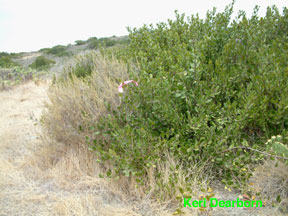
Foxes are counted by setting cage traps in specific places, such as the location marked by the colored tag on this bush. The total number is estimated from individuals that are caught. Trapping also allows biologists to check the health of individual foxes and vaccinate them against distemper. The CIC estimates in 2007 that there are approximately 500 island foxes on Catalina. This population is doing well but still has a long way to go to reach the pre-outbreak estimate of 1,342 foxes.

Today, however, the Catalina island fox is facing new threats.
Since 2001, over 37 foxes have been found with cancerous ear tumors (Ceruminous gland carcinoma). These mysterious ear lesions are typically fatal. Currently, the Catalina island fox is the only subspecies with this disease. The Catalina Island Conservancy is supporting research that is being conducted by IWS and the University of California, Davis to determine the prevalence and possible causes for this cancer.

The island foxes on Santa Catalina also have the challenge of sharing their island with people and domestic pets. Cars on the few island roads have been responsible for 9 fox deaths in the past two years (2005-2006). While three more foxes were attacked and killed by domestic dogs.

Signs warning “Watch for Foxes” are one way to alert drivers and new pet policies for the interior of the island require residents and visitors to vaccinate their pets, keep them leashed and to clean up after them.

When visitors dock their boats in Catalina’s harbors they may not be aware of the island fox, just on shore. Friends of the Island Fox hopes to support the Catalina Conservancy in further island fox disease research and public education to help the residents and visitors on Catalina Island understand their role in providing a safe habitat for island foxes.