Showing posts with label island fox threatened by trash can. Show all posts

Tuesday, January 24, 2017

Support Conservation Efforts That Work


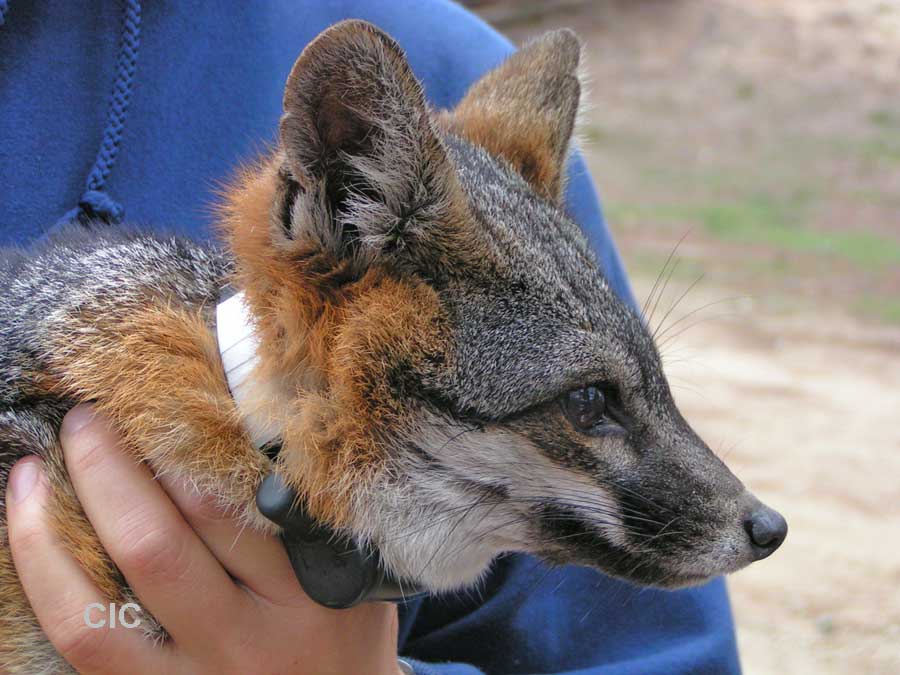
In 2015, Friends of the Island Fox began working with the Catalina Island Conservancy (CIC) on a project to replace deteriorating trash containers that threatened island fox survival. (See the direct and in-direct danger to island foxes)

As of January 2017, FIF has funded the installation of 7 “Fox-Saver” bins. Julie King, Director of Conservation and Wildlife Management with the CIC sent us this exciting report from the field:

The wildlife-proof cans that we installed out at Parson's Landing (remote beach campground) have made a HUGE difference! 


Before I would spend 30 minutes each day I was out there [counting island foxes] picking up trash that foxes and ravens had drug into the bushes. I would always catch foxes there ... loaded with lice. [They had become] habituated moochers. This year, it was so different. No trash to be found on the ground or in the bushes and no foxes caught. To me, no foxes in camp is a testament to the effectiveness of the new trash cans. No more free meals. Outside of camp, there were plenty of foxes and they were all in great shape. Nice to see!


Six new bins have replaced the two large dilapidated wooden containers. The result is healthier island foxes, no foxes coming to the area for free food and becoming more likely to be hit by automobiles, and no foxes trapped inside deathtrap trash cans.

We know what works. Removing an unnatural food source also reduces unnatural concentrations of island foxes thereby decreasing the possible spread of disease. Prevention of problems is financially cost effective and reduces the need to react to crisis situations.

Friends of the Island Fox supports conservation measures that are proven to work:


We are working with our friends at CIC on other measures to make campgrounds less attractive to island foxes and more usable for humans.

Now more than ever, island foxes need you to secure their survival into the future.

Monday, May 09, 2016

"Fox-Saver Bins" Saving Channel Island Foxes on Catalina

What's so special about this trash bin?

As Channel Island foxes recovered on Santa Catalina Island, their growing numbers brought a new challenge. Old and open trash cans were posing a double threat to fox survival

Island foxes attracted to available trash were being hit by cars on their way to trash cans and also becoming trapped inside, sometimes with lethal consequences.


The solution was "Fox-Saver" bins, sealed receptacles built to only be opened by human hands. In 2015, Friends of the Island Fox donors raised $6,000 to fund three of these special trash bins. One student created an entire T-shirt campaign to support the effort and raised nearly $1,000.

New "Fox-Saver" bin in Bird Park, photo courtesy of CIC
The trash bins have been install just in time for the summer season, when Catalina's parks and open areas are visited by over a million tourists. This "Fox-Saver" bin has been placed in Bird Park (one of the locations which had claimed the most island fox lives). You can see the two open trash cans that were then removed, on the left side of the photo. The two additional "Fox-Saver" bins, plus a fourth sponsored by island efforts, have also been put in place in the park, ready to secure trash and protect island foxes.

This was a joint effort of island fox supporters of all ages from across the country. Protecting this rare species requires all of us working together. If you visit Catalina this summer, take a look at the positive change that can be accomplished with group effort. Thank You to our friends at the Catalina Island Conservancy, the Island Company, the City of Avalon, and everyone helping make Catalina a safer home for island foxes.

Why were Catalina's island foxes faced with near extinction?
Challenges faced by island foxes on Catalina Island:

Friday, February 06, 2015

Double Action to Save Catalina Island Foxes

Help Friends of the Island Fox reduce a major threat to the Santa Catalina Island fox (Urocyon littoralis catalinae): human trash

Yes, eating human food is bad for island foxes. Adults dependent on human food fail to teach hunting skills to their offspring. (Island fox diet) However, the greater threat is the attraction of trash and the behavior island foxes engage in to reach readily available human food waste.

The first problem is that standard trash and recycling containers pose a threat to these small foxes. This old trash can, next to a fence, allows an island fox to easily climb inside. The fox's diminutive size means it can easily fit through openings and fall into trash receptacles. 

Aging bins are an enticing hazard.

photo courtesy of Lesly Lieberman and CIC
Once inside, island foxes have a difficult time getting out of these containers. Trash can lids are designed to push open from the outside. Catalina Island biologists have documented numerous cases of island foxes dying inside trash cans.


photo courtesy of Julie King, CIC
The second issue is that accessible trash cans encourage island foxes to cross roads and enter dangerous areas. Notice the island fox under the left side of the trash can pictured here. It is pulling trash out of the rusted bottom of this can. 

Catalina Island Conservancy biologists Julie King and Calvin Duncan report: 

Between April and May 2014, four foxes were hit and killed by vehicles in close proximity to open trash cans near Bird Park in Avalon and two more were hit and killed there in November. It is unknown how many other foxes may have been hit by vehicles in the area but did not immediately succumb to their injuries, and were therefore not accounted for.

courtesy of Julie King, CIC
Car strike has become the greatest killer of island foxes on Catalina Island. The island fox pictured to the right was killed by a car, notice the trash can on the other side of the road (to the left). Clusters of unnecessary island fox deaths are occurring in areas adjacent to public spaces with numerous trash cans.
New "Fox Saver" trash bins

But there is a solution to the double threat: trash bins that island foxes can not access.

“Fox Saver” bins are the same sturdy containers used at Yellowstone and Yosemite National Parks to keep bears out of human trash. Opening the bin requires long human fingers. There is no opening for an island fox to easily enter.

Once the attraction of available human food waste is eliminated, we hope there will be less motivation for island foxes to cross roads, and maybe less attraction to venture into Avalon.

Purchasing these all-steel bins, shipping them to Santa Catalina Island, and installing them on a cement pad comes with a sizable price tag. Each bin costs $2,000. The Catalina Island Conservancy has a goal of replacing 150 trash bins across the island.

Friends of the Island Fox aims to raise $6,000 to fund three “Fox-Saver” bins to be placed in
Avalon's Bird Park area. This should actively reduce island fox deaths along one of Santa Catalina's busiest roads. Your donation will help meet this goal and save island fox lives.

The Catalina Island fox is making a strong recovery, but its current restored population combined with growing human activity  has increased direct human threats to island fox survival. 

Help us make a positive impact by funding 
"Fox Saver" bins!

Friday, October 10, 2014

How Small Is An Island Fox?

Santa Cruz Island fox, courtesy of Anita Machlis
Frequently the size of an island fox is compared to a house cat. However, that can be a bit misleading. 

While house cats average from 8-10 pounds in weight, some breeds can easily weigh up to 18 pounds. Cats typically stand 8-10 inches at the shoulder.

Island foxes on the other hand are considerably smaller. While size varies between the islands and the subspecies, adults range from a weight of 2.35 to 6 pounds. Their fur may give the appearance of bulk, but most island foxes are quite slight in their physic. Finding enough food is always a challenge for these island dwellers. 

The length of the legs varies between islands, but the tallest of the island foxes only stand 8 inches at the shoulder. The Santa Cruz Island fox, the smallest, typically stands 6.5 - 7 inches at the shoulder. 

In actuality, island foxes actually weigh 40% less and are 22% shorter than the average house cat.

While felines are designed for leaping and vertical climbing, island foxes have somewhat weak legs. They can run and climb horizontally, but they are not leapers.

Can you guess what this is?


This is the view from inside a recycling trash can. Island foxes have narrow bodies. The largest males have heads that are only 2.5 inches wide. If an island fox can get its head into an opening, it can usually get the rest of its body through as well. Most island foxes can easily fit through the opening for a can or bottle. 

Human trash can be attractive to an animal that has a hard time finding enough food. Once an island fox gets into a recycle bin or a slightly open trash can, it has a very hard time getting out. 


 How do island foxes measure up to other small fox species?
  • kit fox (Vulpes macrotis), North America: 4 - 4.85 pounds; stand 12 inches to the shoulder
  • fennec fox (Vulpes zerda), Africa: 3 -3.5 pounds; stand 8 inches to the shoulder
fennec fox (Vulpes zerda), courtesy of Pat Meyer
The kit fox and the fennec fox are more closely related to each other than either is to the island fox. Because of the range in size among island fox subspecies, some island foxes are smaller than fennec foxes. Some weigh more than kit foxes, but all are shorter than kit foxes.