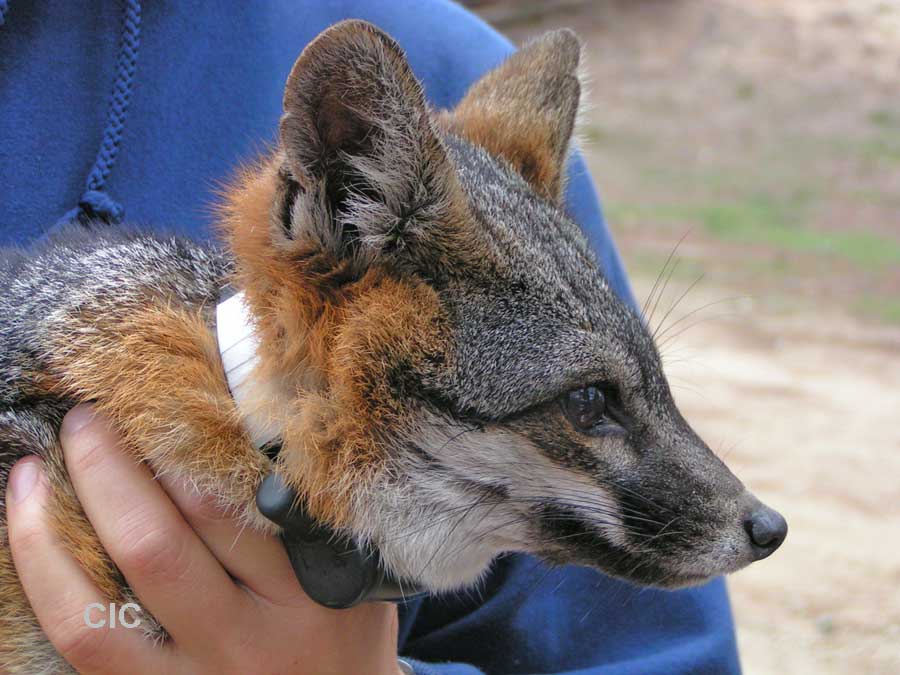
Showing posts with label trash and island fox. Show all posts

Wednesday, June 30, 2021

You Can Help Island Foxes and Other Wildlife This Weekend

As we all head out for a holiday weekend, here's a quick reminder that things we use everyday can be dangerous to wildlife.


A sad story just came in from the US Navy regarding an island fox on San Clemente Island. "I'm honestly surprised we have not seen this before," says Melissa Booker, Navy Wildlife Biologist/Natural Resources Manager for San Clemente Island. "Discarded fishing line is notorious for impacting marine species and birds. Sadly, add foxes to the list."


"We lost this young female to entanglement this [past] weekend."

You can see how the fox caught her tiny foot in the snarl of discarded fishing line, which was out of sight in the bush. Struggling to free herself, only tightened the line. 

Especially during hot summer days, the window to save an entrapped animal is short.


This death could have been easily avoided. Fishing line should always be disposed of so that it doesn't endanger wildlife. Left on the ground or in the water, it remains a threat for years. 

If you have to cut fishing line because of a snarl, don't let it get away from you. If you see a snarl of fishing line, carefully pick it up. Dispose of fishing line into a closed trash container.  Be careful of fishing hooks, they are also dangerous to people and wildlife. Island fox injured by fishing hook - Sea lion caught in fishing debris

Fishing line isn't the only everyday item that can be dangerous to small animals. Another member of the Island Fox Conservation Recovery Group, research ecologist Brian Cypher of CSU-Stanislaus reports: "...we have documented 60+ kit foxes so far getting tangled and trapped in soccer nets or baseball batting cage nets" in California's Central Valley. A third of the trapped kit foxes didn't survive the entanglement.

Even COVID-19 face masks dropped on the ground can become a hazard for small animals. The ear-loops get hooked around small mammals, birds, and even fish.

But YOU can help all of these animals. These situations can easily be prevented.

  • Put old fishing line safely into trash containers
  • Drop game nets or lift them up off the ground to reduce entanglement
  • Cut the ear loops on face masks before disposing of them

Let's have a safe summer for people and wildlife!

Other things to be aware of if you are visiting the Channel Islands this summer

Growing list of animals recently involved with fishing line:

Pacific pond turtle (endangered species)


Tuesday, January 24, 2017

Support Conservation Efforts That Work


In 2015, Friends of the Island Fox began working with the Catalina Island Conservancy (CIC) on a project to replace deteriorating trash containers that threatened island fox survival. (See the direct and in-direct danger to island foxes)

As of January 2017, FIF has funded the installation of 7 “Fox-Saver” bins. Julie King, Director of Conservation and Wildlife Management with the CIC sent us this exciting report from the field:

The wildlife-proof cans that we installed out at Parson's Landing (remote beach campground) have made a HUGE difference! 


Before I would spend 30 minutes each day I was out there [counting island foxes] picking up trash that foxes and ravens had drug into the bushes. I would always catch foxes there ... loaded with lice. [They had become] habituated moochers. This year, it was so different. No trash to be found on the ground or in the bushes and no foxes caught. To me, no foxes in camp is a testament to the effectiveness of the new trash cans. No more free meals. Outside of camp, there were plenty of foxes and they were all in great shape. Nice to see!


Six new bins have replaced the two large dilapidated wooden containers. The result is healthier island foxes, no foxes coming to the area for free food and becoming more likely to be hit by automobiles, and no foxes trapped inside deathtrap trash cans.

We know what works. Removing an unnatural food source also reduces unnatural concentrations of island foxes thereby decreasing the possible spread of disease. Prevention of problems is financially cost effective and reduces the need to react to crisis situations.

Friends of the Island Fox supports conservation measures that are proven to work:


We are working with our friends at CIC on other measures to make campgrounds less attractive to island foxes and more usable for humans.

Now more than ever, island foxes need you to secure their survival into the future.

Monday, May 09, 2016

"Fox-Saver Bins" Saving Channel Island Foxes on Catalina

What's so special about this trash bin?

As Channel Island foxes recovered on Santa Catalina Island, their growing numbers brought a new challenge. Old and open trash cans were posing a double threat to fox survival

Island foxes attracted to available trash were being hit by cars on their way to trash cans and also becoming trapped inside, sometimes with lethal consequences.


The solution was "Fox-Saver" bins, sealed receptacles built to only be opened by human hands. In 2015, Friends of the Island Fox donors raised $6,000 to fund three of these special trash bins. One student created an entire T-shirt campaign to support the effort and raised nearly $1,000.

New "Fox-Saver" bin in Bird Park, photo courtesy of CIC
The trash bins have been install just in time for the summer season, when Catalina's parks and open areas are visited by over a million tourists. This "Fox-Saver" bin has been placed in Bird Park (one of the locations which had claimed the most island fox lives). You can see the two open trash cans that were then removed, on the left side of the photo. The two additional "Fox-Saver" bins, plus a fourth sponsored by island efforts, have also been put in place in the park, ready to secure trash and protect island foxes.

This was a joint effort of island fox supporters of all ages from across the country. Protecting this rare species requires all of us working together. If you visit Catalina this summer, take a look at the positive change that can be accomplished with group effort. Thank You to our friends at the Catalina Island Conservancy, the Island Company, the City of Avalon, and everyone helping make Catalina a safer home for island foxes.

Why were Catalina's island foxes faced with near extinction?
Challenges faced by island foxes on Catalina Island:

Tuesday, June 02, 2015

FIF Funds Three "Fox-Saver" Bins for Catalina Island Foxes


Once again, people working together have helped protect the endangered island fox!


The lethal combination of old trash cans, enticing human trash, and proximity to roads with car traffic has created a growing problem for island foxes on Santa Catalina Island. Double Action to Save Island Foxes

Early winter 2014, eleven Catalina island foxes were hit by cars. Most were near areas of known trash problems.

But thanks to support from a wide range of private individuals and organizations, Friends of the Island Fox has met its goal to raise $6,000 to fund three "Fox-Saver" bins on Santa Catalina Island. The three bins will be placed in high-use areas where fox fatalities have been growing.


Thank you to everyone who helped raise funds for this important project. 

These bins not only help endangered island foxes, they create a healthier environment for people and other island species.

Tuesday, September 07, 2010

Be a Friend of the Island Fox

How can you help the endangered island fox?


Everyday humans create mounds of trash. Too often that trash washes off sidewalks into gutters, down storm drains and into the ocean. Bits of plastic are dropped on the ground. Plastic bags swirl in the wind and end up in streams and seas.


A cast off fishing lure left on a rock can mean a horrible injury for a hungry island fox. Fox and the Fishing Hook


A plastic bag or balloon can be mistaken for a jellyfish by a hungry sea turtle.


Bits of plastic on the beach can get swept into the ocean by the incoming tide. Once plastic enters the ocean, fish and birds mistake the colorful bits for food. When they eat the toxic plastics it can mean their death or it can mean they are no longer healthy food for other animals in the foodweb like island foxes and humans.


Friends of the Island Fox is joining forces with the Channel Islands Park Foundation to clean-up the beach near the Channel Island National Park Visitor Center.

Join Us For:
Coastal Clean-Up Day
Sat. September 25, 2010
9 AM - Noon 


For More Information