Sometimes you have to look behind the scenes to see the important role that zoos play in wildlife conservation. The island fox has several important zoo friends.Fresno's Chaffee Zoo
Fresno's Chaffee Zoo has been a vital partner in island fox recovery and health for 16 years. It started with a few zoo keepers committed to helping island foxes and a donation for a radio-tracking collar. When the zoo established their Wildlife Conservation Fund, Friends of the Island Fox was a 2014 grant recipient. Over the years, the FCZ Wildlife Conservation Fund has funded not only radio collars, but vaccinations, equipment for safe capture of island foxes, important evaluation of island fox blood samples for evidence of disease and other critical health measures.
In January of 2022, the FCZ Wildlife Conservation Fund provided a special one-time grant that funded the refurbishment of 15 radio collars for Santa Cruz Island foxes. These collars were all placed on island foxes over the last month. The grant also helped fund vital testing for disease among island foxes.
Friends of the Island Fox just received our FCZWCF grant of $3,200 for 2022. This funding will go toward health monitoring and/or vaccinations for island foxes.
Santa Barbara Zoo
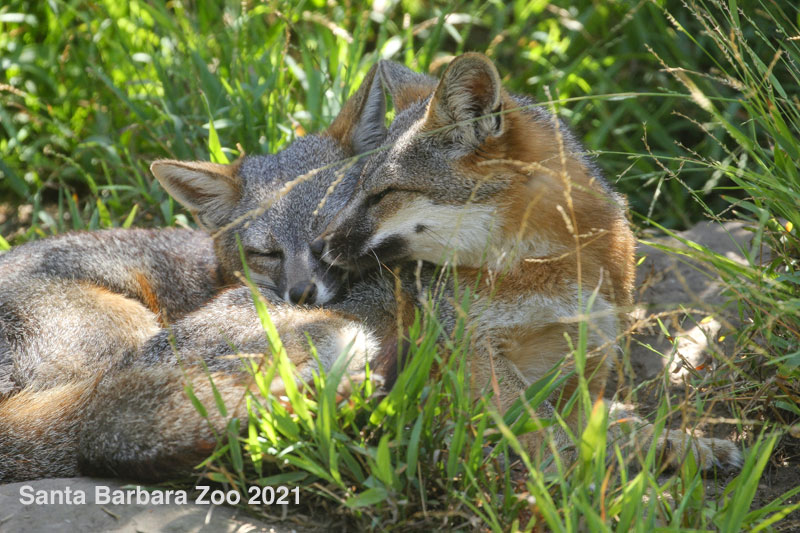
The Santa Barbara Zoo was the first to come to the aid of endangered island foxes and they participate in the Island Fox Conservation Working Group. Keepers and veterinary staff helped develop the care and feeding protocols for island foxes in captive breeding facilities from 2001–2006. The zoo has provided a home for a few island foxes and was the first to successfully breed island foxes in captivity. Today, all of the island foxes living in mainland zoos are rescued wild individuals that do not have the skills to survive in the wild.
Lewis and Clark (above) are brothers who were abandoned by their parents in the midst of drought on San Clemente Island. Today these two island foxes play an important role for their wild relatives. Because they live in a controlled environment with ready access to veterinary care, they are health advocates for other island foxes. They provided samples to the island fox microbiome research study.
Early in the pandemic it was discovered that Covid-19 could be passed to canines. As the pandemic grew there was concern for island foxes in the wild. Could biologists handle island foxes for health checks as they had in the past? Might island visitors pass Covid-19 to island foxes?Island foxes are very susceptible to introduced diseases. Many vaccinations for dogs are not safe for island foxes. In the controlled environment of the Santa Barbara Zoo, Lewis and Clark were vaccinated against Covid-19. They had no ill side-effects. Zoo veterinarians monitor whether the vaccine continues to protect the two foxes. If necessary we know island foxes can be safely vaccinated for Covid-19.
 |
Beau at the Living Desert
|
Island Foxes at other Zoos
Living Desert in Palm Springs - Home to Beau (above) a male abandoned as a pup during drought on San Clemente Island
 |
Female gray fox and island fox sisters at CALM
|
California Living Museum in Bakersfield - Home to two sisters (above) abandoned as pups during drought on San Clemente Island
San Diego Safari Park - Home to Sage a female with a chronic health condition from Catalina Island
FIF is thankful for the continued support of island fox conservation from our Zoo Friends.