Showing posts with label saving island foxes. Show all posts

Friday, May 12, 2023

What Questions Do You Have For Island Fox Experts?


Next week 

the Island Fox Conservation Working Group 

meets for its 

25th Annual Meeting !

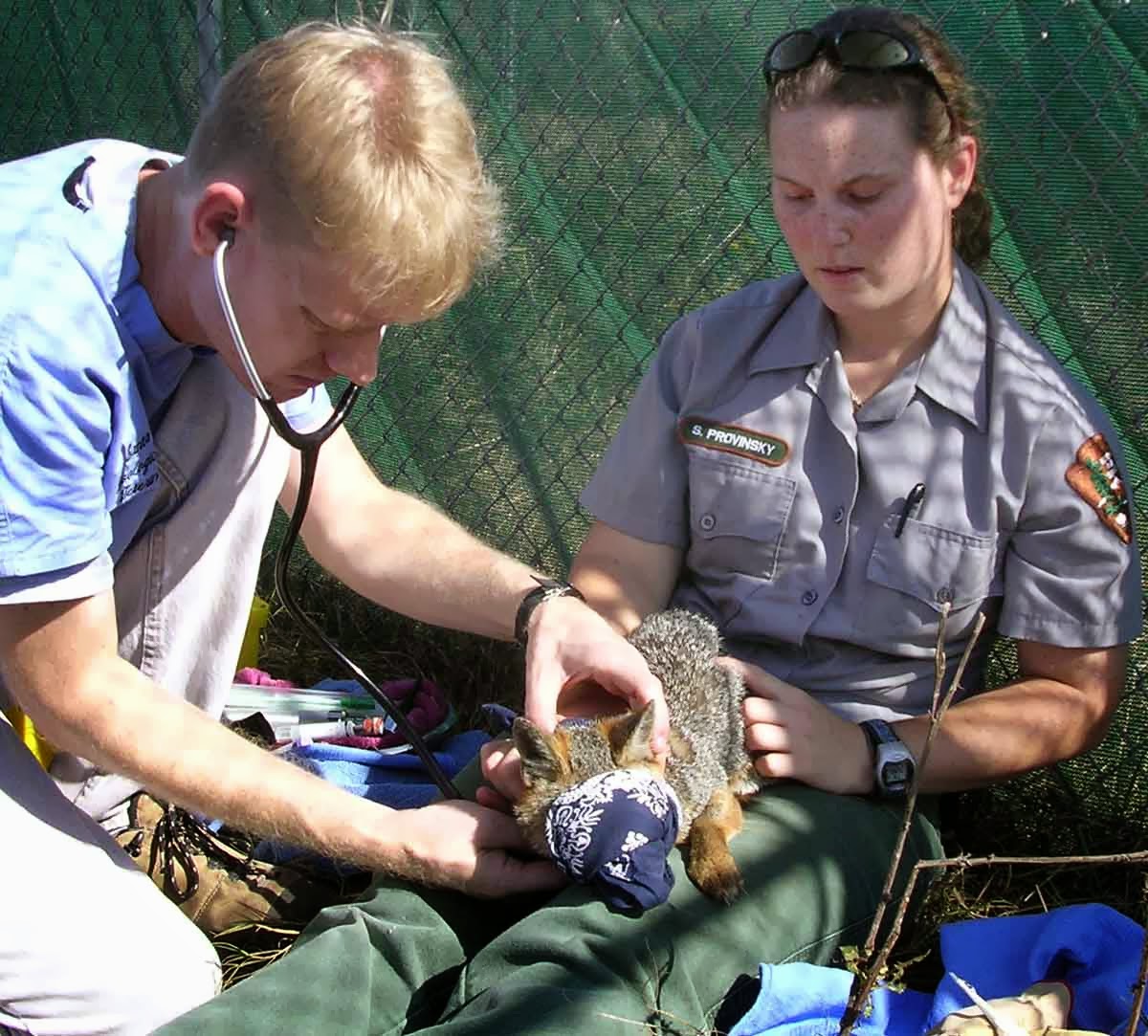
It's a time to celebrate the biologists, land managers, researchers, technicians, veterinarians, ecologists, government agencies, academic institutions, and conservation organizations that all came together to formulate a plan and take action to save island foxes from extinction and shepherd their recovery. 


It is also a time to ask questions of the folks that were on the ground trying to discern why island foxes were disappearing on the northern islands in the late 1990s.

And how was it discovered that canine distemper virus was killing island foxes on Catalina Island in the south?

How were the Catalina Island foxes saved from high levels of cancer?

What do we still need to find out about island foxes to protect them into the future?

Friends of the Island Fox 

is looking for your questions

Thursday May 18, we'll be posing your questions to the people of the Island Fox Working Group and videoing their answers.

Send your questions to info@islandfox.org

Tuesday, December 10, 2019

The Legacy of Island Fox M152


Island fox M152 became known to all of us in 2018.

We watched this male fox on Santa Rosa Island get a radio collar. His health check was profiled and compared to his health history. Over the summer he avoided capture for 2019 health checks, but through September his radio collar tracked his normal activity.

Recently we received notification from the National Park biologists: "We are sad to report that M152's mortality was confirmed...on October 12."

M152 appeared to have died right after the biologists left Santa Rosa to do health checks on San Miguel in late September/early October. Though he appeared to have died from natural causes, his body had gone undetected too long in the warm weather for a necropsy to determine exact cause of death.

But because M152's radio collar signaled his death, and biologists were able to find his body. That means his story continues:

M152 was found quite a way from the location where he had been captured in 2014 and 2018. It may be that the reason he was not consistently captured was because his territory only tickled the area where foxes are counted.

Despite his death, a whisker sample was taken from M152. This will add to the cumulative story of his diet through the stable isotope study (supported by FIF). Researchers will be able to chronicle his diet through the drought and back into a rainy 2019. His whisker will also provide information on what he was eating or how his diet changed as he neared the end of his life.


Biologist Juliann Schamel says, "M152 was one of the few collared foxes on Rosa whose exact age-in-years we don't know..." When he was first captured in 2014, it was estimated that he was 1–2 years old, by looking at the wear on his teeth. 

His canine teeth have been preserved. A FIF funded research project in progress is evaluating if structures in the canine tooth can be used to verify island fox age at death. If this research is fruitful, we may be able to determine M152's age when he died. Was he the 6–7 years old that was estimated or was he older?

M152's radio collar still had two years of battery life, so it was cleaned up, disinfected and deployed on a male fox born in 2019. Male pup M164 was collared in November in the Cherry Canyon area. Cherry Canyon is frequently visited by day hikers on Santa Rosa. Because young males under a year old tend to disperse to find their own territory, M164 may take this story into a completely different part of the island.

M152 was the fox face that encouraged donations in 2019 and helped fund a record 40 radio collars for island foxes across the Channel Islands. We are sad to say "farewell" to him, but his legacy lives on.


Friday, July 06, 2018

Island Fox Success Story - Pup and Mother Reunited

island fox pup
Island fox recovery is a success story, but sometimes it is nice to focus on individual successes.

This May an island fox pup, only a few days old, was separated from its parents. It was so young, its eyes were still closed. When the pup was found on a dirt road on Catalina Island, it was weak and hungry. Biologists with the Catalina Island Conservancy rallied to the pup's aid. Veterinary care was provided and after two weeks, the pup was healthy enough to be returned. But the clock was ticking on a possible reunion and acceptance from its fox family.

Returning to the area where the pup was found, biologist Lara Brenner and Emily Hamblen captured adult island foxes, including a female who showed signs of lactating. After observing interactions between the pup and the female, the pup was allowed to approach the female and it immediately began nursing. Mom and pup were reunited. The mother fox was radio-collared so that the biologists could locate the family and check in to see how the pup was doing. But getting everyone safely returned to the wild was a challenge. Watch the heart-warming story of mother and pup.


Three cheers for a brave island fox pup, a devoted mother fox, and the determined Catalina biologists who facilitated a successful reunion.

Friends of the Island Fox supports the CIC Fox Program with radio collars, fox health measures and "Fox-safer" trash cans. With your help, FIF replaced the electronic elements of traffic speed sign on Catalina in 2018 to help slow down drivers on a section of road dangerous to island foxes.

Working together to make island foxes and people safer on the Channel Islands.