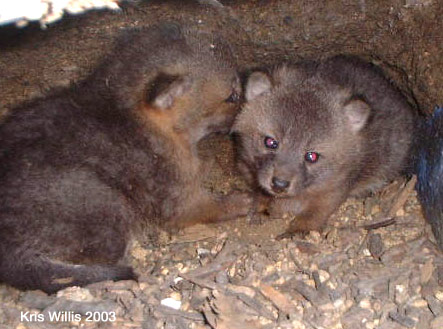
Friday, May 05, 2006

Island Fox Festival - Los Angeles Zoo


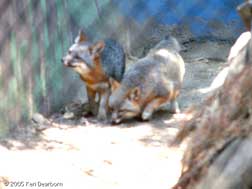
Come meet Bear and Stubby, a pair of San Clemente Island foxes, and celebrate the ongoing conservation efforts to save this endangered species.

Saturday, May 20; 10:00 AM to 4:00 PM
at
The Los Angeles Zoo and Botanical Gardens

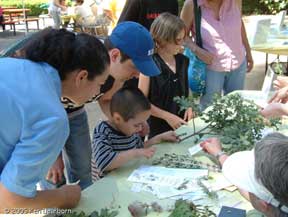
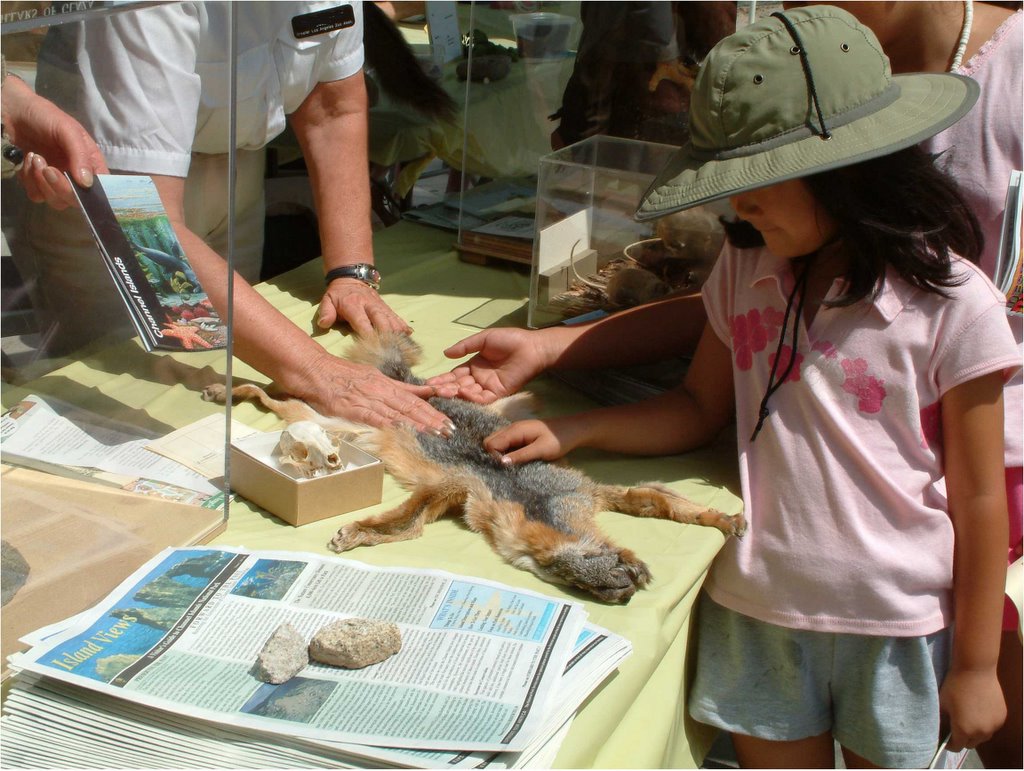
The Los Angeles Zoo is one of the few places where the public can easily see island foxes up close. All day Saturday, May 20th the docent Conservation Committee of the Los Angeles Zoo and Botanical Gardens will be hosting their Third Annual Island Fox Festival. There will be:

  • keeper & docent talks at the island fox enclosure
  • interactive stations on the island fox, native plants and island conservation
  • crafts and face painting
  • special presentations, activities and more
Representatives from Friends of the Island Fox and the Channel Islands National Park will also be on-hand.

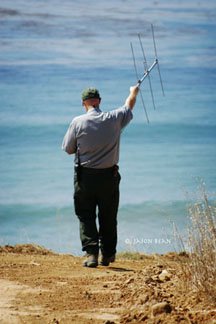
At the Friends of the Island Fox booth you’ll be able to see one of the radio collars we are funding so island foxes can be returned to the wild. We will also be conducting demonstrations of radio telemetry tracking throughout the day.
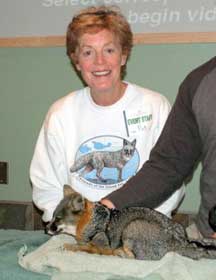
Come join us for a great day at the L.A. Zoo celebrating the island fox!

For more admission and Zoo information: www.lazoo.org

All programs and activities are included with Zoo membership or the price of admission. The Island Fox Festival is supported by GLAZA.

Thursday, April 27, 2006

Catalina Island Fox - Tachi

Report From the Field, 4/22/06 - by Pat Meyer

Friends of the Island Fox traveled to Santa Catalina Island to participate in the Catalina Island Conservancy’s Earth Day celebration and the opening of their new Nature Center at Avalon Canyon.

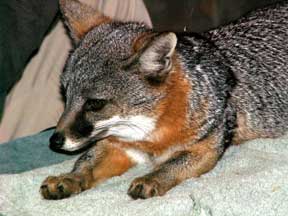
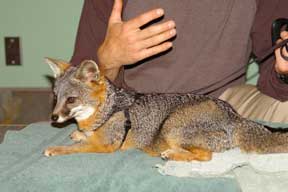
The highlight of the day was meeting Tachi,
Catalina Island Conservancy’s educational ambassador. This young female island fox plays an important role in enlightening people about this endangered species. Though incredibly cute, she is not a pet. While I was allowed to be photographed with Tachi, I was not allowed to get too close to her, or to touch her at all. She is handled only by the Catalina Island Conservancy biologists.

Tachi’s story:
Her full name is Ne Shun Tachi – “Our little girl of hope.” She was born in a litter that was neglected by their mother. It was determined very early in her life that she had an eye infection. She continued to have chronic eye infections and difficulty nursing from her foster mother, so she was returned to the Institute of Wildlife Studies’ veterinary clinic periodically. While receiving treatment, her eye opened and she became habituated to the humans that cared for her. Consequently Tachi was not able to be released into the wild with her siblings and has become an educational ambassador for her species.

Friends of the Island Fox, Inc. sends our appreciation to the Catalina Island Conservancy’s Chief Conservation and Education Officer, Carlos de la Rosa, and Ann Muscat, Chief Executive Officer, for their invitation to participate in their Earth Day celebration.

Spring population numbers are showing increases on all of the islands. There will be more captive fox pups who will need radio collars for release into the wild. Our motto is “Working Together To Save The Island Fox.” You can make a difference. Join us and our friends at the Catalina Island Conservancy as we strive to save the island fox from extinction.

Friday, April 21, 2006

About Friends of the Island Fox

Friends of the Island Fox is a program of the Channel Islands Park Foundation, a 501 (c) (3) charitable and educational corporation as designated by the Internal Revenue Service. FIF is a joint effort of conservation professionals and concerned private citizens striving to create public awareness about the endangered island fox and to raise funds to support education, research and conservation measures to ensure the island fox’s survival.

Friends of the Island Fox (FIF) was founded as a non-profit 501 (c) (3) charitable and educational corporation in March, 2005. On January 1, 2011, FIF joined with the Channel Islands Park Foundation (www.ciparkfoundation.org) for the joint benefit of both organizations.

 FIF provides presentations to community groups and schools (K-college) regarding the island fox and its important relationship with the Channel Island ecosystem. School programs meet CA State Science Standards and address the Environmental Education Initiative (EEI). FIF also offers professional development workshops for educators on using a local endangered species and the Channel Islands to teach math, science, language skills and conservation issue resolution.

To reach us:

Friends of the Island Fox
c/o Channel Islands Park Foundation
1901 Spinnaker Drive, Ventura, CA 93001

by phone: (805) 228-4123

e-mail: admin@islandfox.org

Program Administrators


Patricia M. Meyer, Island Fox Program Director
Born and educated in England, Pat immigrated to Canada, and then to the United States, settling in Los Angeles where she completed her MBA through the University of Redlands, California. Following employment in advertising and marketing, the remainder of her career was spent as Vice-President of Personnel and Administration for a nationwide property-casualty insurance company, handling all aspects of human resource management and the administration of the company’s five corporate offices. Pat founded Friends of the Island Fox in 2005 and served as its President until December 31, 2010. She continues to guide FIF’s activities and currently holds a position on the Channel Islands Park Foundation Board of Directors.

To Reach Pat Meyer regarding the Friends of the Island Fox Program school visits or community programs:
(805) 228-4123 or pat@islandfox.org


Keri F. Dearborn, Education Director
Keri is a California native. She earned her BA from the University of California, Los Angeles and received her MA in Environmental Education from CA State University San Bernardino in 2009. As well as developing conservation and educational materials and programs for a variety of non-profit organizations and private companies, she is a nonfiction writer and a contributing author for a number of textbooks, teachers’ guides, and state literacy tests. Keri served as V.P. of Education on the Friends of the Island Fox Board of Directors from 2005-2010 and continues to direct FIF’s educational programs.

To Reach Keri Dearborn regarding Friends of the Island Fox educational materials or programs:
(805) 228-4123 or islandfoxnews@gmail.com

Updated 1/10/11

Monday, April 17, 2006

Restoring Natural Balance - The Bald Eagle


First bald eagle hatched on northern Channel Islands in 51 years !

In March biologists spotted a bald eagle nest with an egg, on Santa Cruz Island.

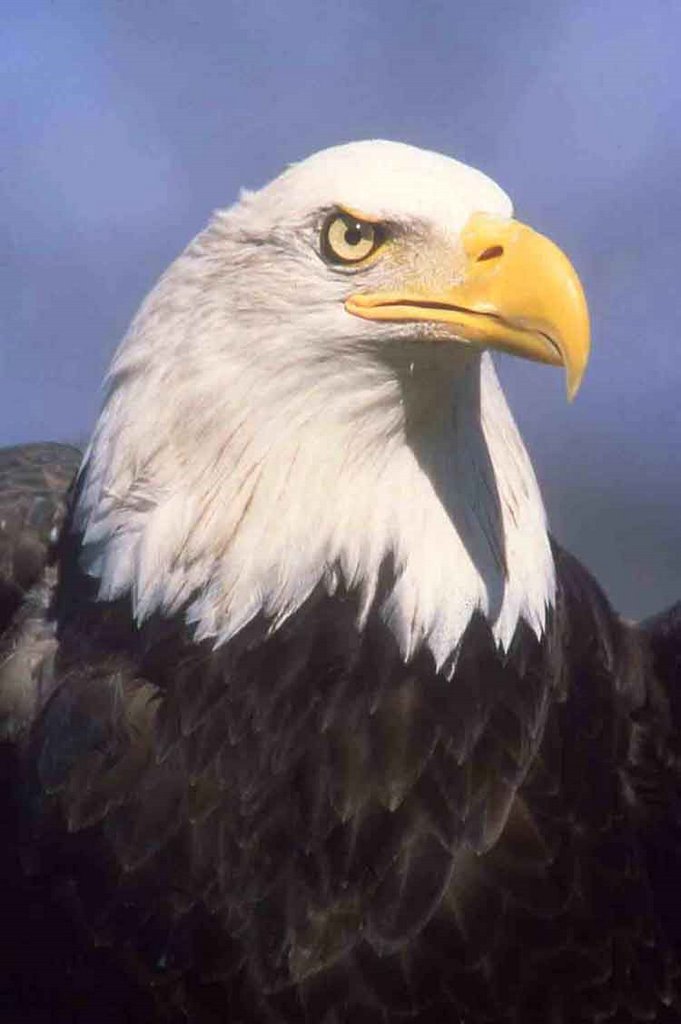
On Wednesday, April 12, 2006, the egg hatched and the first bald eagle chick since 1949 chirpped to its parents on one of California’s northern Channel Islands. This is very exciting news not only for the bald eagle, but also for the island fox.

Bald eagles and island foxes lived together amicably on the Channel Islands for thousands of years. The bald eagle preyed primarily on fish, sea birds, and carrion, while the omnivorous fox hunted the islands’ small rodents, insects, and birds, and also foraged for a variety of native fruit. The two predators each had their own niche and played an important role in maintaining balance in the island ecosystem.

The delicate balance, however, was destroyed when the chemical insecticide DDT (dichlorodiphenyltrichloroethane) entered the marine food chain. Small sea life absorbed the DDT, they were eaten by fish, who in turn were eaten by the bald eagles. High levels of DDT in the bald eagles caused them to lay eggs with thin shells that cracked when the parents tried to hatch them.

The last successful bald eagle chick on the northern Channel Islands hatched on Anacapa in 1949.

Without the territorial bald eagle, the islands were open habitat for the golden eagle. Golden eagles migrated to the islands to hunt the large number of feral pigs on Santa Cruz Island. Preying mainly on mammals, the golden eagle next began hunting the island fox. In the late 1990’s predation by golden eagles nearly pushed the island fox to extinction on San Miguel, Santa Rosa, and Santa Cruz Islands.

In the last few years, over 40 golden eagles have been removed from the northern islands and relocated to the mainland. Since 2001, 46 young bald eagles have been returned to Santa Cruz Island. As the bald eagles have matured they have begun reclaiming the islands as their own.

With the hatching of this first youngster in April 2006, there is hope bald eagles will once again be able to make the northern Channel Islands their home. A successful return of the bald eagle would be a important step toward restoring the natural balance and making the islands safe again for the island fox.

(While bald eagles have also been reintroduced on Santa Catalina Island, DDT levels still remain high enough off Catalina that these eagles are unable to lay sufficiently-shelled eggs. On Catalina, bald eagle eggs are collected by biologists, incubated, and the chicks are then returned to the nest to be raised by their parents. Large quantities of DDT in barrels were dumped into the ocean off Palos Verdes Peninsula by Montrose Chemical Company in the 1950s and 60s. These unstable barrels continue to slowly release their toxic content into the ocean and there is no sign that bald eagles on Santa Catalina will be able to reproduce on their own for sometime into the future.)

Monday, April 10, 2006

Become a Fox Ambassador School!

This week Friends of the Island Fox launched its program for Fox Ambassador Schools.

Our organization representatives are going out to schools in Los Angeles, Ventura, and Santa Barbara counties to introduce school children to the island fox and its struggle for survival.

The island fox is a local California species and unique in the world. Its story includes the importance of balance in nature and is easily understood by children of all ages. Once children are aware of the fox's situation, they are eager to help and to take an empowered stance to help these endangered creatures.

We challenge the students in our Fox Ambassador Schools to find creative ways to help the island fox on three levels:

  • by becoming an informed individual and learning about the island fox
  • helping the fox directly through a project
  • and reaching out in their community to increase public awareness

If your class or school is interested in making a difference and helping to save an endangered animal, contact Friends of the Island Fox, Inc. at islandfoxnews@gmail.com for more information about becoming a Fox Ambassador School.

Thursday, March 09, 2006

Making Friends in the Community


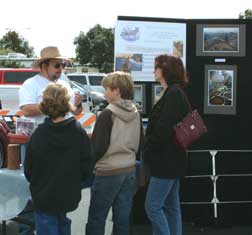
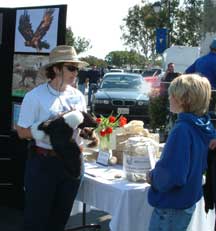
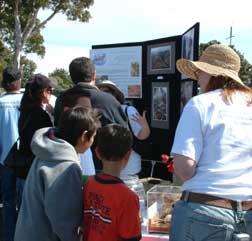
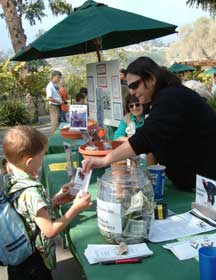
Sunday March 4, 2006 Friends of the Island Fox attended the Ventura Harbor "Celebration of the Whales Festival". It was a lovely day and many people were interested in learning more about the island fox and the conservation efforts to save this endangered species.

The island fox needs all of us to help it survive into the future. We invite you to take action with us and help support island fox conservation.

Contact us for more information on how you can help the island fox.

Tuesday, February 21, 2006

Friends of the Island Fox in the Community


Conservation starts with education.

Sunday, March 5, from 11 AM - 5 PM, Friends of the Island Fox will be out at the "Celebration of the Whales Festival" at Channel Islands Harbor in Ventura.

The more you and your friends know about the island fox and the delicate Channel Island ecosystem, the more you can help by being their advocate.

The creatures of the sea and the shore are interconnected. Healthy islands and a healthy marine environment go hand in hand.

Come out and meet Friends of the Island Fox as we support whale conservation and increase awareness about the island fox. We will be raising funds to support our Education Program that visits schools and community groups.

For more information about the Whales Festival

Monday, January 16, 2006

RADIO COLLARS for 2006


Friends of the Isl
and Fox , Inc. is proud to announce a gift of 10 radio collars to the island fox conservation efforts on the northern islands of San Miguel, Santa Rosa, and Santa Cruz.

As captive breeding successfully increases the number of foxes on the northern islands, there will be opportunities for more foxes to be released back into the wild. In addition, more fox pups are being born in the wild to parents that have been released. But each of these foxes has a special need – a radio collar.


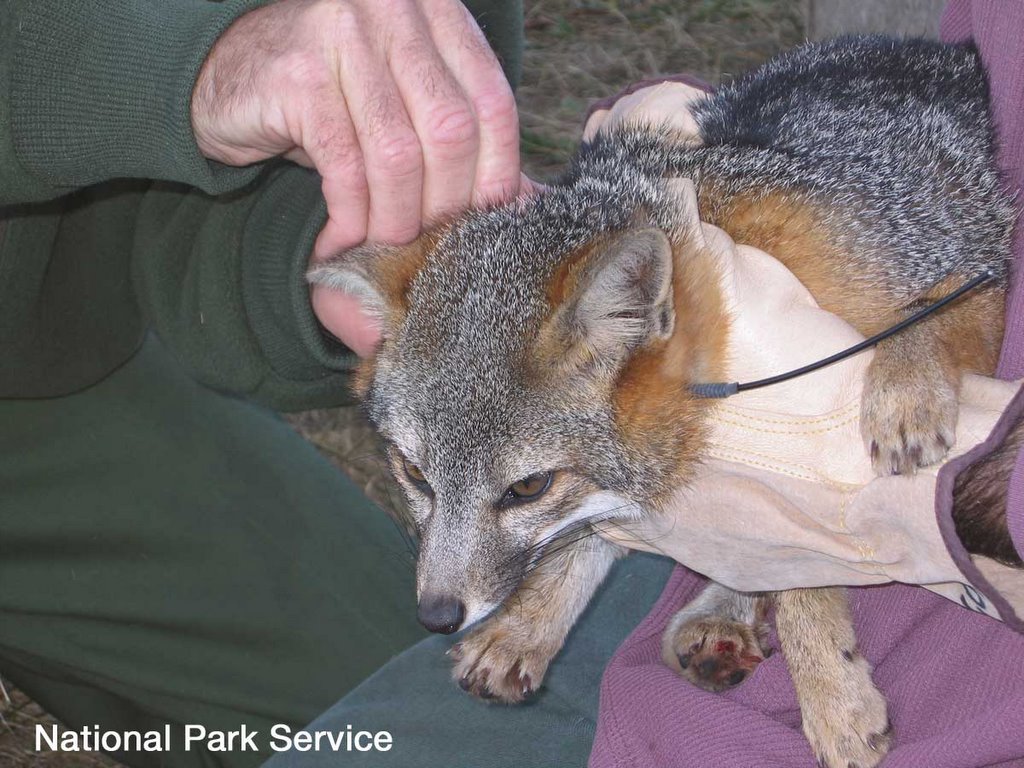
Fox being radio collared for release.

Why do released foxes need radio collars?

The radio collar allows biologists to monitor these tiny canines in the wild. A radio signal that indicates a fox has stopped moving is the first indication of an animal in need or who has fallen victim to predation by a golden eagle. The earlier biologists can identify a specific threat from golden eagles, the earlier they can take action to protect foxes or recapture individuals in danger.


Photo by Jason Bean, Brooks Institute of Photography

Though radio collars can now last up to three years, each is a costly investment – $250 per collar.

Join us in our efforts to invest in the future for the island fox and make radio collars available for each island fox that has the opportunity to return to the wild. Your donation can make a difference for the island fox.

Monday, January 09, 2006

Successful Captive Breeding


When island fox populations dropped to dangerously low numbers on the northern Channel Islands and Santa Catalina Island, foxes were captured and brought into protective captivity with the hope they would reproduce.

Captive breeding allows endangered animal populations a chance to recover while protected from predators or the environmental threat that caused their decline. The captive situation also allows wild animals to receive medical care and guaranteed nourishment they would not normally have.

On Santa Catalina Island, the Catalina Conservancy’s captive breeding facility allowed the island foxes to increase their numbers safe from the distemper virus. By the fall of 2004, enough foxes had been produced in captivity to increase the population to a stable number and all of the captive foxes were released back into the wild.

In 1994, the San Miguel Island foxes numbered only 15 individuals. Today, through the efforts of the National Park Service (NPS) and a successful captive breeding program, the San Miguel population is recovering. There are 27 captive foxes, 33 foxes that have been released back into the wild, plus 9 pups born in the wild this past year (2005). Today, through the efforts of the NPS and a successful captive breeding program, the San Miguel population is recovering.

Captive breeding has also been successful on Santa Rosa and Santa Cruz Islands. You can get the latest update on fox status across the northern Channel Islands at the NPS Fox Home Page.

Tuesday, November 29, 2005

Where Does The Island Fox Live?

The island fox ( Urocyon littoralis ) is found only on the Channel Islands located between 19 and 61 miles off the coast of Southern California. Many of the islands can be seen from the shore on a clear day. Of the eight islands, foxes are only found on six. Each island has its own genetically different island fox subspecies.

California’s Channel Islands are each unique and, like the Galapagos Islands, a treasure of biodiversity.

The northern islands:

San Miguel Island is a sandy, wind-swept plateau with rocky beaches. There are no large trees or shrubs. It is only 8 miles long by 4 miles wide, yet it is the most important sea bird nesting site in Southern California. It also is home to one of the largest pinniped breeding colonies in the world, over 126,000 animals, including: the northern elephant seal, harbor seal, Steller’s sea lion, sea otters and the endangered northern fur seal and Guadalupe fur seal. Approximately 90% of the California sea lion population breeds on San Miguel and San Nicolas Islands.

Foxes share the rugged terrain with creatures unique to the Channel Islands – the silk-spinning sand cricket, Channel Islands slender salamander, Island western fence lizard, several island subspecies of birds, the endangered snowy plover and the bald eagle (reintroduced 2001).

Santa Rosa Island
is, for the most part, dry rolling hills of grassland. The other half is wooded canyons, coastal cliffs, wetlands, and sandy beaches. The island is 10 miles long by 15 miles wide. It is home to one of the rarest pine trees in the world - the Santa Rosa Island Torrey pine. Important fossil discoveries have been made on this island, including 13,000-years-old human remains and numerous pygmy mammoth skeletons.

Foxes share the grasslands with pygmy grasshoppers, island cicadas, and the island gopher snake. They also share habitat with an island species of spotted skunk and over 195 species of birds, including: the endangered snowy plover and bald eagle (reintroduced 2002). Six other species of plants are also endangered on this island.

Santa Cruz Island
has mountains, valleys, streams, and rugged coastline. It is actually two separate islands on opposite sides of a geological fault. Twenty million years ago the two pieces of land slid into each other to create one island. One half is volcanic, while the other half is layers of sedimentary rock. Ancient species of plants and animals from the two original islands can be found on the different sides of the fault (ie. the Channel Islands slender salamander on one side, the black-bellied slender salamander on the other). Many plants on Santa Cruz only grow in specific soils on one side or other of the fault. At 24 miles long and 6 miles wide, it is California’s largest island (3 times the size of Manhattan) and has the greatest plant and animal diversity of all the islands. It is also home to the world’s longest sea cave (1,227 ft.).

The fox preys on the Santa Cruz island deer mouse and the endangered Santa Cruz Island harvest mouse. It shares its varied terrain with other unique species – the island scrub jay, flightless katydid, Santa Cruz Island woodland skipper butterfly, the Santa Cruz Island cicada, and 10 species of plants found no where else in the world, including the Santa Cruz Island pine and the endangered Santa Cruz Island silver lotus.

Islands without foxes:


Anacapa Islands
are a volcanic string of three small islands with dry grassy bluffs, steep cliffs and black sand beaches. The eroded volcanic shoreline has a natural bridge and other scenic formations. At 5 miles long but 1/4 mile wide, the only native land mammal is the Anacapa deer mouse. However, this island is home to numerous island plants and is an important sea bird nesting site. It has the largest breeding colony of brown pelicans in California.

Santa Barbara Island is the smallest of the Channel Islands at only 1 mile long by 1 mile wide. Its steep, rugged volcanic cliffs rise to a grassy plateau with no trees. There is only one native land mammal, the Santa Barbara Island deer mouse, but there are 30 species of sunflower. This tiny island is an important sea bird nesting site and home to the largest breeding colony of Xantus’ murrelets in the world.

The southern islands:

Santa Catalina Island is the most populated of the Channel Islands and has a thriving recreation and resort area. Twenty-one miles long by 8 miles wide, the terrain includes mountains, steep canyons, woodlands, grassy hills, and rocky beaches. Bald eagles were reintroduced here in 1995, but DDT remains in the environment at high enough levels that the eagles are still unable to reproduce without human intervention.

This is the only Channel Island where foxes live with rattlesnakes and the two-striped garter snake. Foxes also share habitat with the Santa Catalina subspecies of deer mouse, harvest mouse, ground squirrel, California quail, Bewick’s wren, and 10 butterflies, including the Avalon hairstreak. Here, foxes live among numerous rare plants including the Santa Catalina Island ironwood and the endangered Catalina Island mountain mahogany. Marine mammals frequent but typically do not breed on this island because beaches are used by people, but the island is home to an arboreal salamander and 4 species of bats.

San Clemente Island is a dry grassy plateau (21 miles long by 3 miles wide) rising from the sea to steep cliffs at the far end. The U.S. Navy uses the island for training operations. This island has the largest number of plants found only on one Channel Island, including 8 endangered species and 138 species of lichen. The native plant life has been recovering since the removal of invasive exotic animal species.

The foxes on this island have had to learn to live in harmony with an endangered bird, the San Clemente loggerhead shrike. At one point foxes were removed from the shrike’s nesting area to save young birds. All island foxes in zoos come from this island. Foxes also share the island with the island night lizard, numerous birds and 4 species of bats.

San Nicolas Island is a grassy plateau with sand dunes (9.7 miles long by 3 miles wide). Because it was overgrazed by sheep and other exotic animals, no native trees remain. Today, the island is occupied by the U.S. Navy, but still remains an important breeding site for marine mammals. Sea otters were reintroduced beginning in 1987 and 90% of the California sea lion population breeds on San Nicolas or San Miguel. It is also an important sea bird nesting site.

Foxes share this windswept terrain with the San Nicolas Island deer mouse, the island night lizard,and a variety of island subspecies of birds, including Bewick’s wren, house finch, orange-crowned warbler, and horned lark.