Friday, October 20, 2006

Our First 18 Months


President Pat Meyer presents a Friends of the Island Fox t-shirt to Jane Goodall, Ph.D., DBE (Founder of the Jane Goodall Institute and UN Messenger of Peace) at the Roots & Shoots 4th Annual Peace Day.

Friends of the Island Fox, Inc. has reached its 18-month milestone as a nonprofit organization working for the conservation of the island fox on California’s Channel Islands.

The year and a half has gone by quickly but with your help, much has been accomplished. We have:
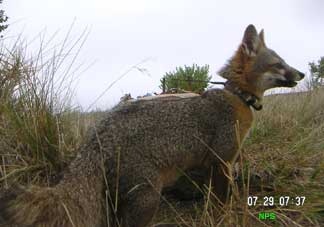

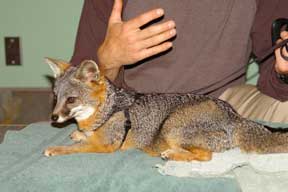
  • Donated funding for 10 fox radio collars to the Channel Islands National Park so 10 foxes could be returned to the wild.
  • Provided educational programs to schools, colleges and community groups.
  • Established an island fox education and conservation website.
  • Initiated the “Fox Ambassador School” program to establish schools in Ventura, Los Angeles, and Santa Barbara Counties as conservation friends raising funds and public awareness about the fox in their communities.
  • Participated in the annual Integrated Island Fox Recovery Team Meeting

Roots & Shoots Peace Day doves


Friends of the Island Fox has also been out in the community spreading the word about the endangered island fox at:
  • Santa Barbara Zoo Fox Festival 2005 & 2006
  • Roots & Shoots 4th Annual Day of Peace with Jane Goodall
  • L.A. Zoo and Botanical Gardens’ Island Fox Festival 2005 & 2006
  • Catalina Island Conservancy’s Earth Day celebration and the opening of the Nature Center at Avalon Canyon.
  • Moorpark Teaching Zoo’s Spring Spectacular
  • Ventura Whale Festival

As we meet people in the community, we are discovering approximately 30% do not know there are islands off California, let alone island foxes. There is much to be done introducing Californians to our local natural treasures. You can’t help save an endangered species or its habitat if you don’t know it exists.

How can you help the endangered island fox?
  1. Tell your friends, family, and neighbors about the island fox and its story.
  2. Make sure your pets are vaccinated and not allowed to run free in wild areas.
  3. Support measures to restore island habitat.
  4. Donate time, talent, or funds to Friends of the Island Fox and our efforts to support education, research and conservation measures to ensure the island fox’s survival.

Wednesday, October 11, 2006

Experiencing Santa Rosa Island, CA


Island Journal - Summer 2006

What an adventure! Santa Rosa Island’s windswept hillsides met the sea with white sand beaches.

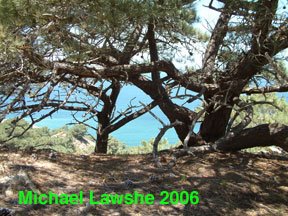
We went to the island for the day and were fortunate to catch a ride with a Channel Island National Park docent who took us up to the lone stand of rare Santa Rosa Island Torrey pines. The small gathering of pine trees huddles on a single slope to the sea and no where else in the world.

Different from their closest relative on the mainland, this island species has smaller cones with larger pine nuts. Each pine nut was nearly the size of a shelled almond.

Would an island fox eat a pine nut?


Like so many plants and animals on the Channel Islands these trees are unique. Their dark green needles are long and thick and form a domed protection from the wind. Sheltered in this conifer oasis were house finches, Pacific slope flycatchers and a pair of San Clemente Island spotted towhees. We looked for island foxes, but didn’t see any.

The hike back to the dock wandered across grassy slopes and the remains of ranching. For thousands of years prior to the arrival of Europeans, the island fox was the largest land animal on the islands. I couldn’t help but wonder how much of the native landscape had been altered by large grazing animals brought to this delicate island by people.

It was a jewel of a day. - Keri

Keri Dearborn is a Friends of the Island Fox, Inc. board member and a writer living in Los Angeles, CA.


The Santa Rosa Island fox needs your help.

A recent amendment to a bill in the U.S. House of Representatives directly effects Santa Rosa Island. It proposes the continued hunting of introduced deer and elk on the island for the unforeseen future despite the fact the island is now part of a National Park. Read about the bill and its sponsor at http://www.signonsandiego.com/news/state/20060929-0936-wst-congress-island.html

Tuesday, September 19, 2006

Meet Friends of the Island Fox

Friends of the Island Fox will be at two upcoming conservation events. Come out and join in the conservation efforts in your community and learn more about the island fox.

Roots & Shoots 4th Annual Day of Peace

Saturday, September 30th

10 AM - 4 PM at Griffith Park in Los Angeles
(4730 Crystal Springs Drive near the merry-go-round)

Join Dr. Jane Goodall and the Roots & Shoots conservation clubs in a FREE Family Event. There will be live music, arts & crafts, environmental and wildlife displays, pet adoptions, and a Parade of the Giant Peace Doves!

Dr. Goodall will speak sometime after 1:00 PM.

For more information: www.janegoodall.org/peace-day

or contact: rootsandshootsla@aol.com (310) 547 1390


Santa Barbara Zoo Fox Festival
Sunday, October 8th
11 AM - 4 PM at the Santa Barbara Zoo

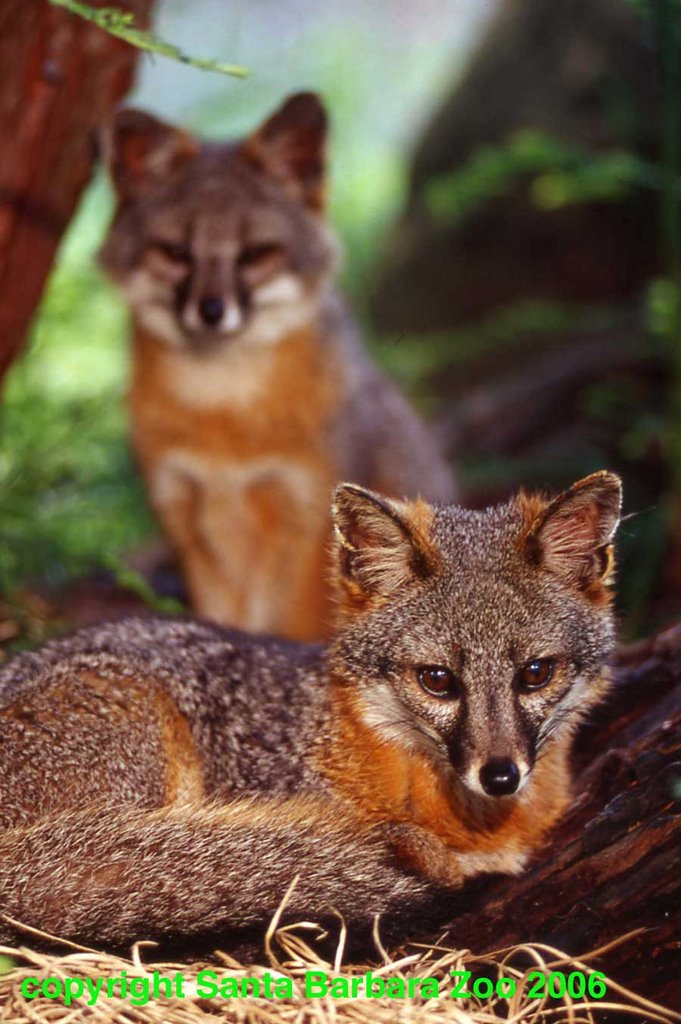
The Santa Barbara Zoo is home to two subspecies of island fox. With help from Roots & Shoots clubs, the Channel Islands National Park and Friends of the Island Fox, the Zoo will be celebrating the encouraging conservation outlook for the island fox. There will be special activities, arts & crafts, and Keeper Talks with the foxes. (Most activities included in general admission)

For more information on the Santa Barbara Zoo: www.santabarbarazoo.org

Saturday, September 02, 2006

Experiencing Santa Cruz Island, CA

Island Journal - Summer 2006

Hello from the beautiful island of Santa Cruz! The trip began in an exciting fashion when we watched a large school of dolphins swimming by our boat. After setting up camp, we set off to adventure the island.

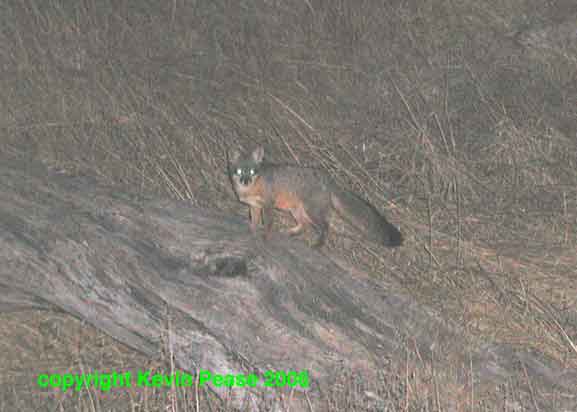
Snorkeling and hiking allowed us to observe a variety of plant and animal life, including the spotted skunk and the western fence lizard. However, seeing the Channel Island foxes come out at night easily became the highlight of the trip. They ran around, played with each other and chased mice all to our viewing pleasure.

I cannot wait to come back again next summer. - Kevin

Kevin Pease is a Middle School student in Santa Maria, California. He led his school to participate in island fox conservation and to raise awareness about the island fox in their community. Kevin is a true friend of the island fox.

Monday, August 21, 2006

What Do Island Foxes Eat?


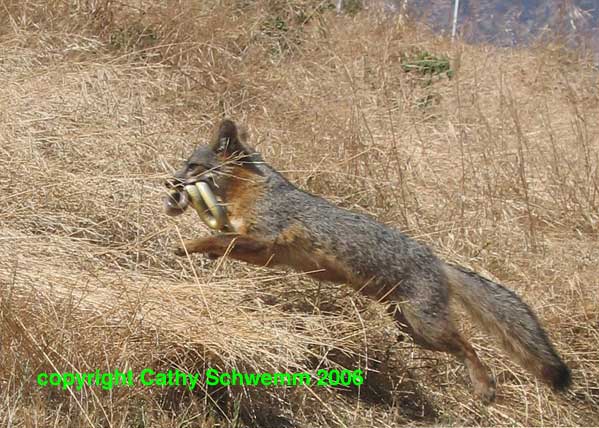
Biologists took this picture in June of a fox on Santa Cruz Island with a western yellow-bellied racer in its mouth. The snake probably provided a filling meal for the fox and its pups.

Despite its small size (4 - 5 lb.), the island fox is a formidable hunter. It is the largest native mammal predator on the California Channel Islands. While deer mice are a favorite, birds, snakes, lizards, crabs and insects are also eaten. Island foxes will also opportunistically forage for plant foods and scavenge for carrion.

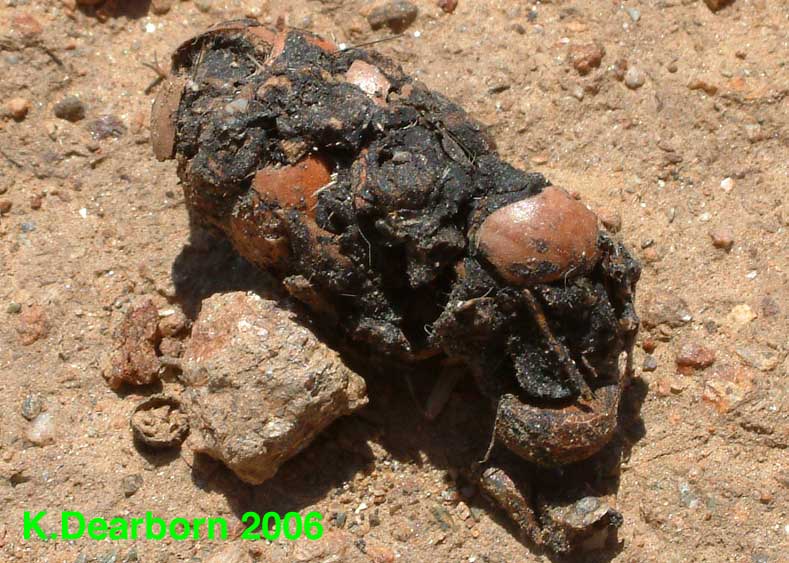
This scat sample contains seeds from a Catalina Island cherry. The island fox must have dined on this native island fruit.


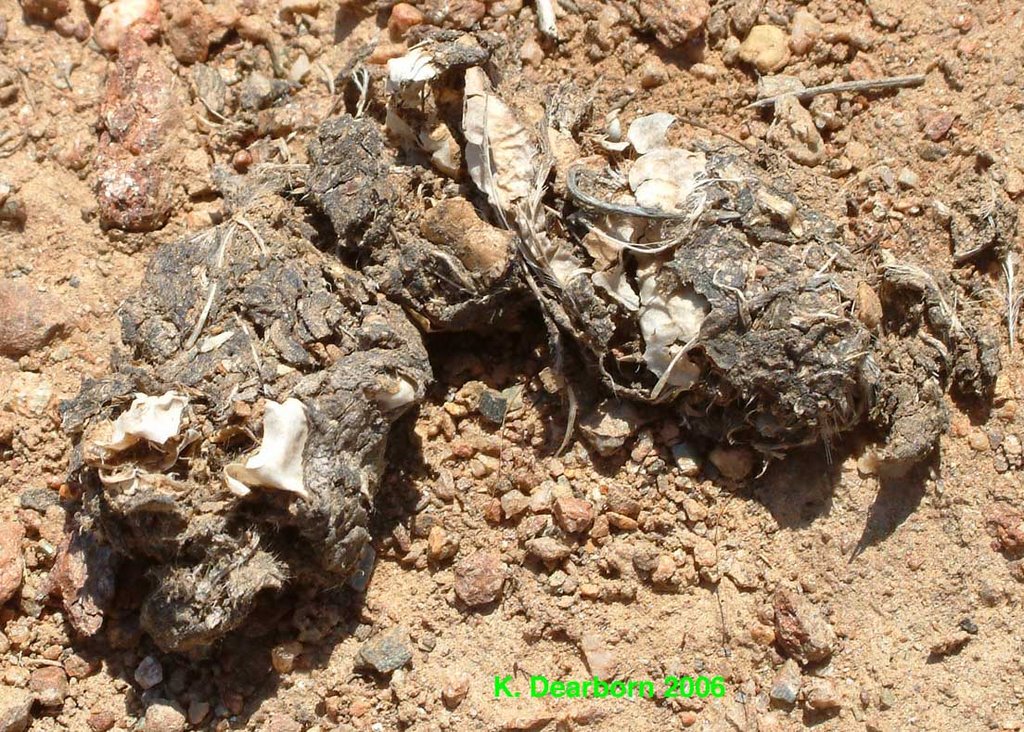
While this scat sample shows fur and bones from deer mice. These scat samples were found four feet from each other and demonstrate the variety in the island fox’s diet.

As a solitary hunter the island fox uses stealth. It moves silently through the island vegetation on padded feet. The large upright ears listen for prey, while the moist nose searches for scent.

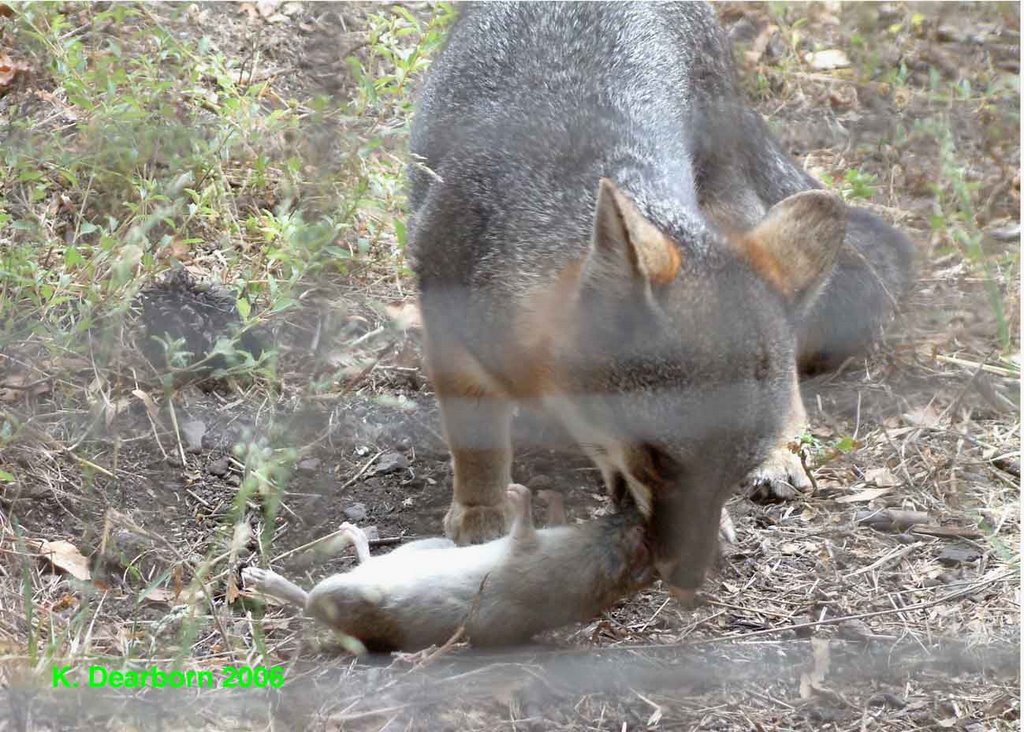
This island fox on Santa Catalina Island attacked her prey swiftly and silently. The black rat was very large in comparison to the tiny female fox, but the determined predator pounced without a second thought and quickly subdued her rodent prey. Starting at the head, she ate the entire carcass, including bones and fur. Only the tail was left behind.

Though small in stature the island fox is vital to the natural balance on its island home. Foxes play an important role in stabilizing rodent and insect populations and even in dispersing the seeds of some plants. As the top predator on the Channel Islands, a healthly island fox population is vital to a balanced and healthy island ecosystem.

Monday, July 24, 2006

Highlights from the Integrated Island Fox Recovery Team Meeting

June 20-22, 2006

The island fox may be a small animal but it has many friends.
With island foxes living on six of the Channel Islands, a wide range of people and organizations are involved in assuring their recovery from endangered status on the northern islands and maintaining their populations on the southern islands.

Reports on the current status were provided by each of the land managers:
  1. San Miguel and Santa Rosa Islands - Tim Coonan, National Park Service
  2. Santa Cruz Island - Lotus Vermeer, The Nature Conservancy
  3. Santa Catalina Island - Carlos de la Rosa, Catalina Island Conservancy
  4. San Clemente Island - Kelly Brock, U.S. Navy
  5. San Nicolas Island - Grace Smith, U.S. Navy

This has been a good year for the island fox. Populations appear stable or increasing, and with the exception of Santa Catalina Island, there is no evidence of widespread disease.

HIGHLIGHTS:

Northern Islands:
  • San Miguel Island (46 foxes in the wild; 32 in captivity)
  • Santa Rosa Island (~42 foxes in the wild; 42 in captivity)
  • Santa Cruz Island (~324 foxes in the wild, 81 in captivity)

Foxes on the Northern islands are reproducing well in the wild. Most released females had pups this spring, helping to dramatically increase fox numbers on Santa Cruz Island.

Foxes in the captive breeding programs are reproducing less. Hormone and stress level research over the past year was unable to identify any specific reasons for this decline in fertility. The island fox appears to be different from other foxes regarding reproduction. More research is needed to understand how best to manage sustained successful reproduction in captivity.

The last known breeding pair of golden eagles were removed from Santa Cruz Island on 6/21 and 6/22/06. This wily raptor pair has eluded capture for several years, but the two golden eagles were finally caught with net guns released from a low-flying helicopter. The two eagles have been fitted with radio transmitters and will be released in Northern California. Their chick has been taken to San Diego for fostering. A few immature golden eagles may still reside on the northern islands, but this is a huge step forward in making the islands safe (link) for foxes released back into the wild.

This is the fifth and final year for bald eagle releases on the northern islands. To date ~60 juvenile bald eagles have been released. Two bald eagle chicks were hatched by released birds and are being successfully raised by their first-time parents on Santa Cruz Island. This is a positive step toward the reestablishment of bald eagles on the northern islands. You can observe one of the island eagle families as they occasionaly return to the nest at www.iws.org/nestcam.htm

In order to restore the natural habitat on Santa Cruz Island, feral pigs continue to be removed. To date nearly 5,000 feral pigs have been removed and it is believed only 10 pigs are still loose on the island. This is an important step forward in restoring the entire ecosystem on Santa Cruz Island.

  • Santa Catalina Island (415 foxes in the wild, 5 in captivity)
The island fox population continues to recover from the virus, believed to be canine distemper, that swept through the population in 1999-2000. Over 80% of the foxes on the island have now been vaccinated for the disease.

Ear mites, possibly transmitted from feral domestic cats, are currently causing tumors in the ear canals of 30% of the Catalina island foxes. These tumors appear to gradually become cancerous and 20% of the general population has this form of cancer. The causes and ramifications of this trend are yet unknown, but concern for the situation is growing. The majority of the foxes in captivity on Santa Catalina Island are individuals receiving health care.

Domestic dogs running loose have also been responsible for the death of several foxes. The Catalina Conservancy is trying to educate the public on Catalina Island and a new Pet Policy requiring domestic pets be contained has been implemented for the interior of the island.

Southern Islands:
New studies are proposed to more precisely determine the fox population on San Clemente Island. This will help the Navy monitor fox numbers and needs. The population on San Nicolas Island is regularly monitored and believed to be stable at ~400 foxes. On both islands steps are being taken to reduce fox fatalities from car strikes.


New Insights:
  • Even when it is offered, island foxes do not seem to drink much fresh water. Perhaps they are utilizing fog condensed on plants.
  • Research showed that for foxes kept in captive breeding facilities having 8 or more structures in their pen (boxes, hammocks, etc.) gave them multiple options and reduced stress.
  • Some of the radio-tagged bald eagles released on the islands have returned to the mainland; one traveling as far as Montana.
  • Bald eagles are scavengers. Ammunition used by a hunting facility on Santa Rosa Island has caused lead poisoning in some of the released bald eagles.
  • The primary food sources for golden eagles on the northern islands are mammal species that have been introduced by humans (feral piglets, deer and elk fawns). Removing these introduced species would remove the primary reason golden eagles are attracted to the islands.

Friends of the Island Fox, Inc. strongly supports all of the conservation efforts by the various biologists and organizations working on behalf of the island fox. Our goal is to make the community at large aware of the island fox’s situation and to help all of these positive efforts to Save the Island Fox.

Thursday, June 01, 2006

What is an ISLAND FOX ?


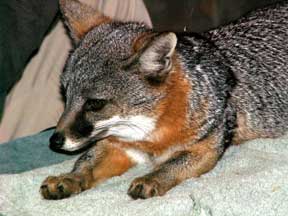
The island fox (Urocyon littoralis) is a unique species found only on six of the eight Channel Islands along the coast of southern California. Channel Island Fox Habitat

The island fox’s size, habitat, and behavior make them very different from their closest relative the mainland gray fox. Each island fox population also faces different challenges. The foxes on the northern islands of San Miguel, Santa Rosa, Santa Cruz, and Santa Catalina Island in the south were listed as endangered under the U.S. Endangered Species Act in 2004. More About the Island Fox

Friends of the Island Fox, Inc. works with government agencies, private conservation organizations, community groups, schools and individuals to support island fox conservation, research and public awareness.


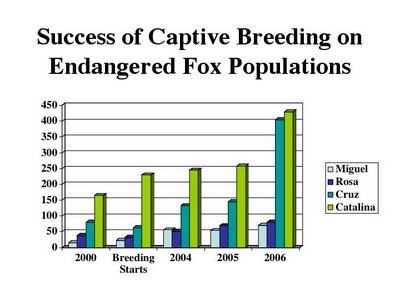
Island fox survival is threatened by habitat imbalances created by human actions. The good news is current conservation efforts are improving both the island habitat and increasing island fox numbers. Captive breeding has allowed island fox species at the brink of extinction to make a come back.

Island Fox Status

National Park Islands

Santa Cruz Island
foxes Endangered
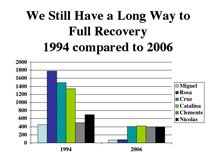
  • Decline noticed in 1994 - population 1,465
  • Low point 2000: population 80
  • Captive breeding starts in 2002 with: wild foxes (~50); captive foxes (12)
  • January 2006: wild foxes (~149); captive foxes (62) plus new pups
  • Captive breeding still taking place. Golden eagles remain a threat.

Santa Rosa Island foxes Endangered
  • Decline noticed in 1994 - population 1,780
  • Low point 2000: population 38
  • Captive breeding starts in 2001 with: wild foxes (0); captive foxes (32)
  • January 2006: wild foxes (~39); captive foxes (51) plus new pups
  • Captive breeding still taking place. Golden eagles remain a threat.

San Miguel Island foxes Endangered
  • Decline noticed in 1994 - population 450
  • Low point 2000: population 15
  • Captive breeding starts in 2001 with: wild foxes (1); captive foxes (21)
  • January 2006: wild foxes (43); captive foxes (48) plus new pups
  • Captive breeding still taking place. Golden eagles less of a threat.

Southern Islands

Santa Catalina Island
foxes Endangered
  • Decline noticed in 1994 - population 1,342
  • Low point 2000: population 165
  • Captive breeding starts in 2001 with: wild foxes (~200); captive foxes (30)
  • January 2006: wild foxes (425); captive foxes (5)
  • Captive breeding has been successful. All able foxes have been returned to wild.
Navy Islands

San Clemente Island foxes
  • Decline noticed in 1994 - population 1,003
  • 2000: population ~500
  • January 2006: wild foxes (~400); captive foxes in Zoos (13)
San Nicolas Island foxes
  • Decline noticed in 1994 - population 550
  • 2000: population ~734
  • January 2006: wild foxes (~435)
Anacapa and Santa Barbara Island have never had fox populations.

Updated population numbers for all of the islands will be available in early July 2006.

Captive breeding, public awareness and habitat restoration are improving the status of the island fox, but we still have a long way to go to reach healthy stable population numbers.

You can help Save the Island Fox by supporting Friends of the Island Fox, Inc. and current conservation efforts on the Channel Islands.

Friday, May 05, 2006

Island Fox Festival - Los Angeles Zoo


Come meet Bear and Stubby, a pair of San Clemente Island foxes, and celebrate the ongoing conservation efforts to save this endangered species.

Saturday, May 20; 10:00 AM to 4:00 PM
at
The Los Angeles Zoo and Botanical Gardens

The Los Angeles Zoo is one of the few places where the public can easily see island foxes up close. All day Saturday, May 20th the docent Conservation Committee of the Los Angeles Zoo and Botanical Gardens will be hosting their Third Annual Island Fox Festival. There will be:

  • keeper & docent talks at the island fox enclosure
  • interactive stations on the island fox, native plants and island conservation
  • crafts and face painting
  • special presentations, activities and more
Representatives from Friends of the Island Fox and the Channel Islands National Park will also be on-hand.

At the Friends of the Island Fox booth you’ll be able to see one of the radio collars we are funding so island foxes can be returned to the wild. We will also be conducting demonstrations of radio telemetry tracking throughout the day.

Come join us for a great day at the L.A. Zoo celebrating the island fox!

For more admission and Zoo information: www.lazoo.org

All programs and activities are included with Zoo membership or the price of admission. The Island Fox Festival is supported by GLAZA.

Thursday, April 27, 2006

Catalina Island Fox - Tachi

Report From the Field, 4/22/06 - by Pat Meyer

Friends of the Island Fox traveled to Santa Catalina Island to participate in the Catalina Island Conservancy’s Earth Day celebration and the opening of their new Nature Center at Avalon Canyon.

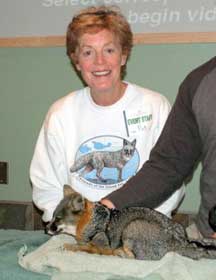
The highlight of the day was meeting Tachi,
Catalina Island Conservancy’s educational ambassador. This young female island fox plays an important role in enlightening people about this endangered species. Though incredibly cute, she is not a pet. While I was allowed to be photographed with Tachi, I was not allowed to get too close to her, or to touch her at all. She is handled only by the Catalina Island Conservancy biologists.

Tachi’s story:
Her full name is Ne Shun Tachi – “Our little girl of hope.” She was born in a litter that was neglected by their mother. It was determined very early in her life that she had an eye infection. She continued to have chronic eye infections and difficulty nursing from her foster mother, so she was returned to the Institute of Wildlife Studies’ veterinary clinic periodically. While receiving treatment, her eye opened and she became habituated to the humans that cared for her. Consequently Tachi was not able to be released into the wild with her siblings and has become an educational ambassador for her species.

Friends of the Island Fox, Inc. sends our appreciation to the Catalina Island Conservancy’s Chief Conservation and Education Officer, Carlos de la Rosa, and Ann Muscat, Chief Executive Officer, for their invitation to participate in their Earth Day celebration.

Spring population numbers are showing increases on all of the islands. There will be more captive fox pups who will need radio collars for release into the wild. Our motto is “Working Together To Save The Island Fox.” You can make a difference. Join us and our friends at the Catalina Island Conservancy as we strive to save the island fox from extinction.

Friday, April 21, 2006

About Friends of the Island Fox

Friends of the Island Fox is a program of the Channel Islands Park Foundation, a 501 (c) (3) charitable and educational corporation as designated by the Internal Revenue Service. FIF is a joint effort of conservation professionals and concerned private citizens striving to create public awareness about the endangered island fox and to raise funds to support education, research and conservation measures to ensure the island fox’s survival.

Friends of the Island Fox (FIF) was founded as a non-profit 501 (c) (3) charitable and educational corporation in March, 2005. On January 1, 2011, FIF joined with the Channel Islands Park Foundation (www.ciparkfoundation.org) for the joint benefit of both organizations.

 FIF provides presentations to community groups and schools (K-college) regarding the island fox and its important relationship with the Channel Island ecosystem. School programs meet CA State Science Standards and address the Environmental Education Initiative (EEI). FIF also offers professional development workshops for educators on using a local endangered species and the Channel Islands to teach math, science, language skills and conservation issue resolution.

To reach us:

Friends of the Island Fox
c/o Channel Islands Park Foundation
1901 Spinnaker Drive, Ventura, CA 93001

by phone: (805) 228-4123

e-mail: admin@islandfox.org

Program Administrators


Patricia M. Meyer, Island Fox Program Director
Born and educated in England, Pat immigrated to Canada, and then to the United States, settling in Los Angeles where she completed her MBA through the University of Redlands, California. Following employment in advertising and marketing, the remainder of her career was spent as Vice-President of Personnel and Administration for a nationwide property-casualty insurance company, handling all aspects of human resource management and the administration of the company’s five corporate offices. Pat founded Friends of the Island Fox in 2005 and served as its President until December 31, 2010. She continues to guide FIF’s activities and currently holds a position on the Channel Islands Park Foundation Board of Directors.

To Reach Pat Meyer regarding the Friends of the Island Fox Program school visits or community programs:
(805) 228-4123 or pat@islandfox.org


Keri F. Dearborn, Education Director
Keri is a California native. She earned her BA from the University of California, Los Angeles and received her MA in Environmental Education from CA State University San Bernardino in 2009. As well as developing conservation and educational materials and programs for a variety of non-profit organizations and private companies, she is a nonfiction writer and a contributing author for a number of textbooks, teachers’ guides, and state literacy tests. Keri served as V.P. of Education on the Friends of the Island Fox Board of Directors from 2005-2010 and continues to direct FIF’s educational programs.

To Reach Keri Dearborn regarding Friends of the Island Fox educational materials or programs:
(805) 228-4123 or islandfoxnews@gmail.com

Updated 1/10/11